
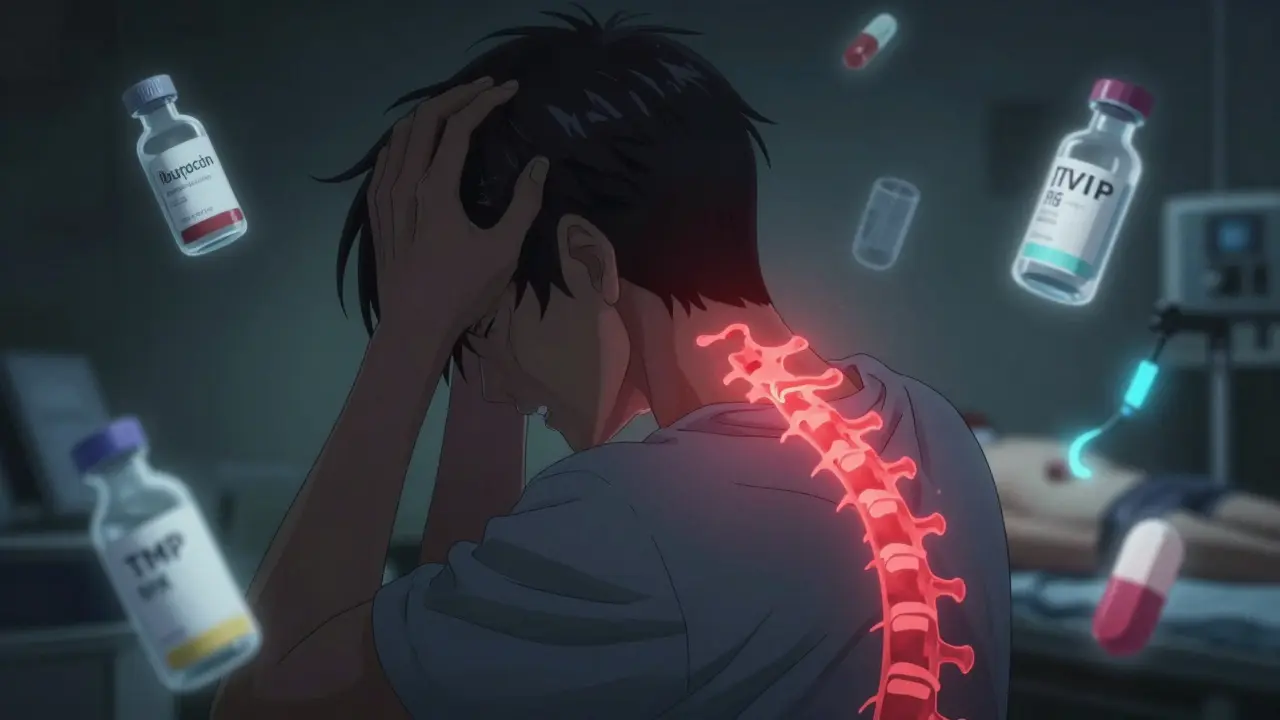
Medication Risk Checker for Aseptic Meningitis
This tool helps identify potential risk of drug-induced aseptic meningitis based on medication timing. Remember: This is not a medical diagnosis. Always consult your doctor.
Based on clinical data showing symptoms typically appear within 24-72 hours of medication exposure.
Risk Assessment
Important Notes
High Risk: Symptoms appearing within 24 hours of medication exposure.
Moderate Risk: Symptoms appearing between 24-72 hours after medication exposure.
Low Risk: Symptoms appearing more than 72 hours after medication exposure.
When you get a bad headache, fever, and stiff neck, your first thought might be meningitis. But not all meningitis is caused by infection. In fact, drug-induced aseptic meningitis is a real and growing concern - and it’s often mistaken for something far more serious. This isn’t rare. Around 10-20% of all aseptic meningitis cases come from medications, not viruses or bacteria. And if you’re taking common drugs like ibuprofen, antibiotics, or even immunoglobulin infusions, you could be at risk - even if you’ve taken them before without issue.
What Exactly Is Drug-Induced Aseptic Meningitis?
Aseptic meningitis means inflammation of the membranes around your brain and spinal cord - but without any live bacteria in the fluid. That’s the key difference from bacterial meningitis, which is life-threatening and needs immediate antibiotics. In drug-induced cases, your immune system reacts to a medication, triggering swelling and symptoms that look identical to an infection. The first solid medical recognition of this came in 1999, when researchers documented how certain drugs could cause this reaction. Since then, it’s become clearer that this isn’t an accident - it’s a predictable side effect in some people.
It’s not about allergies like rashes or breathing trouble. It’s a targeted inflammatory response in the central nervous system. The most common culprits? Human intravenous immunoglobulin (IVIG), nonsteroidal anti-inflammatory drugs (NSAIDs) like ibuprofen, antibiotics like trimethoprim-sulfamethoxazole (TMP-SMX), and newer biologics like monoclonal antibodies used for autoimmune diseases. In fact, IVIG alone accounts for nearly 30% of all documented cases. And here’s the twist: you don’t need to be on the drug long. Some reactions happen within hours.
How Do You Know It’s Not Just a Virus?
The symptoms are nearly identical to viral meningitis: severe headache (98% of cases), fever (76%), stiff neck (89%), sensitivity to light (65%), and sometimes confusion or nausea. You can’t tell by how you feel. That’s why doctors can’t just say, “It’s probably not serious.” They have to rule out the real dangers.
Here’s what sets drug-induced cases apart:
- Timing matters. Symptoms usually show up within 24 to 72 hours after taking the drug - sometimes as fast as 60 minutes after a re-dose. If you started a new medication last week and now have a headache that won’t quit, that’s a red flag.
- It gets better fast. Once you stop the drug, symptoms usually fade in 24 to 72 hours. That’s much quicker than viral meningitis, which can take a week or more to resolve.
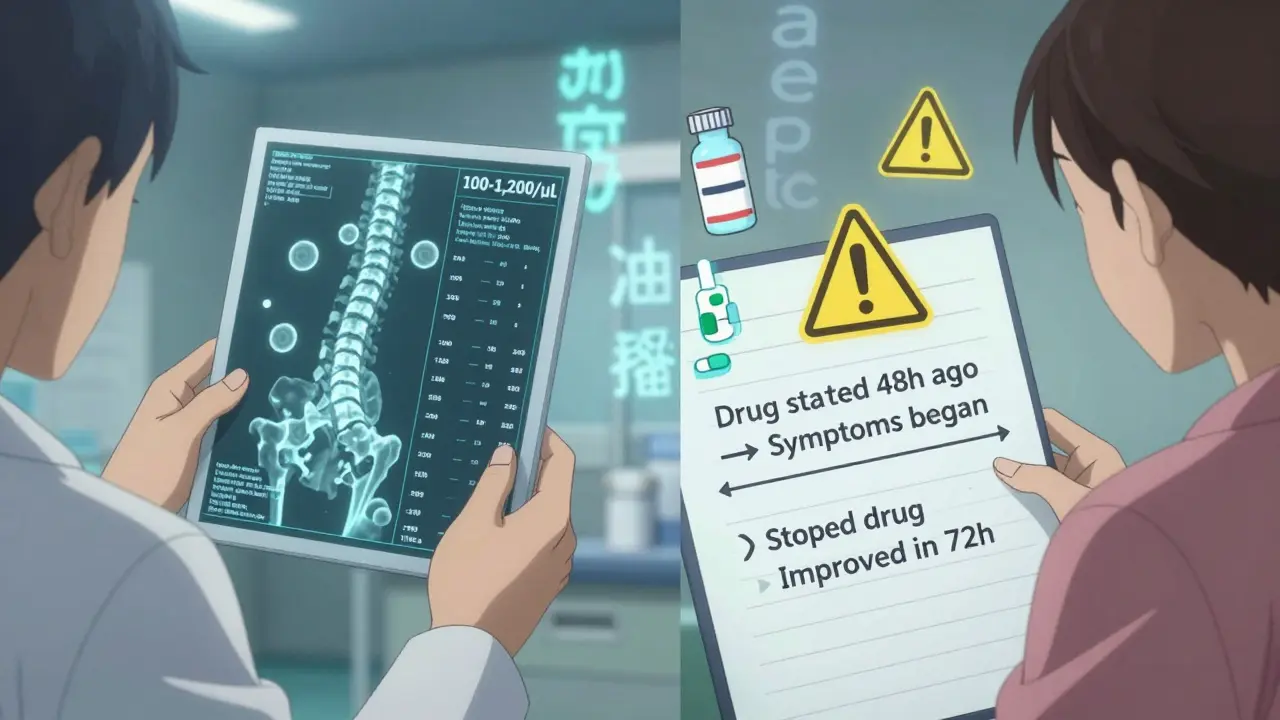
- No infection in the fluid. A spinal tap (lumbar puncture) shows white blood cells - often between 100 and 1,000 per microliter - but no bacteria. Glucose levels are normal, and cultures come back clean. That’s the gold standard for diagnosis.
But here’s the problem: viral meningitis also shows similar CSF results. So how do doctors know? They look at your history. Did you recently start a new drug? Did you have the same symptoms after taking it before? Did you have a flare-up after a vaccine or IVIG infusion? That’s the clue.
Which Medications Are Most Likely to Cause This?
Not all drugs carry the same risk. Some are far more dangerous than others. Based on data from over 300 confirmed cases tracked in the French Pharmacovigilance Database:
| Drug Class | Percentage of Cases | High-Risk Examples |
|---|---|---|
| Human Intravenous Immunoglobulin (IVIG) | 28.9% | IVIG preparations (e.g., Gammagard, Privigen) |
| NSAIDs | 21.6% | Ibuprofen, naproxen, diclofenac |
| Vaccines | 12.5% | MMR, influenza, HPV |
| Antibiotics | 11.2% | Trimethoprim-sulfamethoxazole (TMP-SMX), penicillin |
| Monoclonal Antibodies | 8.7% | Adalimumab, rituximab, infliximab |
NSAIDs are especially tricky. Most people think they’re safe. But if you have lupus or another autoimmune condition, your risk jumps to 35-40%. And TMP-SMX? It’s responsible for 70% of all antibiotic-related cases - especially in people with HIV or organ transplants.
Even vaccines can trigger this. But don’t panic: only about 0.3% of meningitis cases after vaccination are true drug-induced. Most are just coincidental viral infections. Still, if you’ve had a reaction before, you should tell your doctor before getting another shot.
How Is It Diagnosed? It’s Not Just a Lab Test
There’s no single blood test for drug-induced meningitis. Diagnosis is a puzzle. The American Academy of Neurology says you need four things to be sure:
- Temporal link. Symptoms started within hours or days of taking the drug.
- Exclusion of other causes. No signs of infection, cancer, or autoimmune disease like lupus in the CSF or imaging.
- Improvement after stopping. Symptoms fade within a few days of quitting the drug.
- Recurrence upon re-exposure. If you take the drug again and symptoms come back - that’s the strongest proof.
But rechallenge isn’t always done. It’s risky. Doctors usually skip it unless the drug is essential and no alternatives exist. Still, if you’ve had this before and the same drug made you sick again, that’s a diagnosis.
CSF analysis is the backbone. In confirmed cases:
- White blood cell count: 25 to 1,200 per microliter (usually neutrophils early on)
- Glucose: normal in 92% of cases
- Protein: elevated in 78% (45-250 mg/dL)
- Bacterial cultures: always negative
And here’s the catch: if you’re immunocompromised - say, you have HIV, are on transplant meds, or have lupus - the risk is higher, and the lines get blurrier. That’s why doctors often start antibiotics while waiting for test results. Better safe than sorry.
What Happens After Diagnosis?
There’s no special treatment. No steroids. No antivirals. The only thing that works? Stopping the drug.
Most people feel better within 24 to 72 hours. Headache might linger for a few days, and in 15% of cases, it can drag on for up to two weeks. But full recovery is the norm. No long-term damage. No scarring. Just avoidance.
That’s why the next step is simple: never take that drug again. And tell every doctor you see - even your dentist. If you’ve had this reaction once, you’re at high risk for it again. Even a small dose can trigger it.
Some drugs, like IVIG, are unavoidable for people with immune disorders. In those cases, doctors may try slower infusions, pre-medication with antihistamines, or switch brands. But there’s no guarantee. It’s a balancing act.
Why Is This Underdiagnosed?
Because doctors don’t always think about it. If you’re in the ER with a headache and fever, the default assumption is infection. Antibiotics are given. Tests are ordered. But if you’ve been on ibuprofen for a month, or got an IVIG infusion last week, that’s not on the radar. That’s why this condition is likely underreported.
Also, symptoms are often mild. Some people think it’s just a bad flu. Others dismiss it as stress. But if it keeps happening - especially after taking the same drug - it’s not coincidence. It’s a reaction.
And with more people using biologics for arthritis, Crohn’s, or psoriasis, the number of cases is rising. From 2010 to 2022, monoclonal antibody-related cases jumped from 2% to nearly 9%. That’s not a coincidence - it’s a trend.
What Should You Do If You Suspect This?
If you’ve recently started a new medication and now have meningitis-like symptoms, here’s what to do:
- Stop the drug immediately - don’t wait for a doctor’s note.
- Call your doctor or go to urgent care. Don’t wait for symptoms to worsen.
- Bring a full list of all medications - including OTC drugs, supplements, and recent vaccines.
- Ask for a lumbar puncture if symptoms persist beyond 24 hours.
- Document everything: when you started the drug, when symptoms began, how long they lasted.
And if you’ve had this before? Make sure it’s in your medical records. Wear a medical alert bracelet if you’re on long-term IVIG or immunosuppressants. Your life could depend on it.
Drug-induced aseptic meningitis isn’t a death sentence. It’s not even rare. But it’s easily missed. And once you know the signs - the timing, the triggers, the resolution - you’re not just a patient. You’re an advocate.
Can you get drug-induced meningitis from over-the-counter painkillers?
Yes. NSAIDs like ibuprofen, naproxen, and diclofenac are among the top causes of drug-induced aseptic meningitis. The risk is low overall - but much higher in people with autoimmune diseases like lupus. If you’ve had a similar reaction before, even a single dose can trigger it again.
Is drug-induced meningitis contagious?
No. It’s not caused by a virus or bacteria, so you can’t spread it to others. The inflammation is your body’s reaction to a medication. That’s why it’s called "aseptic" - meaning no infectious agent is involved.
How long does it take to recover from drug-induced meningitis?
Most people feel significantly better within 24 to 72 hours after stopping the drug. Full recovery usually happens in under five days. However, about 15% of patients may have lingering headaches for up to two weeks. There’s no permanent damage if the drug is stopped promptly.
Can vaccines cause aseptic meningitis?
Yes, but it’s extremely rare. Only about 0.3% of meningitis cases following vaccination are truly drug-induced. Most are unrelated viral infections that happen to occur around the same time. If you’ve had this reaction to a vaccine before, discuss alternatives with your doctor before future shots.
Do I need imaging like an MRI to diagnose this?
Not usually. A spinal tap (lumbar puncture) is the gold standard. Imaging like MRI or CT scans are only done if doctors suspect something else - like a tumor, stroke, or brain abscess. In pure drug-induced cases, scans are typically normal.
What’s Next for Diagnosis and Treatment?
Researchers are now looking for biomarkers - chemical signals in the spinal fluid - that can tell the difference between drug-induced and infectious meningitis. A 2023 NIH study is testing cytokine patterns to see if certain immune proteins are unique to drug reactions. If they find it, we could avoid unnecessary antibiotics and hospital stays.
For now, the best defense is awareness. Know your meds. Know your body. And if something doesn’t feel right after starting a new drug - trust your gut. It might not be a virus. It might be your body telling you to stop.


