
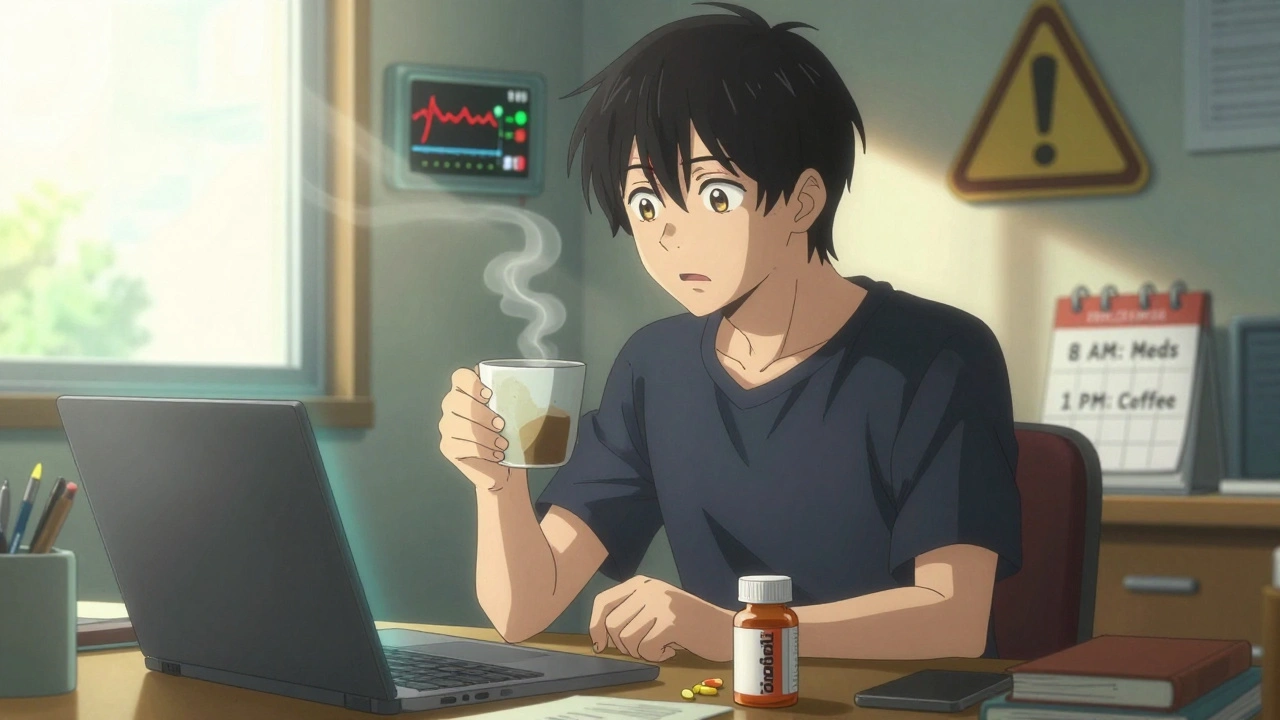
Many people with ADHD reach for a cup of coffee when they take their medication. It feels natural - both are stimulants, both promise focus, both seem to help. But mixing caffeine and ADHD meds like Adderall isn’t just a harmless habit. It’s a pharmacological tightrope. One wrong step, and what was supposed to boost your day turns into a racing heart, jittery nerves, or a crash so bad you can’t get out of bed.
Why Caffeine and ADHD Meds Feel Like a Perfect Match
Caffeine and prescription stimulants like Adderall both target the same brain chemicals: dopamine and norepinephrine. In ADHD, these neurotransmitters are often in short supply, leading to trouble focusing, impulsivity, and mental fatigue. Adderall works by forcing more of these chemicals into your brain. Caffeine does something similar - it blocks adenosine receptors, which indirectly boosts dopamine and makes you feel alert. That’s why some people swear by the combo. A 2020 study with five boys diagnosed with ADHD found that when caffeine was paired with L-theanine (a calming amino acid found in tea), it actually improved attention and impulse control. The same study showed caffeine alone made their focus worse. This isn’t random. It’s chemistry. Caffeine isn’t the problem - it’s how much you take, when you take it, and whether you’re already on a strong stimulant. But here’s the catch: Adderall is about 3 to 5 times more powerful than caffeine at managing ADHD symptoms, according to a 2016 meta-analysis. That means if you’re taking a 20mg dose of Adderall, your coffee isn’t adding much to the focus. It’s mostly adding side effects.The Hidden Risks: More Than Just Jitters
The biggest danger isn’t feeling wired. It’s what happens to your heart. Both caffeine and Adderall raise your heart rate and blood pressure. When you combine them, the effect isn’t just added - it’s multiplied. A 2022 study from Johns Hopkins found that people using both had a 37% higher risk of tachycardia (fast heartbeat) and a 29% higher risk of high blood pressure. That’s not a small uptick. That’s a medical red flag. And it’s not just adults. The American Academy of Pediatrics warns against mixing caffeine with stimulants in children and teens. Their developing nervous systems are more sensitive. A 2023 JAMA Internal Medicine study found that 23% of adults with ADHD also have underlying heart conditions. For them, caffeine isn’t just risky - it could be dangerous. Then there’s the crash. Adderall lasts 8 to 12 hours. Caffeine lasts 5 to 7. When the caffeine wears off before the medication, your brain gets hit with a double whammy: the stimulant is still active, but the caffeine’s lift is gone. That’s when anxiety spikes, your hands shake, and you feel like you’re falling apart. One Reddit user described it perfectly: “One cup of coffee with my 20mg Adderall feels amazing until hour three - then I crash into pure anxiety. Switching to half-caf fixed it.”How Much Caffeine Is Too Much?
The FDA says 400mg of caffeine a day is safe for most healthy adults. That’s about four cups of coffee. But if you’re on Adderall? That number drops. A 2022 survey by the National Alliance on Mental Illness found that 33% of adults who combined caffeine and stimulants ended up needing medical care for side effects. Most of those cases involved people drinking more than 200mg of caffeine daily - just two strong coffees. Here’s what experts actually recommend:- Start with 100mg or less - that’s one small coffee (8 oz) or one espresso shot.
- Avoid energy drinks. One can can have 200mg or more, plus sugar and other stimulants.
- Watch hidden sources: chocolate, green tea, certain painkillers, and even some “focus” supplements.
- Don’t drink caffeine after 2 PM. It can linger in your system and wreck your sleep, which already suffers with ADHD.
Timing Matters More Than You Think
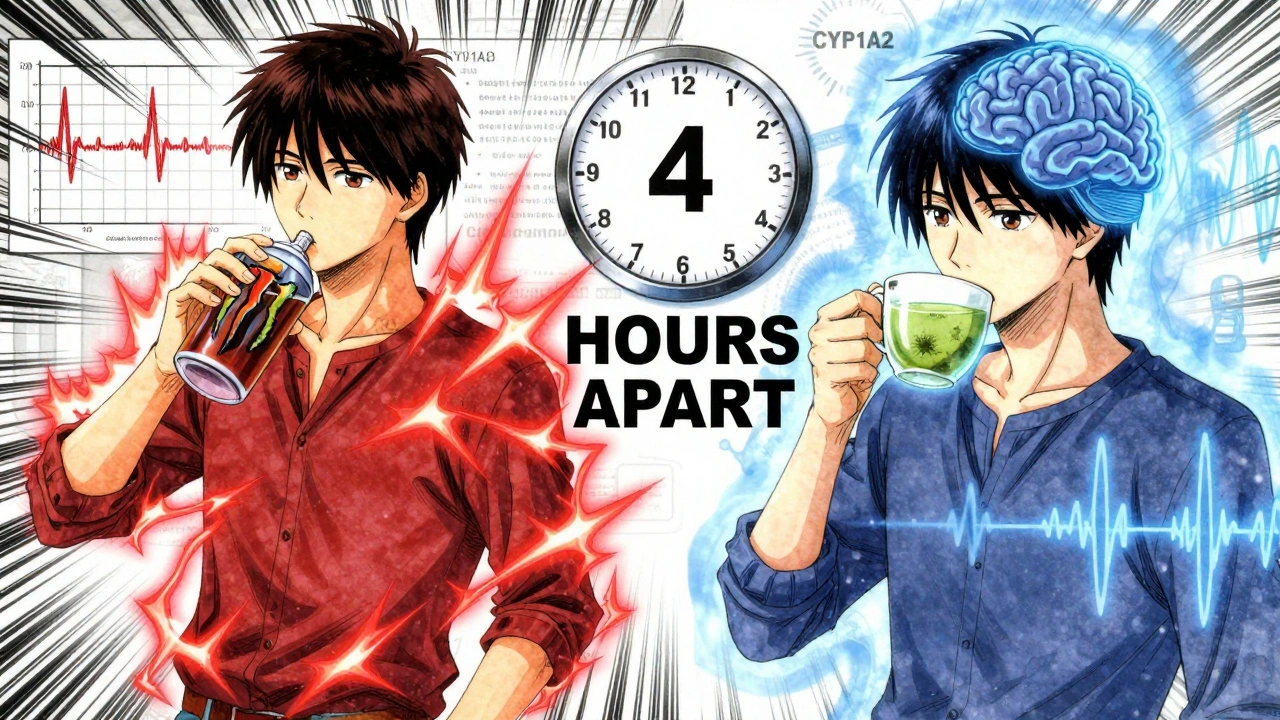
Taking caffeine and Adderall together is like stepping on the gas and the brake at the same time. Your body doesn’t know whether to speed up or slow down. The best approach? Separate them. If you take your Adderall at 8 AM, wait until at least 1 PM to have coffee. That gives your body time to process half the Adderall before adding caffeine. If you take your medication later in the day, skip caffeine entirely. You’re not helping your focus - you’re sabotaging your sleep. Also, take both with food. A 2021 study showed that 45% of people who combined caffeine and stimulants had stomach pain, nausea, or upset digestion. Eating slows absorption, reduces GI stress, and helps your body handle the load.Who Should Avoid This Combo Altogether?
Not everyone can safely mix caffeine and ADHD meds. You should avoid it if you:- Have high blood pressure, heart disease, or arrhythmias
- Experience anxiety, panic attacks, or insomnia
- Are under 18 - your brain is still developing
- Are a slow caffeine metabolizer (about 40% of people are)
What About L-Theanine?
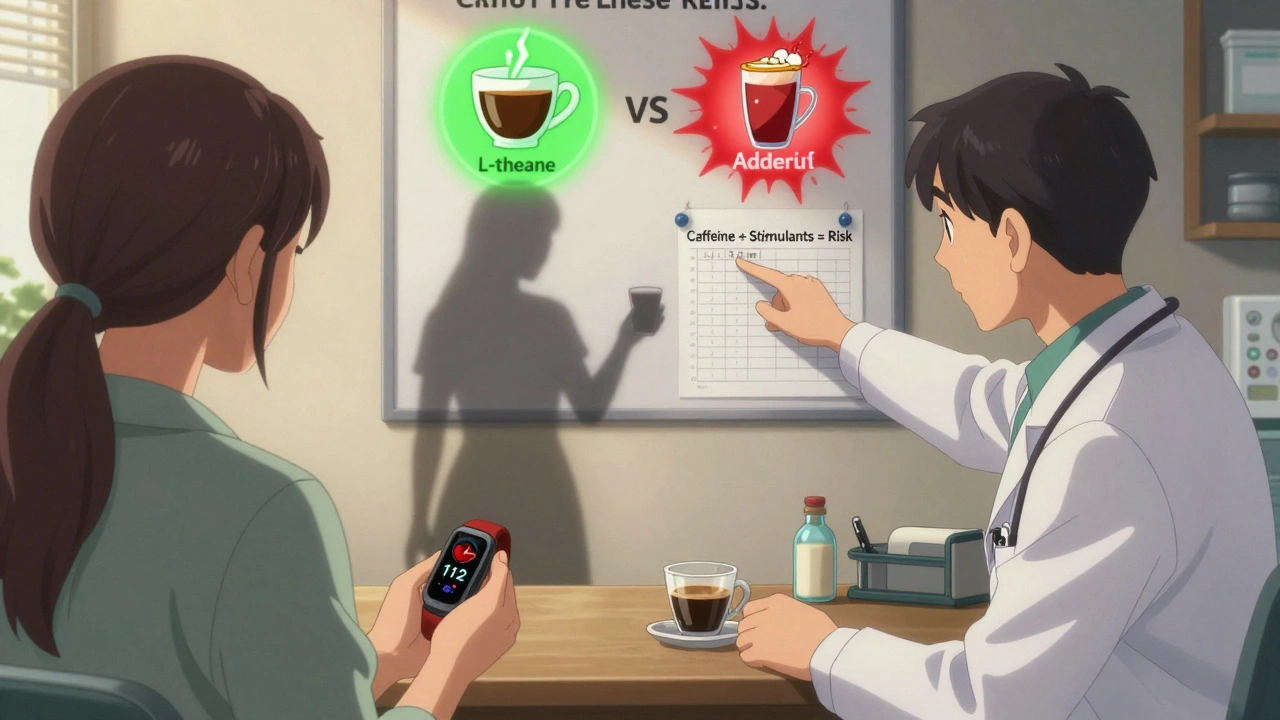
There’s a growing body of research pointing to L-theanine - a natural compound in green tea - as a way to make caffeine safer and more effective for ADHD. A 2018 study showed that a 3:1 ratio of L-theanine to caffeine (like 200mg L-theanine with 60mg caffeine) improved focus without the jittery side effects. A 2023 NIH-funded trial with 127 participants found this combo reduced mind-wandering and improved task performance better than caffeine alone. It’s not a magic pill. But if you’re going to use caffeine with your ADHD meds, pairing it with L-theanine is the smartest move you can make. You can find it in capsules or as a powder. Start with 100mg L-theanine and 50mg caffeine. See how you feel.The Bottom Line: It’s Not About Quitting Coffee - It’s About Managing Risk
You don’t have to give up coffee to manage your ADHD. But you do need to stop treating caffeine like a harmless add-on. It’s a powerful drug. And when you mix it with prescription stimulants, you’re playing with fire. Here’s your simple action plan:- Track your caffeine intake - write it down. Include tea, chocolate, energy drinks, and supplements.
- Start low: no more than 100mg caffeine per day while on stimulants.
- Wait at least 4 hours between your medication and your coffee.
- Monitor your heart rate. Use a fitness tracker if you have one. If your resting heart rate jumps above 100 bpm, stop caffeine.
- Talk to your doctor. Don’t assume they know you’re drinking coffee. Tell them.
Can I drink coffee while taking Adderall?
Yes - but with limits. Stick to 100mg of caffeine or less (one small coffee), wait at least 4 hours after taking Adderall, and avoid energy drinks. Monitor your heart rate and anxiety levels. If you feel jittery, dizzy, or your heart races, stop.
Does caffeine make ADHD medication work better?
Not really. Adderall is 3 to 5 times stronger than caffeine at improving ADHD symptoms. Caffeine doesn’t boost its effectiveness - it mostly adds side effects like anxiety, insomnia, and heart strain. In rare cases, pairing caffeine with L-theanine can improve focus, but that’s not the same as caffeine alone.
How long does caffeine stay in my system with Adderall?
Caffeine takes about 5 hours to halve in your bloodstream. Adderall lasts 8 to 12 hours. That means caffeine can still be active when Adderall is peaking, increasing the risk of overstimulation. Spacing them 4 to 5 hours apart reduces this overlap.
Is it safe for teens to mix caffeine and ADHD meds?
No. The American Academy of Pediatrics advises against it. Teen brains are still developing, and combining stimulants increases the risk of anxiety, sleep disruption, and heart problems. If a teen uses caffeine, it should be minimal and only under a doctor’s supervision.
What are the signs I’m taking too much caffeine with my ADHD medication?
Racing heartbeat, chest tightness, shaking hands, severe anxiety, trouble sleeping, nausea, or dizziness. If you notice any of these, stop caffeine immediately and talk to your doctor. Emergency room visits for stimulant-caffeine combinations rose 27% between 2019 and 2023.
Should I take L-theanine with caffeine and Adderall?
It’s one of the safest ways to use caffeine with ADHD meds. A 3:1 ratio of L-theanine to caffeine (like 200mg L-theanine with 60mg caffeine) has been shown to reduce anxiety and improve focus without the crash. It’s not a cure, but it’s a smart buffer.


