
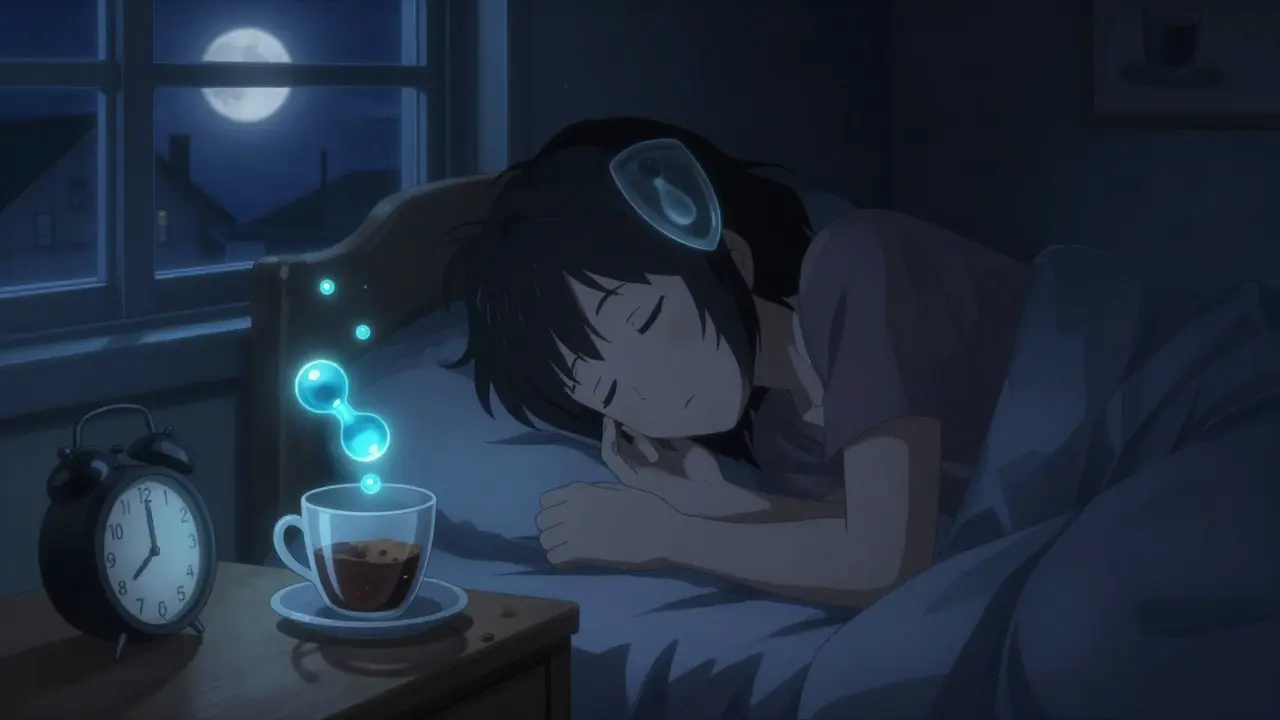
How many times have you laid in bed at night, wide awake, wondering why you can’t fall asleep - even though you didn’t do anything crazy that day? For a lot of people, the answer isn’t stress, screen time, or a racing mind. It’s that afternoon coffee. Or maybe that energy drink you had after lunch. Or even that chocolate bar you told yourself was "just a treat."
The truth is, caffeine doesn’t vanish when you finish your last sip. It lingers. And if you’re drinking it too close to bedtime, it’s quietly stealing your sleep - even if you think you’re fine.
Why Caffeine Keeps You Awake (Even If You Don’t Feel It)
Caffeine doesn’t work by making you hyper. It works by blocking a chemical in your brain called adenosine. Adenosine builds up the longer you’re awake. When it binds to receptors in your brain, it tells you: "It’s time to sleep." Caffeine looks so much like adenosine that it sneaks into those same receptors and blocks the signal. Your brain doesn’t get the message to wind down. So you stay alert.
But here’s the catch: you don’t need to feel jittery for caffeine to mess with your sleep. A 2022 review in the American Journal of Managed Care found that even when people said they fell asleep fine after having coffee at 7 p.m., their sleep efficiency dropped by 7%. That means less deep sleep. Less restorative sleep. And yes - even if you sleep 7 hours, you might only feel like you got 6.
And it’s not just about falling asleep. The real damage happens in the middle of the night. Studies show caffeine reduces total sleep time by 45 minutes on average. That’s not a small loss. That’s one full sleep cycle gone.
The 8-Hour Rule: It’s Not Just a Suggestion
You’ve probably heard "don’t drink caffeine after 2 p.m." But that’s not the full story. The real cutoff depends on how much caffeine you’re consuming - and what form it’s in.
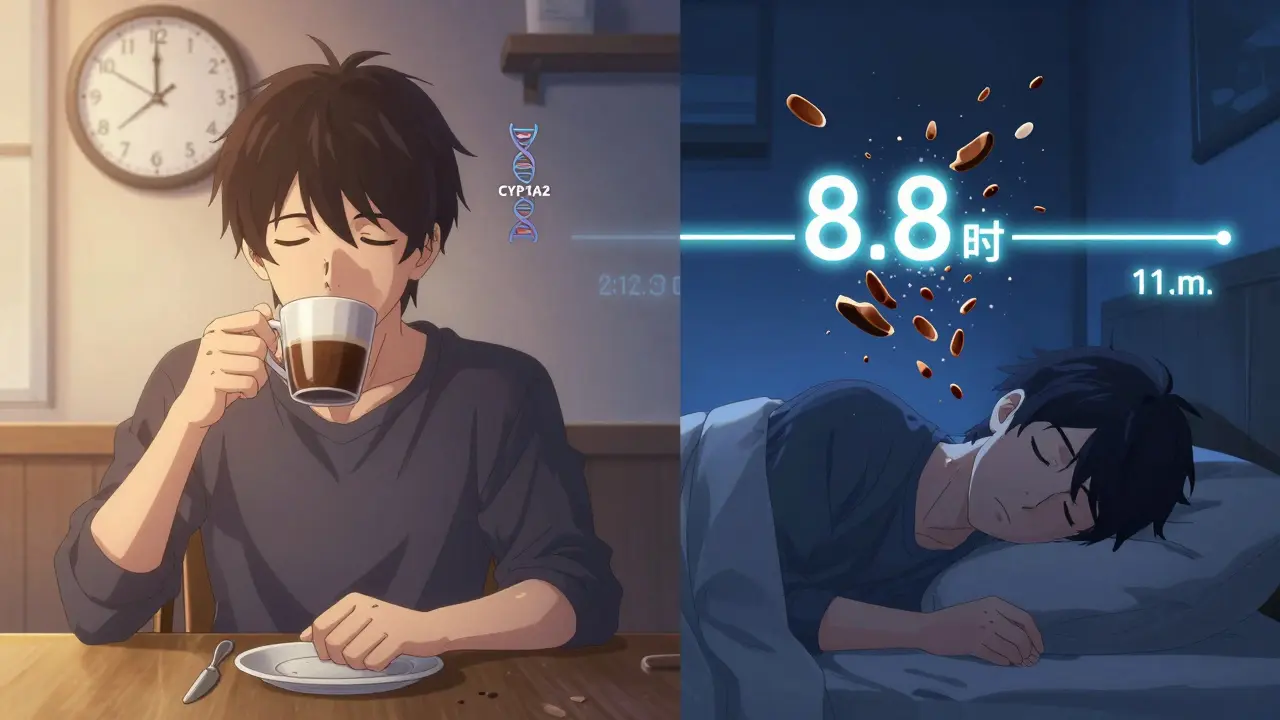
A standard 250 mL cup of coffee contains about 107 mg of caffeine. According to a 2021 analysis of 24 studies published in Sleep Medicine Reviews, you need a minimum 8.8-hour window between your last cup and bedtime to avoid disrupting sleep. That means if you go to bed at 11 p.m., you should stop at 2:12 p.m.
But most people don’t drink exactly 107 mg. So here’s what it looks like in real life:
- Espresso (63 mg per shot): 5.2 hours cutoff
- Black tea (47 mg per cup): No clear cutoff - too low to significantly affect sleep for most people
- Red Bull (80 mg per 250 mL): 6.6 hours cutoff
- Pre-workout supplement (217.5 mg): 13.2 hours cutoff - that’s 7 a.m. if you sleep at 8 p.m.
- Excedrin (65 mg per tablet): 5.8 hours cutoff - yes, painkillers can contain caffeine
And here’s the kicker: if you’re a "slow metabolizer," thanks to your genes (specifically a variation in the CYP1A2 gene), your body might take up to 12 hours to clear half the caffeine. That means even a morning coffee could still be in your system at midnight.
Who’s Most at Risk?
Not everyone reacts the same way. Research from Nature Communications (2025) found that people between 41 and 58 years old are far more sensitive to caffeine’s sleep-disrupting effects than younger adults. Their sleep latency increased more. Their deep sleep dropped more. Their sleep efficiency took a bigger hit.
And it’s not just age. If you’ve been drinking caffeine daily for years, your body might have built up a tolerance - but that doesn’t mean your brain isn’t still being affected. You might fall asleep faster, but your sleep quality is still degraded.
Reddit users in r/sleep reported that 78% of those who drank coffee within 6 hours of bedtime struggled to fall asleep. And 63% of them said their sleep felt "shallow" or "unrefreshing," even when they got enough hours.
Real-Life Experiments: What Actually Works
One user on Sleepopolis tracked their sleep for 30 days. First week: coffee at 4 p.m. Result? Average sleep time: 6 hours 12 minutes. Second week: switched to 2 p.m. Result? 7 hours 3 minutes. That’s 47 extra minutes of sleep - just from moving coffee earlier.
Another person, u/CaffeineStruggles on Reddit, wrote: "I switched from having my last coffee at 4 PM to 2 PM and gained almost an hour of sleep quality - eye-opening how dramatic the difference was."
And it’s not just anecdotal. A 2022 analysis of 15,328 sleep logs from the Sleep Cycle app showed that people who followed an 8-hour cutoff had 82% satisfaction with sleep quality. Those who only waited 4 hours? Only 47%.
One of the most surprising findings? You don’t need to quit caffeine entirely. Switching to half-caf in the afternoon cuts sleep disruption by 32%, according to the same AJMC review. That’s a simple fix with big results.
Hidden Sources of Caffeine (That You’re Probably Ignoring)
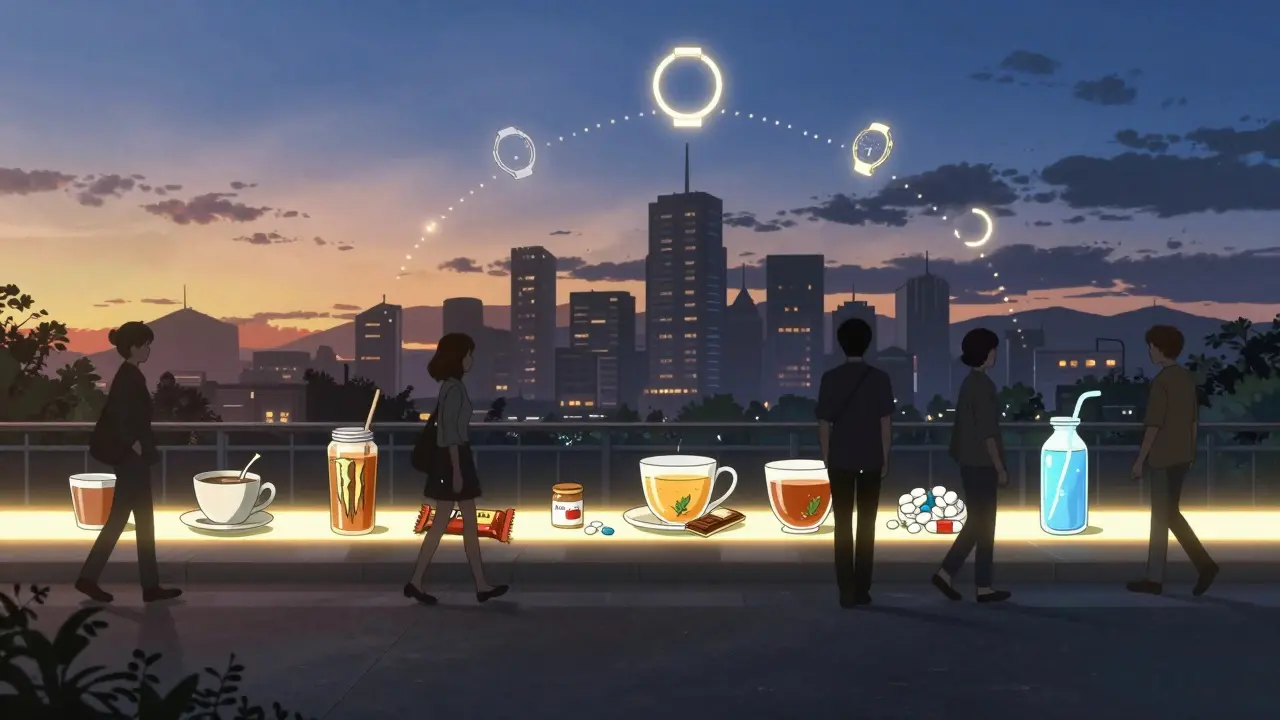
Most people think caffeine = coffee. But it’s everywhere.
- Tea: Green tea has 20-45 mg per cup. Black tea is 47 mg. Herbal teas? Usually safe - but check labels.
- Chocolate: Dark chocolate can have 20-50 mg per bar. Milk chocolate? Less, but still enough to matter if you’re sensitive.
- Medications: Excedrin, Anacin, some cold medicines - all contain caffeine. Check the "active ingredients" list.
- Energy drinks: A single 16 oz Monster has 160 mg. That’s nearly two cups of coffee.
- Decaf coffee: Still has 2-5 mg per cup. Not zero. Not enough to disrupt sleep for most - but if you’re a slow metabolizer, it adds up.
A 2023 Sleep Foundation survey found that 68% of people significantly underestimate how much caffeine is in these products. You think you’re being careful - but you’re not.
How to Actually Stick to a Cutoff Time
Knowing the rule isn’t enough. You need a system.
- Track your intake. Use an app like Caffeine Zone or MyFitnessPal. Log every drink, snack, and pill. You’ll be shocked how fast it adds up.
- Set a hard stop. Pick a time - 2 p.m. is safe for most. Stick to it. No exceptions. Not even on weekends.
- Switch to alternatives. Try herbal tea, sparkling water with lemon, or just plain water in the afternoon. Your body will thank you.
- Try half-caf. If you can’t give up coffee entirely, switch to half-caffeinated after lunch. It’s a game-changer.
- Check your meds. If you take painkillers or cold pills, read the label. If caffeine is listed, avoid them after 2 p.m.
And if you’re serious about sleep, consider a genetic test. Companies like 23andMe now offer caffeine metabolism reports as part of their $199 health package. If you’re a slow metabolizer, you might need to cut off caffeine by noon - or even earlier.
What’s Next? Personalized Sleep Advice
Wearable sleep trackers like Oura Ring and Fitbit now include personalized caffeine cutoff recommendations. Oura reported a 41% increase in user engagement after adding this feature in 2021. Why? Because people finally saw the direct link between their coffee habit and their sleep score.
Even Starbucks noticed. In 2022, they launched "Evening Brew," a decaf blend marketed specifically for after-4 p.m. consumption. It captured 15% of the after-4 p.m. coffee market within six months.
By January 2025, the American Academy of Sleep Medicine announced it would update its guidelines to include beverage-specific cutoffs - moving beyond vague advice like "avoid caffeine late in the day." This isn’t just a trend. It’s becoming standard medical advice.
Final Thought: It’s Not About Willpower - It’s About Chemistry
You’re not lazy. You’re not weak. You’re just working against biology. Caffeine doesn’t care how disciplined you are. It blocks your brain’s natural sleep signal. And if you’re drinking it too late, your sleep is paying the price - even if you don’t notice it.
The fix isn’t complicated. Stop drinking caffeine at least 8.8 hours before bed. Track what you’re consuming. Switch to decaf or half-caf in the afternoon. Check your meds. And if you still can’t sleep? Consider whether you’re a slow metabolizer.
Good sleep isn’t about sleeping more. It’s about sleeping better. And sometimes, all it takes is moving your coffee from 4 p.m. to 2 p.m.


