
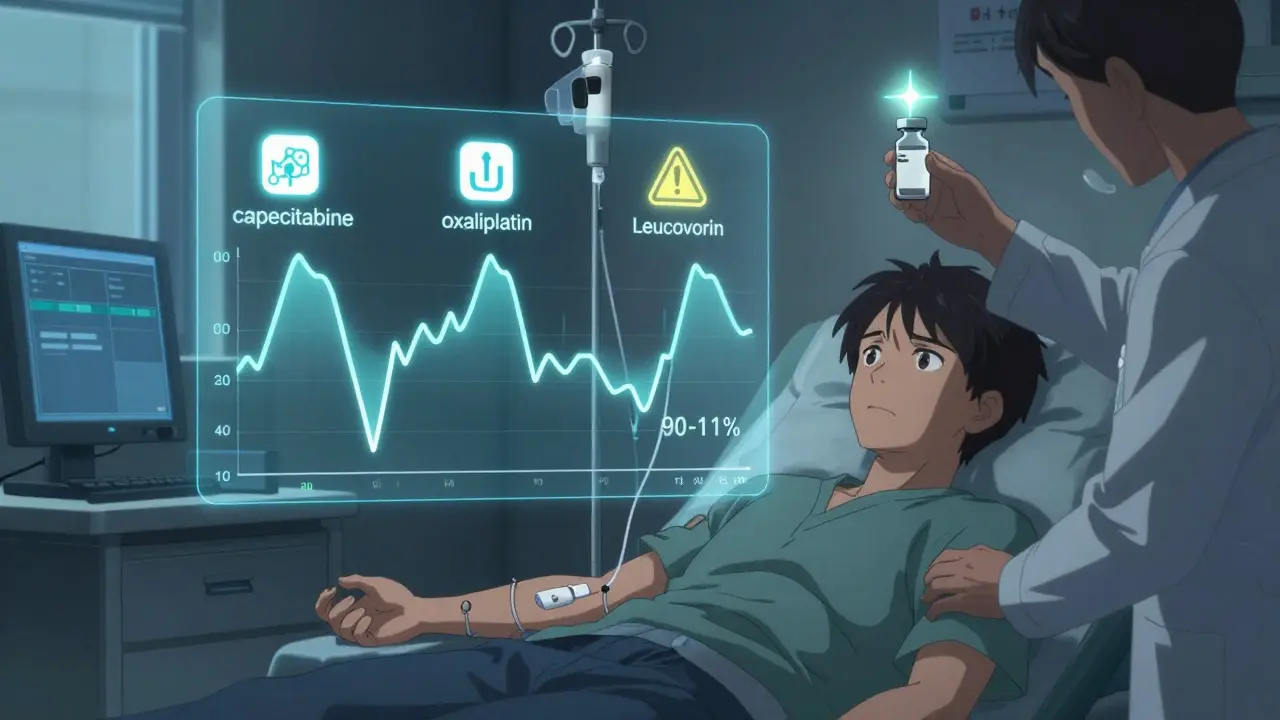
When cancer patients take more than one drug at a time - which is the case for 70% of all treatment regimens - the math gets complicated. Not just in terms of dosing schedules or side effects, but in whether a generic version of one drug in that mix actually behaves the same way as the brand-name version. This is the hidden challenge behind generic cancer drugs: bioequivalence in combinations.
What Bioequivalence Really Means in Cancer Treatment
Bioequivalence isn’t just about two pills looking the same or costing less. It means the body absorbs and uses the active ingredient in exactly the same way. For single drugs like paclitaxel or docetaxel, regulators use a simple rule: if the generic delivers between 80% and 125% of the brand’s concentration in the bloodstream (measured by AUC and Cmax), it’s considered equivalent. That’s the standard set by the FDA and ICH. But cancer isn’t treated with one drug. It’s treated with combinations. A patient might take oral capecitabine, IV oxaliplatin, and leucovorin all in the same cycle. Each one has to be bioequivalent. And here’s the problem: when you swap out just one component for a generic, you don’t know how it will interact with the others.The Hidden Risk in Mixing Generics
Think of it like a recipe. You can substitute sugar for honey in a cake and still get a sweet result. But if you’re baking a soufflé - where timing, temperature, and ingredient ratios are precise - even a small change can make it collapse. Cancer drugs are like soufflés. Some drugs have a narrow therapeutic index. That means the difference between a dose that works and one that’s toxic is tiny. Methotrexate, for example, is used in many combination regimens. Studies show that for these drugs, the standard 80-125% bioequivalence window is too wide. Experts at Johns Hopkins recommend tightening it to 90-111% to avoid under- or over-dosing. A 2023 survey of 250 U.S. oncology pharmacists found that 57% had seen cases where switching just one generic component in a combination led to unexpected side effects or reduced effectiveness. One documented case involved generic vincristine being substituted in the R-CHOP regimen for lymphoma. The new formulation changed how quickly the drug peaked in the blood, leading to higher neurotoxicity - numbness, tingling, even loss of coordination - in several patients.Why Biologics Make It Worse
Not all cancer drugs are the same. Some are small molecules - chemically synthesized pills or injections. Others are biologics: complex proteins made from living cells, like trastuzumab (Herceptin) or rituximab (Rituxan). These don’t have generics. They have biosimilars. Biosimilars aren’t held to the same 80-125% bioequivalence standard. They need full clinical trials to prove they’re as safe and effective as the original. That’s expensive. So when a combination includes both a small-molecule chemo and a biologic - like R-CHOP (which has cyclophosphamide, doxorubicin, and rituximab) - you’re dealing with two different regulatory worlds. One drug can be swapped out based on a blood test. The other needs a whole new trial. The result? Hospitals and pharmacies often avoid substituting any component in mixed regimens. A 2024 study from the Gulf Cancer Consortium found that 42% of oncologists were hesitant to allow generic substitution in combination therapies - compared to only 15% for single-agent treatments.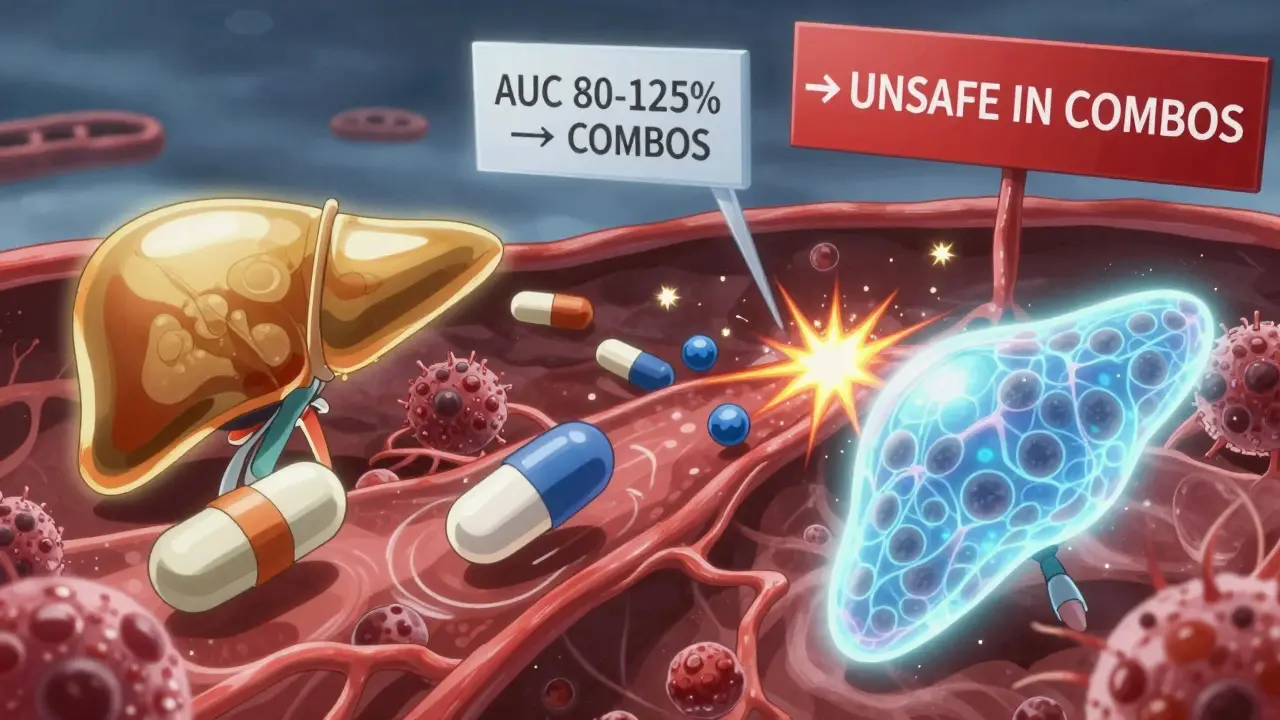
Cost vs. Safety: The Real Trade-Off
The financial pressure to use generics is real. Branded cancer drugs can cost over $150,000 per year per patient. Generic versions can drop that to $45,000 - a 70% savings. In the U.S., switching to generics in appropriate regimens could save the healthcare system $14.3 billion a year, according to the American Cancer Society. But savings shouldn’t come at the cost of safety. Generic trastuzumab biosimilars have proven to be just as effective, with no drop in survival rates. But for other drugs? The data is mixed. Cetuximab, for example, requires price cuts of more than 80% to be considered cost-effective in public health systems - because even small drops in efficacy can lead to more hospitalizations and failed treatments. Patients notice this too. A 2024 survey by Fight Cancer found that 63% of patients worried about generic substitution in combination therapy. Over 40% said they’d ask for the brand-name version if they could afford it - even though they knew generics saved money.How the System Is Trying to Fix This
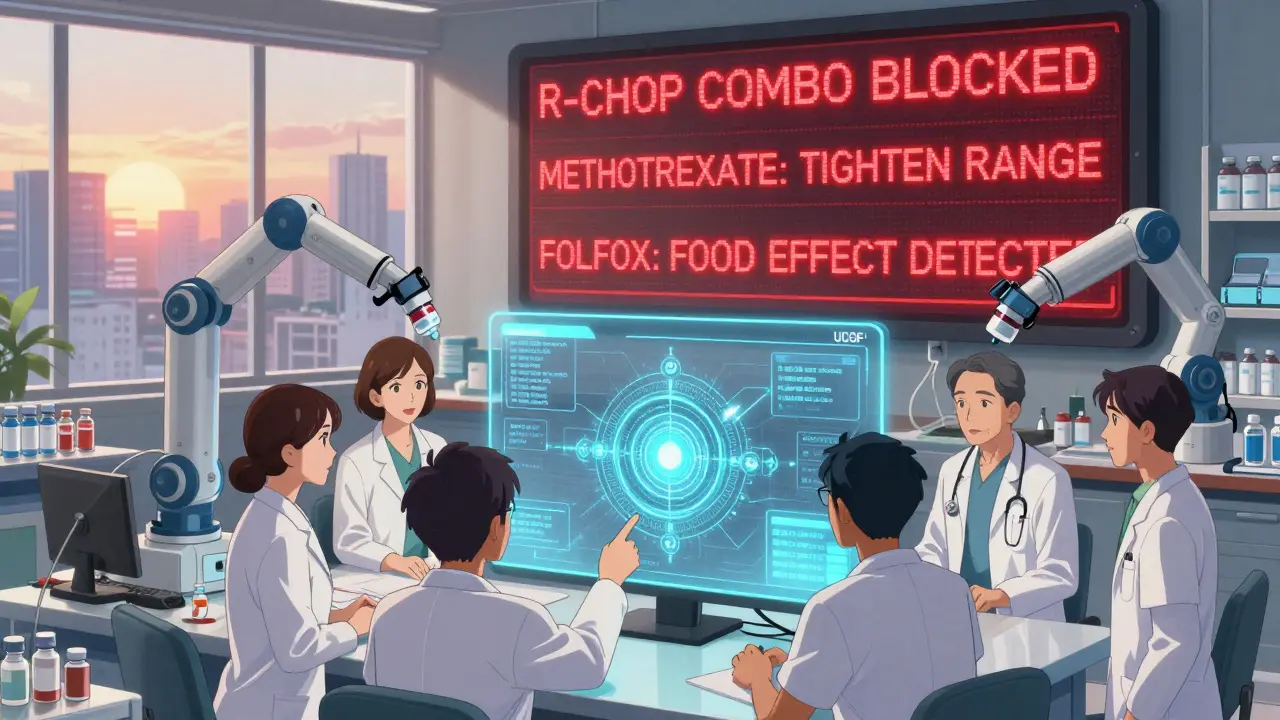
Regulators are waking up. In 2024, the FDA launched the Oncology Bioequivalence Center of Excellence. Its job? To develop new testing methods for combination drugs. The European Medicines Agency is already requiring clinical endpoint studies for high-risk combinations - not just blood levels. New guidelines from the International Consortium for Harmonisation of Bioequivalence Standards in Oncology (March 2024) now recommend:- Tighter bioequivalence ranges (90-111%) for narrow therapeutic index drugs in combinations
- Food-effect studies for all oral components - because eating or not eating can change how a drug is absorbed
- Testing the entire combination as a unit, not just each drug separately
What Patients and Providers Need to Know
If you’re on a combination regimen:- Ask your oncologist or pharmacist: Is this drug part of a fixed-dose combination? If yes, don’t substitute any component.
- Check the FDA’s Orange Book. Drugs with an “A” rating are approved as equivalent. But that doesn’t mean they’re safe to swap in combinations.
- Don’t assume all generics are the same. Different manufacturers use different fillers, coatings, or release mechanisms - even if the active ingredient is identical.
- Report any new side effects after a switch. It could be the generic.
- Use a decision tool like the Gulf Cooperation Council’s MCDA model - it scores generics on quality, cost, supply, and patient trust.
- Only substitute whole combination products when available - not individual components.
- Train your team. 78% of oncology pharmacy residencies now require 40+ hours of training on this exact issue.
The Future: Modeling, Simulation, and Smarter Rules
The next big shift won’t be more trials. It’ll be modeling. The FDA now accepts physiologically based pharmacokinetic (PBPK) models to predict how a generic will behave in combination with other drugs. These computer simulations can test hundreds of scenarios - different doses, food intake, liver function - without needing a single human subject. By 2030, the National Cancer Institute predicts that 35-40% of current combination therapies will need specialized bioequivalence protocols. That’s not because generics are bad. It’s because cancer treatment is getting more complex. The goal isn’t to stop generics. It’s to make sure they’re safe when used together. Because in cancer care, there’s no room for guesswork.Can generic cancer drugs be safely substituted in combination regimens?
Substituting generic drugs in combination regimens carries significant risks. While single-agent generics have been proven safe and effective, combining multiple generics - each with slight variations in absorption or metabolism - can alter drug interactions. For example, swapping out one generic component in a regimen like R-CHOP or FOLFOX may lead to unexpected toxicity or reduced efficacy, especially with narrow therapeutic index drugs like vincristine or methotrexate. Regulatory agencies now recommend avoiding component substitution and using only approved fixed-dose combinations whenever possible.
Why is bioequivalence harder to prove for combination drugs than single drugs?
For single drugs, regulators measure blood concentration of one active ingredient. For combinations, each component must meet bioequivalence standards individually - and their interactions must remain unchanged. If Drug A in a combo is replaced with a generic that absorbs faster, it could increase the toxicity of Drug B, even if Drug B is unchanged. These drug-drug interactions are complex and rarely tested in standard bioequivalence studies, which are designed for single-agent use. As a result, proving true equivalence in combinations requires far more data than current methods allow.
Are biosimilars the same as generics for cancer drugs?
No. Generics are chemically identical copies of small-molecule drugs, approved using bioequivalence studies. Biosimilars are copies of complex biologic drugs (like trastuzumab or rituximab), made from living cells. Because biologics are structurally intricate, biosimilars must undergo full clinical trials to prove safety and effectiveness - not just blood-level comparisons. They are not interchangeable in the same way generics are, and substitution requires specific physician approval.
What should patients do if they’re switched to a generic cancer drug in a combination?
Patients should immediately inform their oncology team about the switch and monitor for new or worsening side effects - especially numbness, fatigue, nausea, or unusual bleeding. Keep a symptom diary and report any changes. Ask whether the drug is part of a fixed-dose combination and whether substitution was approved by a pharmacist or oncologist. If the change was made without consultation, request clarification. Many patients express concern about substitution; you have the right to ask for the original brand if safety is uncertain.
Do all countries regulate cancer drug combinations the same way?
No. The U.S. and EU have stricter rules. The FDA allows generic substitution based on bioequivalence studies but is now pushing for combination-specific testing. The EMA requires clinical endpoint studies for many oncology combinations. India accepts standard bioequivalence studies for 92% of oncology generics, while the EU mandates additional studies for 83%. This creates confusion for patients and providers, especially when traveling or accessing drugs from international sources. Always check local guidelines and consult your oncologist before accepting a switch.


