
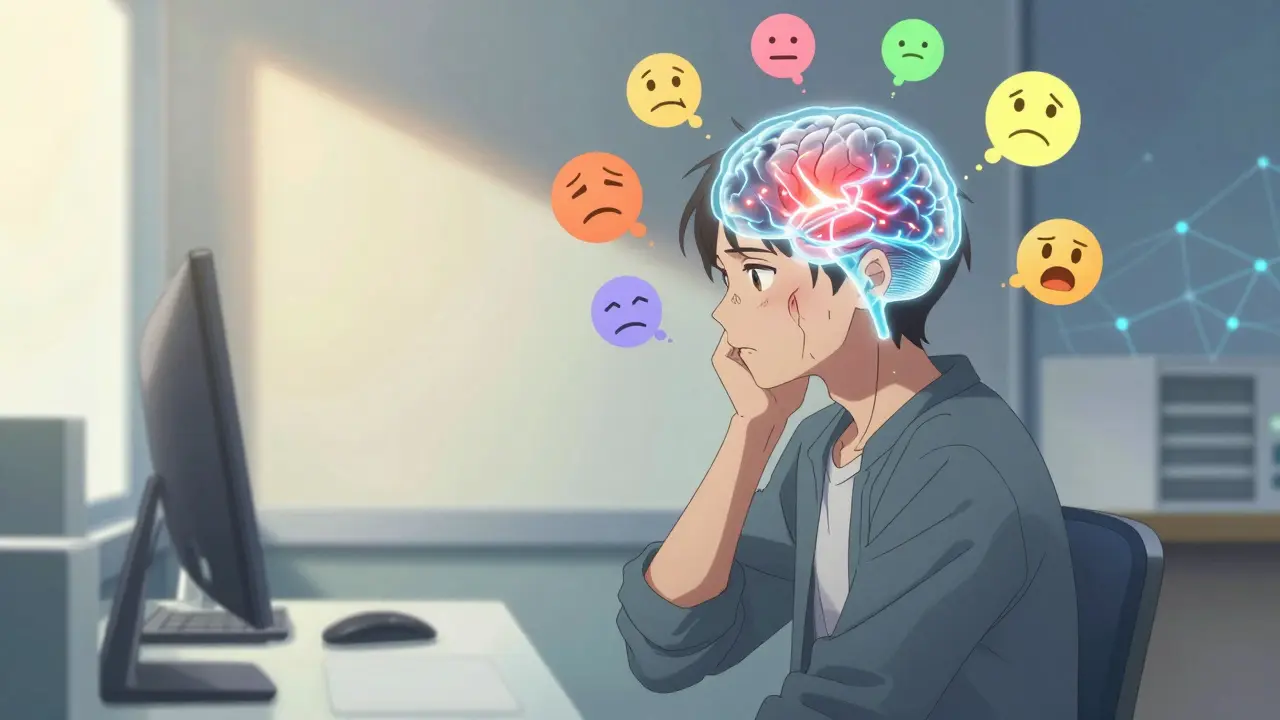
If you have lived with persistent pain for months or years, you probably know one frustrating truth: the pain doesn't always match the visible damage in your body. You might feel exhausted after minimal effort, or panic when a flare-up starts, convinced it means something terrible is happening physically. This disconnect happens because pain is not just a signal sent by nerves; it is a complex experience constructed by your thoughts, emotions, and behaviors. That is where Cognitive Behavioral Therapy for Chronic Pain (CBT-CP) comes in. Unlike standard counseling which focuses on venting feelings, this approach offers a concrete manual for rewiring those patterns.
The reality is stark. According to recent data from Penn State College of Medicine published in 2024, nearly 80% of patients with chronic low back pain report dissatisfaction with current treatments. Many rely solely on medication, yet studies show only modest improvements in quality of life. The U.S. Department of Veterans Affairs, for instance, implemented a standardized CBT-CP protocol nationwide starting in 2010 because they recognized that pills alone were failing people.
Understanding the Brain-Pain Connection
To understand why CBT works, you have to accept a biological fact: your brain amplifies pain signals based on what you think and feel. When you are stressed or fearing movement, your nervous system stays in "high alert," essentially turning up the volume on pain receptors. This concept was formalized decades ago by pioneers like Aaron T. Beck and later adapted for pain specifically by researchers such as Dennis Turk and Robert Kerns.
The core mechanism targets three main drivers of pain disability:
- Catastrophizing: The mental habit of imagining the worst-case scenario ("This pain means my spine is crumbling").
- Fear-Avoidance: Stopping activities because you fear they will hurt, which leads to muscle deconditioning and makes pain worse when you do move.
- Dysfunctional Beliefs: Ideas like "Rest is always healing" or "I must push through all pain to be productive."
Research indicates that pain catastrophizing is often a stronger predictor of disability than the actual severity of tissue injury. By addressing these thought loops, you aren't denying the pain exists; you are reducing the noise interference that makes the pain unbearable. A systematic review by Williams et al. in March 2023 analyzed over 1,600 participants across 13 studies. They confirmed that while CBT-CP has modest effects on pain intensity scores (reducing the number rating on a scale of 1-10), its impact on mood, anxiety, and daily function is significantly larger. In short, it helps you live despite the pain, rather than waiting for the pain to vanish completely.
Core Components of a CBT Protocol
You won't spend six months just discussing your childhood. A standard protocol, such as the version used by the VA, typically runs for 10 to 12 weekly sessions of 60 to 90 minutes each. Here is exactly what happens during that time:
- Pain Neuroscience Education: Your therapist explains the difference between nociception (tissue sensing) and pain perception. Understanding that pain is a safety alarm rather than a damage meter reduces threat levels.
- Cognitive Restructuring: You identify automatic negative thoughts when pain spikes. Instead of thinking, "I can't do anything today," you practice reframing to, "I can modify this task to stay active."
- Activity Pacing: This is arguably the most critical tool. It involves breaking tasks into manageable chunks and setting timers to stop before exhaustion hits, preventing the "boom-bust" cycle common in chronic pain.
- Relaxation Training: Techniques like diaphragmatic breathing reduce the sympathetic nervous system arousal (fight-or-flight response) that tightens muscles and increases sensitivity.
These tools are practical. Imagine you are gardening, a task you loved before pain started. With pacing, you don't try to weed the whole yard in one afternoon until you are bedridden for two days. Instead, you work for 15 minutes, rest for 5, and walk away feeling satisfied rather than destroyed. This builds confidence and maintains physical conditioning, which is vital for long-term recovery.
What the Research Says About Results
We need to be honest about expectations. CBT-CP is not a magic wand that erases sensory input. If your goal is purely to lower your pain score from 8/10 to 2/10 forever, the data suggests this is unlikely to happen consistently with CBT alone. A 2023 review noted that only 25% of studies showed significant improvement in pain intensity compared to usual care.
| Metric | Effect Size (Post-Treatment) | Significance |
|---|---|---|
| Pain Intensity | d=0.32 | Modest / Variable |
| Depression Symptoms | d=1.31 | Large |
| Anxiety Levels | d=0.75 | Large |
| Functional Ability | d=0.58 | Moderate to Large |
While the numbers above show smaller gains on direct pain ratings, the functional outcomes tell a different story. Patients who complete at least 80% of their sessions see a 2.3x higher success rate in regaining control over daily life. In the STAMP study published in 2024, researchers compared CBT against Mindfulness-Based Therapy. Both beat usual care, but neither was superior to the other regarding pain intensity at 26 weeks.
However, CBT shines brightest when you look at secondary benefits. It is particularly effective at lowering dependency on opioids. The same trial found that 36% of CBT participants reduced their daily opioid use, compared to just 17% in the usual care group. For many, this reduction is a more tangible victory than chasing a specific pain score.

Comparison with Other Pain Treatments
Navigating the medical landscape involves weighing options. CBT-CP is rarely meant to replace physical rehabilitation or medication entirely; it is best used alongside them. Here is how it stacks up against common alternatives.
- Pharmacology: Medications manage symptoms but carry risks of tolerance, side effects, and dependency. CBT teaches self-management skills that last a lifetime, without chemical side effects. However, pills provide immediate relief that CBT takes weeks to build.
- Physical Therapy (PT): PT focuses on movement mechanics and strength. While excellent for restoring biomechanics, it sometimes ignores the emotional driver of avoidance. Studies suggest CBT combined with PT produces 40% greater functional improvement than either modality alone.
- Mindfulness-Based Stress Reduction (MBSR): MBSR focuses on acceptance and present-moment awareness without necessarily changing the thought process. CBT actively challenges and changes negative cognitions. They are complementary strategies; some patients find the 'change' focus of CBT too stressful and prefer the 'accept' focus of mindfulness.
If you are considering treatment, ask yourself what is holding you back. If you avoid walking because you fear re-injury, CBT's cognitive restructuring addresses that fear directly. If your struggle is primarily fatigue and lack of motivation, behavioral activation techniques within CBT help reignite action.
Access, Cost, and Delivery Formats
Getting access to specialized pain psychologists can be surprisingly difficult. As of early 2024, insurance coverage is inconsistent. Medicare, for example, covers only 10 sessions annually, whereas the full therapeutic protocol requires closer to 20 for optimal fidelity. Commercial plans vary wildly; UnitedHealthcare might cover 12 sessions, while others offer none.
This barrier has shifted dramatically toward digital solutions. Since 2020, videoconference-based CBT (vCBT) has proven non-inferior to in-person sessions. A 2021 study in JMIR demonstrated that virtual delivery achieved comparable improvements in pain severity. This is a massive win for rural patients who previously had zero access to pain specialists.
When seeking a therapist, look for credentials like the Psychological Clinical Specialists in Pain certification. Verify that they use evidence-based manuals (like the VA's manual scoring 4.7/5 on fidelity checks) rather than unstructured advice. Common red flags include providers who promise "cures" for chronic conditions or rely heavily on spiritual explanations without grounding in behavioral science.

Success Factors and Patient Experiences
Data from patient satisfaction surveys at the Veterans Health Administration in 2023 showed 73% reported meaningful improvement in function. But qualitative stories reveal the nuance. One participant in the STAMP trial shared, "Learning to pace activities prevented my boom-bust cycles." Others noted that the biggest hurdle was initial skepticism-32% of patients initially doubt CBT's relevance to physical pain because it feels too "mental." Overcoming that mindset shift is often the breakthrough point.
Success relies heavily on engagement. Completion rates average 76%, but those who stick with it get results. It requires doing homework between sessions, monitoring your activity diary, and practicing relaxation exercises when you aren't desperate. It is work, but it is work that pays dividends in autonomy.
Frequently Asked Questions
Does CBT actually reduce pain intensity?
Research shows mixed results on pure pain intensity ratings. While 25% of studies show significant reduction, the primary benefit lies in improving quality of life, reducing depression, and increasing functional capacity rather than eliminating the sensation of pain entirely.
Is CBT covered by insurance?
Coverage varies significantly. Medicare allows 10 sessions per year. Private insurers differ widely; some cover up to 12-20 sessions, while others deny it as experimental. Always check your policy codes for "Behavioral Health for Pain Management" before starting.
Can CBT help me reduce opioid use?
Yes. A major 2024 study (STAMP) found that 36% of patients using CBT reduced daily opioid use compared to 17% in usual care. It provides coping skills that decrease reliance on medication for comfort.
How long does a course of therapy take?
Standard protocols typically run 8 to 16 weeks of weekly 60-minute sessions. Virtual options may allow for slightly faster progression, but consistency is key for neuroplasticity changes.
Who developed CBT for pain?
Aaron T. Beck developed the foundational Cognitive Therapy in the 1960s. Specific adaptations for pain were pioneered in the 1970s and 80s by researchers including Dennis Turk and Robert Kerns, making it a distinct clinical specialty.


