
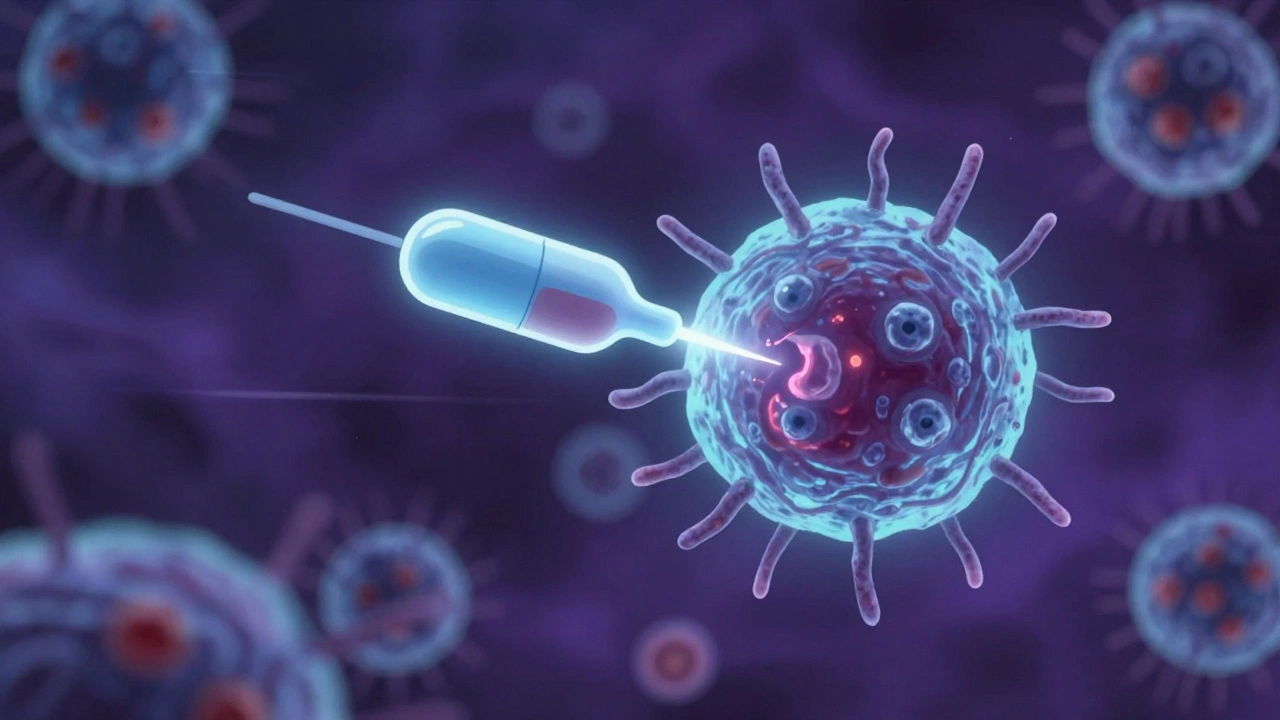
Chemotherapy isn’t just one drug. It’s a whole family of powerful medicines designed to kill cancer cells by attacking anything that divides quickly. That’s the core idea: cancer cells multiply like crazy, and chemo drugs exploit that weakness. But here’s the catch - so do your hair follicles, your gut lining, and your bone marrow. That’s why chemotherapy brings both hope and hardship.
How Chemotherapy Actually Kills Cancer Cells
Modern chemotherapy uses more than 100 different drugs, grouped into six main classes. Each one hits cancer at a different point in its life cycle. Alkylating agents like cyclophosphamide stick chemical groups onto DNA, making it impossible for the cell to copy itself. Antimetabolites like 5-fluorouracil sneak in as fake building blocks, tricking the cell into building broken DNA or RNA. Anthracyclines such as doxorubicin physically wedge themselves into DNA and block enzymes that untangle it during division. Plant alkaloids like vincristine freeze the cell’s internal scaffolding - the microtubules - so it can’t split in two. Topoisomerase inhibitors like etoposide break DNA strands while the cell is trying to unwind them. And miscellaneous agents do their own thing, like platinum drugs that cross-link DNA strands together.
These drugs don’t care if the fast-dividing cell is cancerous or not. That’s why chemotherapy is systemic - it travels through your bloodstream to reach cancer cells anywhere in the body. This makes it uniquely useful for cancers that have spread, like metastatic breast or lung cancer. It’s also used before surgery to shrink tumors (neoadjuvant therapy), or after surgery to kill any leftover cells (adjuvant therapy). In some cases, like acute myeloid leukemia, chemotherapy is the main cure.
Most chemo is given through an IV - about 65% of treatments. Some, like capecitabine, come as pills you take at home. Others go directly into the spinal fluid, abdomen, or even arteries feeding the tumor. Treatment happens in cycles: a few days of drugs, then weeks off. That break lets your healthy cells recover. A typical cycle runs 2 to 6 weeks. For example, paclitaxel (Taxol) for breast cancer is usually given as a 3-hour infusion every 3 weeks at 175 mg per square meter of body surface.
Why Chemotherapy Still Matters Today
Even with all the new targeted therapies and immunotherapies, chemotherapy hasn’t been replaced - it’s been refined. In 2023, the American Society of Clinical Oncology reported that chemotherapy remains the first-line treatment for 78% of blood cancers like lymphoma and leukemia. It’s still used in 95% of ovarian cancer cases and 85% of colorectal cancers. Why? Because it works fast, works everywhere, and works on tumors with mixed cell types. Targeted drugs only help if the cancer has a specific mutation. Immunotherapies need the immune system to be active. Chemotherapy doesn’t care - it just kills dividing cells.
It’s also the only option for many cancers without known targets. For example, triple-negative breast cancer has no hormone receptors or HER2 protein, so chemo is the main tool. And unlike newer drugs, some chemo agents like methotrexate can cross the blood-brain barrier, making them vital for cancers that spread to the brain.
Even in cancers where targeted drugs are now first-line - like HER2-positive breast cancer - chemo is still added. Combination therapy often gives better results. The 2021 SWOG S1418 trial showed that patients with early-stage breast cancer who got chemo before surgery had a 40-60% chance of having no cancer left at surgery - and those patients lived longer.
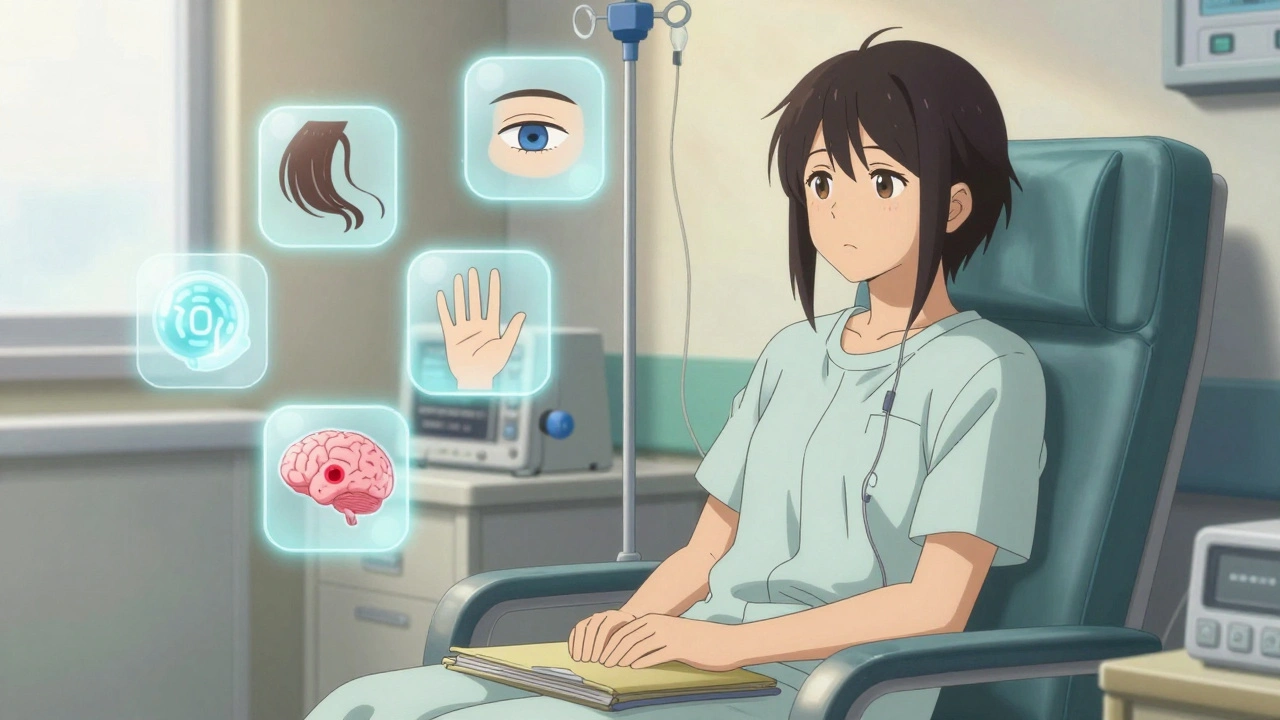
The Real Side Effects: More Than Just Hair Loss
People think chemo means losing your hair. That’s true for many - but it’s just the tip of the iceberg. The real toll comes from collateral damage to fast-growing healthy tissues.
Fatigue hits 82% of patients, according to patient forums. It’s not just being tired. It’s bone-deep exhaustion that sleep doesn’t fix. Studies show 30 minutes of moderate exercise daily - like walking - can reduce fatigue by 25-30% across 17 clinical trials.
Nausea and vomiting used to be brutal. In the 1980s, 70-80% of patients on strong chemo got severe nausea. Now, thanks to drugs like ondansetron, that’s down to 10-20%. But delayed nausea - happening 24+ hours after treatment - still affects nearly two-thirds of patients. Anti-nausea pills help with the first day, but not always the next.
Neuropathy - tingling, burning, or numbness in hands and feet - affects 30-40% of people on taxanes (like paclitaxel) or platinum drugs (like cisplatin). For 5-10%, it’s permanent. Avoiding cold objects, wearing gloves, and reporting symptoms early can prevent worsening. Some patients find relief with medical cannabis; a 2022 study showed CBD:THC reduced neuropathic pain by 55%.
Chemo brain is real. About 75% of patients report trouble focusing, remembering names, or multitasking during treatment. One in three still feel it six months later. Meditation apps like Calm or Headspace, used 20 minutes a day, improved cognitive symptoms by 30-40% in a 2021 JAMA Oncology study.
Blood cell drops are dangerous. Low white blood cells (neutropenia) mean you can’t fight infections. A fever of 100.4°F (38°C) or higher during chemo is an emergency - you need antibiotics immediately. Low red blood cells cause anemia and more fatigue. Low platelets mean you bruise easily or bleed longer. Blood counts are checked before every cycle.
Other issues include mouth sores, diarrhea, constipation, metallic taste in the mouth, and skin changes. Some drugs turn urine red - that’s normal with doxorubicin. Black stools? That’s not. Call your team right away.
Managing Side Effects Like a Pro
Today’s chemo care isn’t just about the drug - it’s about managing the fallout. Here’s what actually works, based on real clinical guidelines.
- Stay hydrated. Drink 1-2 liters of water daily. Dehydration makes nausea, fatigue, and kidney stress worse.
- Eat small, bland meals. Toast, bananas, rice, and applesauce are easier on the stomach than greasy or spicy foods.
- Use scalp cooling. If you’re getting taxane-based chemo for breast cancer, a cold cap can reduce hair loss from 65% to 25%. It’s now recommended in the 2024 NCCN guidelines.
- Move your body. Even light walking helps fatigue, mood, and sleep. Don’t wait until you feel strong - start slow.
- Check vitamin D. Some studies link low vitamin D to worse neuropathy from Taxol. Ask your doctor for a blood test.
- Track your symptoms. Keep a simple journal: fatigue level (1-10), nausea, numbness, sleep quality. Bring it to appointments.
Most patients get the hang of managing side effects by their third cycle. By then, they know what foods trigger nausea, what time of day they feel worst, and which meds help best.
What’s New in Chemotherapy?
Chemotherapy isn’t standing still. In June 2023, the FDA approved trilaciclib (Cosela), the first drug designed to protect bone marrow during chemo. It’s used in small cell lung cancer to reduce the need for blood transfusions and antibiotics.
Scientists are also testing smarter dosing. Instead of the same dose every cycle, some trials now adjust based on how your body metabolizes the drug - a step toward true personalization. Combination therapies are growing too. Chemo + immunotherapy is now standard for some lung and kidney cancers, improving survival where chemo alone failed.
Still, experts agree: chemotherapy isn’t going away. Dr. George Sledge wrote in Nature Reviews Clinical Oncology in 2023 that while it’s not the future of cancer care, it’s still an indispensable part of the present. For many patients, it’s the difference between life and death - even with its side effects.
When Chemotherapy Isn’t the Best Choice
Not all cancers respond to chemo. Prostate cancer, for example, grows slowly. Hormone therapy works better and causes fewer side effects. Some slow-growing lymphomas are monitored without treatment for years. Chemo doesn’t help every tumor - and using it when it won’t work just adds risk.
Doctors now use genetic tests to decide. If your tumor has a targetable mutation - like EGFR in lung cancer or BRCA in breast cancer - a targeted pill might be better than chemo. But if there’s no known target, chemo remains the most reliable tool.
It’s not about choosing chemo over everything else. It’s about choosing the right tool for the job - and sometimes, that tool is still chemotherapy.
Does chemotherapy always cause hair loss?
No. Hair loss depends on the drug. Some chemo agents like taxanes and anthracyclines cause it in most people, but others like capecitabine or vinorelbine rarely do. Scalp cooling caps can reduce hair loss by up to 60% in patients receiving taxane-based treatments. Not everyone loses all their hair - some experience thinning, others none at all.
Can you work while on chemotherapy?
Many people do, but it depends on the treatment, job demands, and side effects. Fatigue and chemo brain are the biggest barriers. Some work part-time, from home, or adjust hours. Others take medical leave. Employers are legally required to make reasonable accommodations in most countries. Talking to your oncology team about your schedule helps them tailor your treatment to fit your life.
Is chemotherapy painful?
The infusion itself usually isn’t painful - it’s like getting an IV for fluids. But some drugs can cause burning or tingling if they leak outside the vein, which is rare with trained staff. The real discomfort comes from side effects: mouth sores, nerve pain, cramps, or headaches. These are managed with medications, not ignored. If you feel pain during or after treatment, tell your nurse or doctor right away.
How long do chemotherapy side effects last?
Most side effects like nausea, fatigue, and low blood counts improve within days or weeks after a cycle ends. But some linger. Neuropathy, chemo brain, and early menopause can last months or years. A small number of patients have permanent nerve damage or heart issues from certain drugs. Regular follow-ups are key. Recovery isn’t just about the cancer being gone - it’s about rebuilding your body.
Can you drink alcohol while on chemotherapy?
It’s usually not recommended. Alcohol can worsen dehydration, irritate the mouth and gut, and interfere with how your liver processes chemo drugs. It may also increase the risk of liver damage from certain medications. Some patients have a small glass of wine for comfort - but always check with your oncologist first. Your treatment plan might include drugs that react badly with alcohol.
Are there foods to avoid during chemotherapy?
Yes. Avoid raw or undercooked meat, eggs, and seafood - your immune system is weaker. Skip unpasteurized cheese, juice, or honey. Wash fruits and vegetables well. Stay away from very spicy, greasy, or overly sweet foods if you have nausea. Some chemo drugs interact with grapefruit or pomegranate juice - ask your pharmacist if your meds are affected. Focus on clean, simple, nutrient-dense foods that you can tolerate.
Chemotherapy is harsh, but it’s also one of the most effective weapons we have against cancer. The side effects are real - but so are the advances in managing them. Today’s patients have more tools than ever to fight not just the cancer, but the cost of fighting it.


