

Drug Combination Safety Checker
Understanding Sedative Risks
Combining multiple sedatives—like opioids, benzodiazepines, sleep aids, or alcohol—can cause dangerous respiratory depression. Even when taken as prescribed, these combinations increase overdose risk significantly.
Your Risk Level
What to do next
When you take one sedative, your body slows down a little. Take two, and it slows more. But take three or more - especially if they’re from different classes - and your body doesn’t just slow down. It can stop. Combining multiple sedatives isn’t just risky. It’s life-threatening in ways many people don’t realize.
What Happens When Sedatives Mix?
Sedatives like benzodiazepines (Xanax, Valium), opioids (oxycodone, hydrocodone), sleep pills (zolpidem), and even alcohol all work the same way: they boost GABA, a chemical in your brain that tells your nervous system to chill out. When one drug does this, it’s manageable. When two or more do it at once, the effect isn’t just added - it’s multiplied. This is called synergistic CNS depression.Imagine your breathing as a car engine. One sedative might make it idle slower. Two might make it sputter. Three? It shuts off. That’s not a metaphor. In emergency rooms, people who mix these drugs often show respiratory rates dropping to 8-10 breaths per minute - well below the normal 12-20. In severe cases, it falls to 4-6. Oxygen levels plunge below 90%, then 85%. Brain damage can start within minutes. Death isn’t rare - it’s predictable.
The FDA issued a warning in 2016 after reviewing hundreds of overdose deaths. They found that combining opioids with benzodiazepines increases the risk of fatal overdose by 2.5 to 4.5 times. That’s not a small increase. That’s a red flag you can’t ignore.
The Most Dangerous Combinations
Not all drug mixes are equal. Some are far worse than others. Here are the top three most lethal combinations based on real-world data:- Opioid + Benzodiazepine: This is the deadliest combo. It’s why the FDA required boxed warnings on both types of drugs. Emergency room visits for this mix tripled between 2004 and 2014.
- Opioid + Alcohol: Alcohol is a sedative too. People don’t think of it that way, but it depresses the same brain pathways. Mixing it with opioids or sleep aids is like pouring gasoline on a fire. A 2012 study found 12-13% of chronic opioid users drank alcohol within two hours of taking their pain meds.
- Benzodiazepine + Sleep Medication: Taking Valium at night and then Ambien later? That’s a recipe for unconsciousness. One study showed 68% of patients in the ER for drug interactions had taken at least two CNS depressants - often these two.
Even SSRIs - commonly prescribed for depression - can make things worse. They slow how your liver clears other drugs. So if you’re on an SSRI and take a benzodiazepine, that benzodiazepine stays in your system longer. Higher levels. Stronger effects. More risk.
Who’s at Highest Risk?
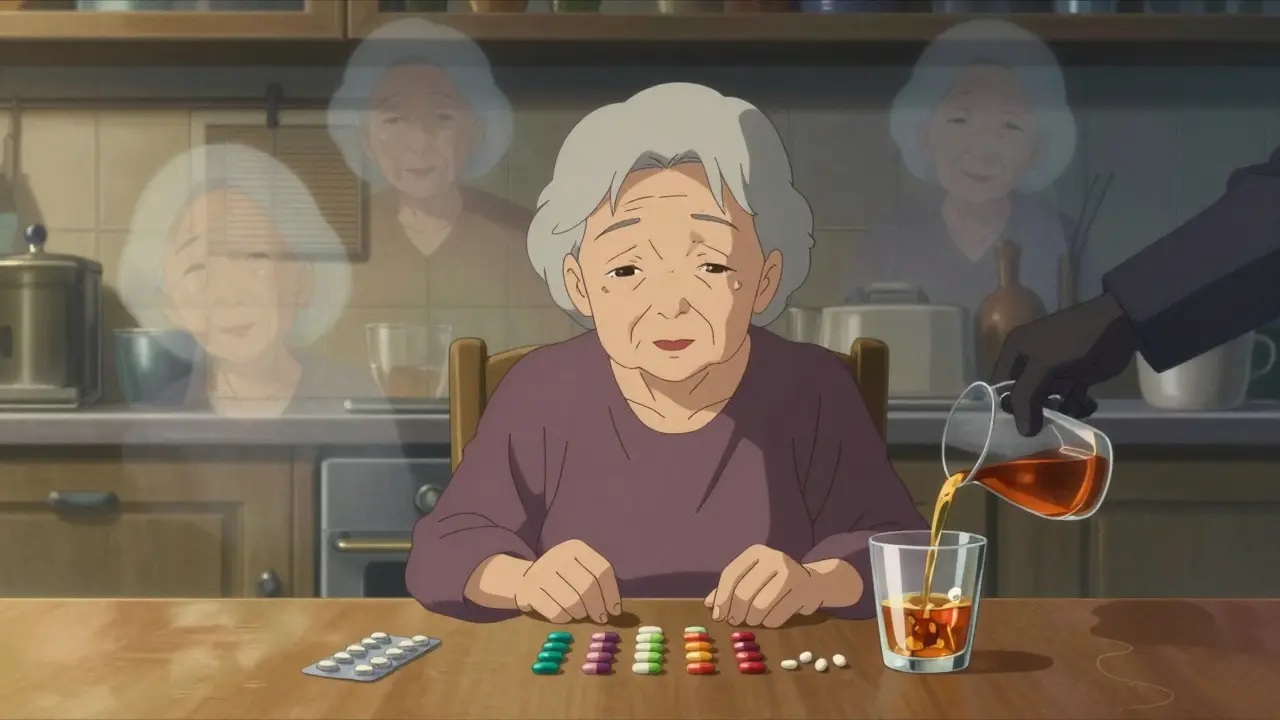
This isn’t just about drug abusers. Most deaths happen to people who were prescribed these drugs legally.- Elderly patients: Their bodies process drugs slower. Their brains are more sensitive. Studies show they’re 2.8 times more likely to fall and 3.4 times more likely to break a hip when on multiple sedatives. The American Geriatrics Society lists 34 drugs that should be avoided in seniors - many of them sedatives.
- People with depression or anxiety: They’re more likely to be prescribed multiple CNS drugs. One study found depression doubled the odds of being on both an opioid and a benzodiazepine.
- Women: Research shows women are 1.7 times more likely than men to be prescribed multiple sedatives - possibly because they report pain and anxiety more often, or because doctors prescribe more readily.
- Those on high-dose opioids: If you’re taking 100 morphine milligram equivalents or more per day, your risk of mixing in another sedative skyrockets. That’s not a coincidence - it’s a pattern.
Long-Term Damage You Can’t See
Most people think the danger is only in overdose. But even if you never pass out, long-term use of multiple sedatives quietly damages your body.- Cognitive decline: A 2009 study found that long-term users of CNS depressants were 27% more likely to lose 5+ points on a standard memory test - enough to affect daily tasks like managing meds or driving.
- Sleep apnea: 27% of chronic users developed it. Sedatives relax throat muscles. That’s why you snore. But when they’re combined, your airway can collapse completely during sleep.
- Depression and suicidal thoughts: 38% of long-term users developed depression. 19% had suicidal thoughts after six months. The drugs don’t just calm you - they dull your brain’s ability to regulate mood.
- Weight gain and fatigue: A 12-18 pound weight gain over a year is common. So is constant tiredness. 45% of long-term users report never feeling fully awake.
What Can Be Done?
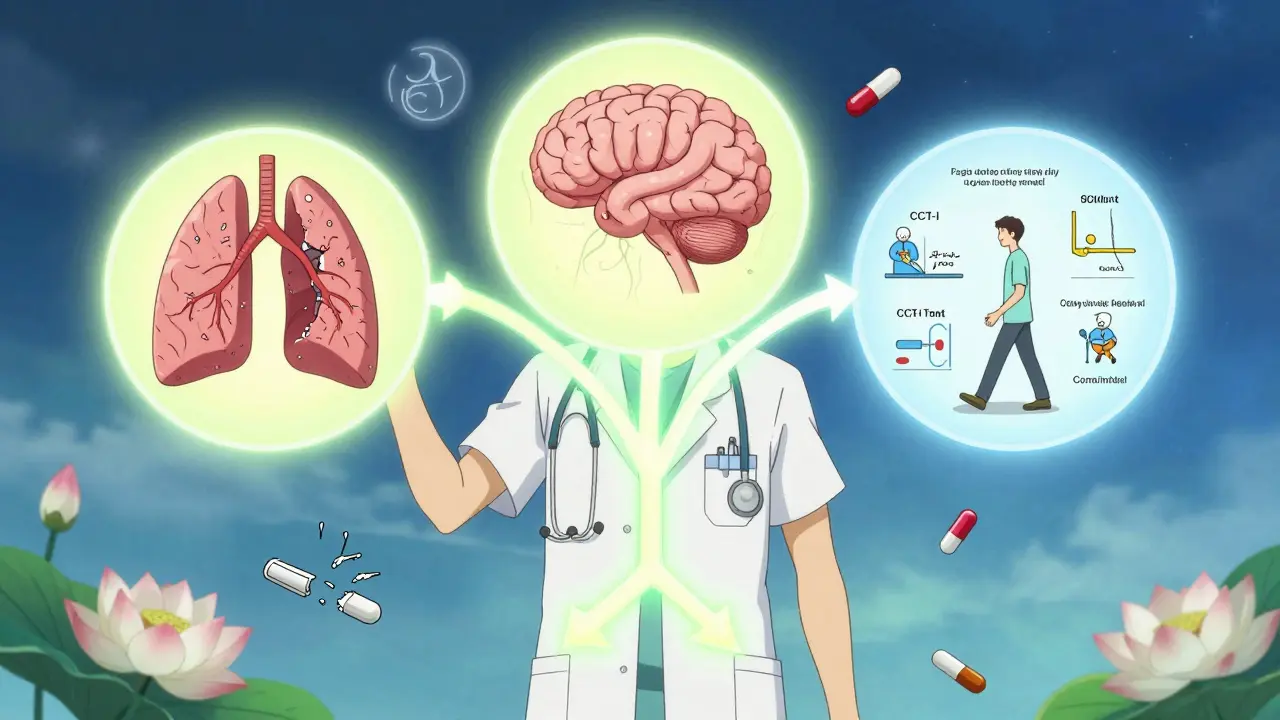
This isn’t hopeless. There are proven ways to reduce risk - if you act.- Medication reviews every 3-6 months: Ask your doctor to go over every pill you take - including over-the-counter sleep aids and alcohol. Many don’t realize their “just one” nightly drink counts.
- Deprescribing: Gradually stopping one sedative at a time, under supervision, reduces fall risk by 32% and cognitive decline by 27% in a year. It’s not about quitting everything - it’s about removing what’s unnecessary.
- Switch to safer alternatives: For anxiety, therapy and non-addictive meds like buspirone work. For sleep, cognitive behavioral therapy (CBT-I) is more effective long-term than pills. For pain, physical therapy and non-opioid meds (like gabapentin or NSAIDs) often help.
- Use clinical decision tools: Hospitals with electronic alerts that flag dangerous combinations reduced inappropriate prescribing by 28%. Ask if your doctor uses them.
Some patients worry: “If I stop my Xanax, I’ll panic.” That’s valid. But the solution isn’t adding another drug. It’s working with a provider to taper safely - and replacing the sedative with something that addresses the root cause.
The Bottom Line
You don’t need to be a drug user to be in danger. You just need to be prescribed more than one sedative. The risks aren’t theoretical. They’re in the data: higher death rates, more hospitalizations, faster cognitive decline. The FDA, CDC, and top medical societies all agree - combining sedatives is one of the most preventable causes of drug-related death.If you’re on two or more CNS depressants, don’t wait for an emergency. Talk to your doctor. Ask: “Is this combination necessary?” “Is there a safer way?” “What happens if I stop one?”
There’s no shame in asking. But there’s real danger in not asking.
Can combining sedatives kill you even if you take them as prescribed?
Yes. Even when taken exactly as directed, combining multiple sedatives - like an opioid painkiller with a benzodiazepine for anxiety - can cause respiratory depression that leads to death. The FDA explicitly warns that this combination increases overdose risk by 2.5 to 4.5 times, regardless of whether doses are “correct.” The danger comes from how the drugs interact, not how much you take.
Is alcohol really a sedative?
Absolutely. Alcohol is one of the most common CNS depressants in the world. It enhances GABA activity just like benzodiazepines and barbiturates. Mixing alcohol with sleep pills, anti-anxiety meds, or opioids is extremely dangerous. Studies show that 12-13% of people on chronic opioid therapy drink alcohol within two hours of taking their dose - a practice linked to significantly higher overdose rates.
Why are elderly people more at risk?
As we age, our liver and kidneys process drugs slower, so sedatives build up in the body. Also, older brains are more sensitive to GABA-boosting drugs. This leads to excessive drowsiness, confusion, and loss of balance. Studies show seniors on multiple sedatives are nearly three times more likely to fall and over three times more likely to suffer a hip fracture. The American Geriatrics Society specifically advises avoiding many sedatives in patients over 65.
Can antidepressants like SSRIs make sedative interactions worse?
Yes. SSRIs block enzymes in the liver that break down other drugs. This means benzodiazepines, antipsychotics, and even some pain meds stay in your system longer and at higher levels. One study found that 69% of hospitalizations for major depression involved multiple drugs, with little guidance on the risks. So even if you’re not taking “sedatives,” your antidepressant could be making another drug more dangerous.
Are there safer alternatives to sedatives for anxiety or insomnia?
Yes. For anxiety, non-addictive options like buspirone or SSRIs (used long-term) are effective. For insomnia, cognitive behavioral therapy for insomnia (CBT-I) is the gold standard - it’s more effective than pills long-term and has no physical dependence risk. Physical therapy, mindfulness, and lifestyle changes can also reduce the need for sedatives. The key is working with a provider to find what works for you - without adding more drugs.


