
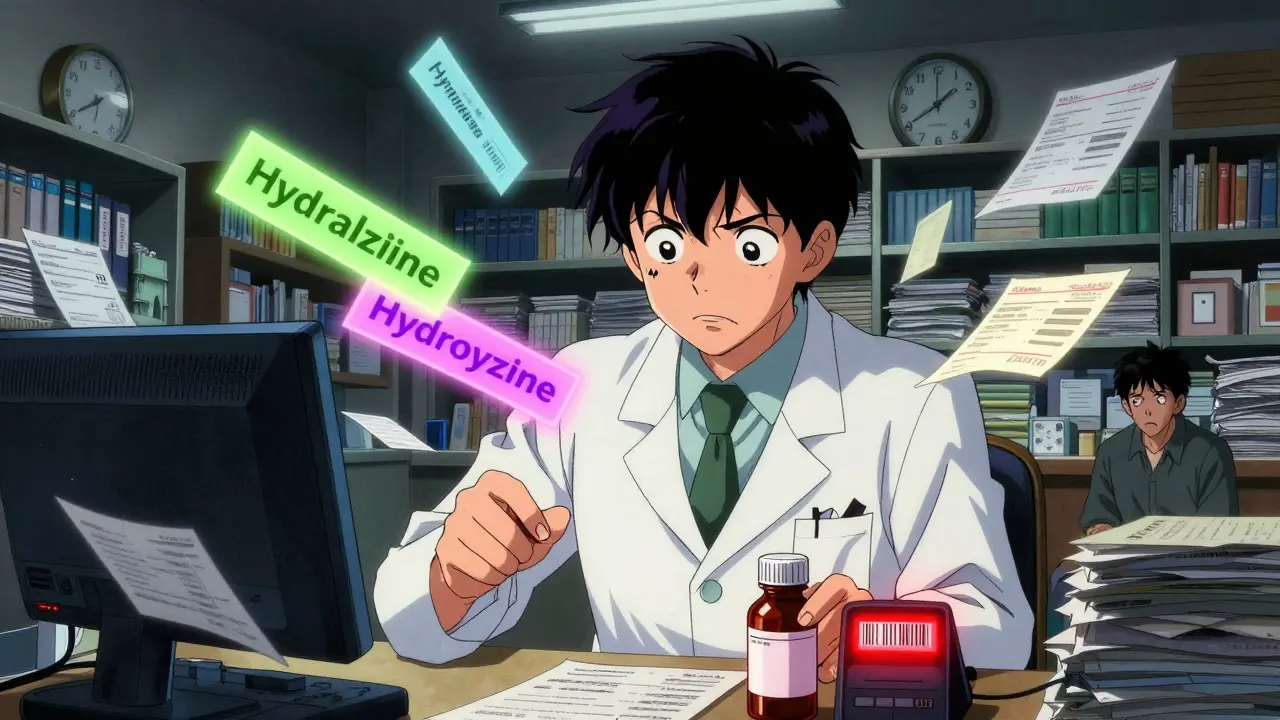
Every year, millions of patients receive the wrong medication, wrong dose, or wrong instructions - not because of negligence, but because the system is broken. Pharmacy dispensing errors aren’t rare accidents. They’re predictable failures in a high-pressure environment where a single misstep can lead to hospitalization, permanent injury, or death. In community and hospital pharmacies around the world, these errors happen at a rate of 1.6% on average, according to a 2023 global review of over 60 studies. That might sound low, but it translates to thousands of preventable harms every day.
What Are the Most Common Dispensing Errors?
The biggest culprits aren’t complicated. They’re simple, repetitive, and often ignored until it’s too late. The top three dispensing errors are:
- Wrong medication, dose, or form - This accounts for 32% of all errors. Imagine a patient prescribed amoxicillin 500mg getting ampicillin 250mg instead. Or someone needing a liquid form for swallowing issues gets a tablet. These aren’t theoretical risks - they happen daily.
- Dose miscalculations - 28% of errors come from math mistakes. Pediatric doses, renal adjustments, weight-based calculations - all require precision. A 10% miscalculation in a blood thinner like warfarin can trigger internal bleeding.
- Missing drug interactions or contraindications - 24% of errors occur when pharmacists don’t catch that a patient is on three drugs that shouldn’t be mixed. For example, combining an SSRI antidepressant with tramadol can cause serotonin syndrome - a life-threatening condition.
Other frequent mistakes include dispensing expired drugs, giving the wrong duration (like 30 days instead of 7), or mislabeling IV infusions. One study found that 41% of antibiotic errors happened because the pharmacist never checked the patient’s allergy history. Another 29% occurred because the label didn’t match the active ingredient.
Why Do These Errors Keep Happening?
It’s not because pharmacists are careless. It’s because the system sets them up to fail.
Workload is the biggest factor. Over 37% of errors happen when pharmacists are rushed - juggling 100+ prescriptions a day, answering phone calls, managing insurance issues, and still expected to counsel patients. Interruptions matter too. Every time a pharmacist gets pulled away during the final check, the chance of an error jumps by over 12%.
Sound-alike and look-alike drugs are another silent killer. Drugs like Hydralazine and Hydroxyzine, or Epinephrine and Epinephrine HCl, look nearly identical on labels. When handwritten prescriptions are involved - still common in 43% of cases - a sloppy ‘S’ can become a ‘5’, turning 5mg into 50mg.
Missing information is just as dangerous. A patient’s kidney function? Not listed. Their allergy to sulfa? Not documented. Their weight? Not updated in the system. These gaps aren’t the pharmacist’s fault - they’re systemic failures. And when prescriptions come over the phone, 22% of errors come from misheard drug names. “Zoloft” sounds like “Zyloft.” “Lunesta” sounds like “Lunesta.”
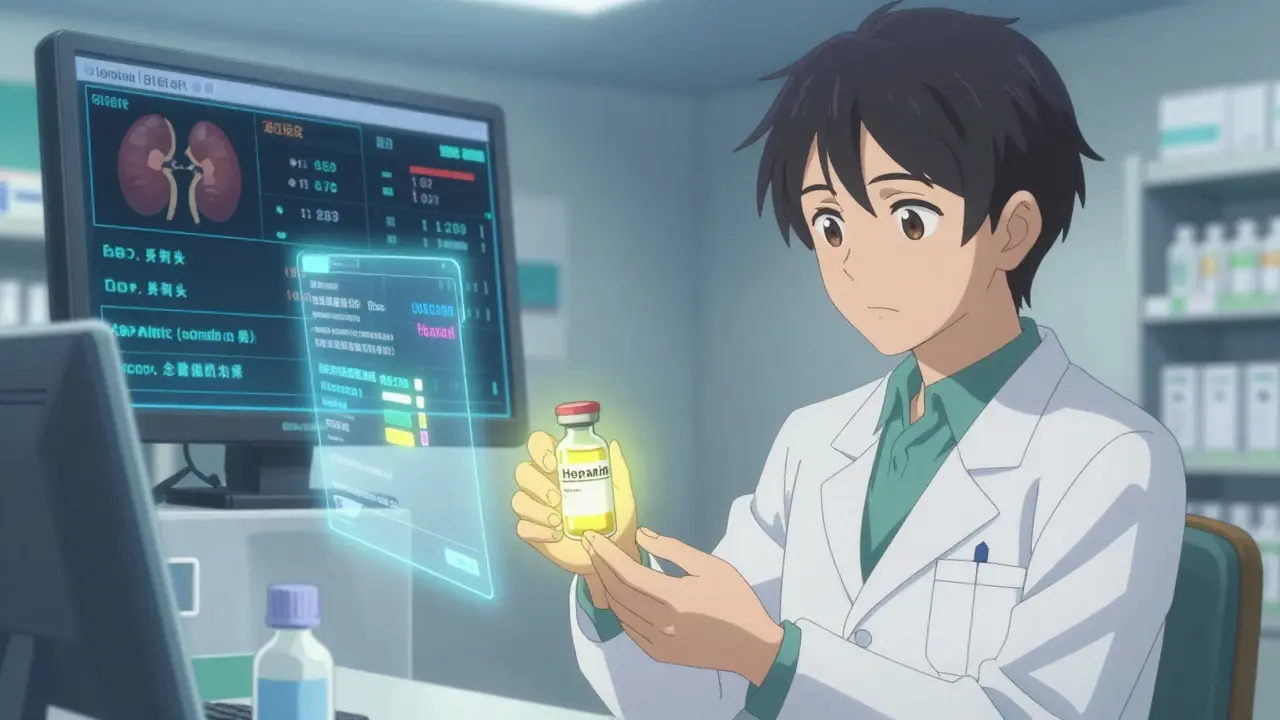
How to Stop These Errors Before They Happen
There’s no magic bullet. But there are proven, practical fixes that work - if they’re implemented correctly.
1. Use Barcode Scanning
It’s not optional anymore. Hospitals and pharmacies that use barcode scanning at every step - from receiving the prescription to handing the bottle to the patient - cut dispensing errors by nearly half. One study showed a 52% drop in wrong-drug errors and 49% fewer wrong-dose errors. The system doesn’t just scan the drug - it verifies the patient, the dose, the route, and the timing. If anything doesn’t match, it stops the process. No exceptions.
2. Implement Double Checks for High-Risk Drugs
Not all medications are equal. Insulin, heparin, warfarin, opioids, and IV antibiotics are high-alert drugs. They need a second set of eyes. One hospital pharmacist in Sydney reported that after introducing a mandatory double-check for these drugs, their error rate dropped by 78% over 18 months. The second checker doesn’t have to be a pharmacist - a trained pharmacy technician can do it. The key is consistency. No shortcuts.
3. Use Tall Man Lettering
This sounds simple, but it’s incredibly effective. Instead of writing “ALPRAZOLAM” and “AMLODIPINE” the same way, use capital letters to highlight differences: ALPRAZOLAM vs. AMLODIPINE. This small visual cue reduces confusion between look-alike drugs by over 56% in community pharmacies. The FDA and WHO both recommend this. It costs nothing. It saves lives.
4. Build in Time for Patient Counseling
Pharmacists who spend even five minutes talking to patients catch errors. Patients often say things like, “I didn’t take that last pill because it made me dizzy,” or “My doctor changed my dose last week.” That information isn’t in the system. If you don’t ask, you won’t know. One study showed that pharmacies with structured counseling protocols reduced errors by 31%.
5. Adopt Electronic Prescribing
Handwritten prescriptions are a relic. They’re responsible for 43% of dispensing errors. Electronic prescribing (e-prescribing) eliminates illegible handwriting, auto-checks for allergies, and flags interactions in real time. But it’s not perfect. One major downside? Alert fatigue. When the system warns you about every minor interaction, you start ignoring them. That’s why the best systems combine e-prescribing with clinical decision support - not just pop-ups, but smart alerts that prioritize life-threatening risks.
6. Report and Learn From Errors
Most pharmacies treat errors like failures. They should treat them like data. Systems like Pharmapod let pharmacists report mistakes anonymously. The goal isn’t to punish - it’s to find patterns. One pharmacy noticed that 80% of wrong-dose errors happened on Tuesdays. Why? Because that’s when the weekend backlog got processed. They adjusted staffing. Errors dropped by 41%. That’s the power of learning.

What’s Changing in 2025?
The world is moving toward smarter systems. By 2025, 78% of pharmacy organizations will use standardized error classification - meaning every error, everywhere, will be tracked the same way. That’s huge. Right now, one hospital calls a mistake “wrong drug,” another calls it “medication misdispense.” No consistency. No learning.
AI is also stepping in. In pilot programs, AI systems analyze prescriptions, patient history, and lab data to predict which orders are most likely to go wrong. One trial cut errors by over 52%. Robotic dispensing systems are getting cheaper - now under $200,000 - and are being used in large pharmacies to handle routine prescriptions, freeing pharmacists for complex cases.
The big shift? From blaming individuals to fixing systems. As the Institute for Safe Medication Practices says: “People make mistakes. Systems prevent them.”
What Patients Can Do
You’re not powerless. Even if you’re not a pharmacist, you can protect yourself:
- Always ask: “Is this the same as what I got last time?”
- Check the label against your prescription - name, dose, instructions.
- Ask: “What is this for?” If the pharmacist can’t explain it clearly, pause.
- Keep a list of all your medications - including supplements - and bring it every visit.
- If something looks off - smell, color, shape - speak up. You’re the last line of defense.
Medication safety isn’t just the pharmacist’s job. It’s a team effort - and you’re on the team.


