

The DASH diet isn't just another trend. It's a science-backed eating plan created by the National Heart, Lung, and Blood Institute to lower blood pressure-no pills required. And while its main goal is heart health, many people find they lose weight too, without even trying. If you're struggling with high blood pressure or carrying extra pounds, this isn't about cutting carbs or fasting for 16 hours. It's about eating more of what your body actually needs.
How the DASH Diet Lowers Blood Pressure
The DASH diet works because it flips the script on what most people eat. Instead of processed snacks, sugary drinks, and salty meats, it tells you to fill your plate with vegetables, fruits, whole grains, beans, nuts, low-fat dairy, and lean proteins. The magic isn't just in the food-it's in what you cut out. Sodium is the big one. Most Americans eat over 3,400 mg a day. The standard DASH diet limits you to 2,300 mg. The stronger version drops it to 1,500 mg-about the amount in one teaspoon of salt.
Clinical trials show this works. In just two weeks, people with high blood pressure saw their systolic numbers drop by 6 to 11 mmHg. That’s as much as some blood pressure medications do. One study even found that when people combined DASH with sodium reduction, their systolic pressure fell by 16.1 mmHg-far more than what you get from just general advice. And it’s not just a short-term fix. Blood pressure stays lower for months, even years, if you stick with it.
It’s not just about pressure. Cholesterol drops too. LDL (the bad kind) falls by about 11 mg/dL, and total cholesterol by 14 mg/dL. That’s a big deal for heart disease risk. Harvard researchers estimate this diet can cut your 10-year heart disease risk by 10%. For Black adults and women, the benefit is even higher-13% to 14%.
What the DASH Diet Actually Looks Like
You don’t need to count calories. You don’t need to weigh your food. But you do need to know what a serving looks like. Here’s the daily breakdown:
- 6-8 servings of grains (at least half should be whole grain-think brown rice, oats, whole wheat bread)
- 4-5 servings of vegetables (1 cup raw leafy greens = 1 serving)
- 4-5 servings of fruits (a medium apple, a banana, or ½ cup berries counts as one)
- 2-3 servings of low-fat dairy (milk, yogurt, cottage cheese)
- 6 or fewer servings of lean meat, poultry, or fish (1 serving = 3 oz, about the size of a deck of cards)
- 4-5 servings of nuts, seeds, or legumes per week (a handful of almonds or ½ cup beans)
- 2-3 servings of fats and oils (olive oil, avocado, or small amounts of butter)
- 5 or fewer servings of sweets per week (a small cookie or 1 tablespoon of sugar)
That’s it. No forbidden foods. No extreme rules. It’s about balance. A typical day might include oatmeal with berries and almond milk for breakfast, a tuna salad with whole grain bread and an apple for lunch, and grilled chicken with quinoa and steamed broccoli for dinner. Snacks? A yogurt, a handful of walnuts, or carrot sticks with hummus.
Weight Loss on the DASH Diet
Here’s the truth: the DASH diet wasn’t designed to make you lose weight. But it does-because you’re eating whole, unprocessed foods that fill you up without packing on calories. In studies where people didn’t intentionally cut calories, they still lost 1 to 3 kg (2-7 lbs) over 8-12 weeks.
But if you want more weight loss, pair DASH with portion control or a small calorie deficit. The PREMIER trial showed that when people lost an average of 4.5 kg (10 lbs) while following DASH, their blood pressure dropped even more-and their vascular health improved significantly. That’s the real win: lower blood pressure and better body composition.
Compare that to low-carb or intermittent fasting diets. Those often lead to faster weight loss-5-8% of body weight in a few months. But they don’t lower blood pressure as reliably. DASH gives you steady, sustainable results. It’s not flashy, but it lasts.
How It Stacks Up Against Other Diets
People often ask: Is DASH better than Mediterranean? Or plant-based? Or keto?
For blood pressure? DASH wins. Head-to-head studies show it lowers systolic pressure more than the Mediterranean diet-6.7 mmHg vs. 4.7 mmHg. It’s more structured than Mediterranean, which is great if you’re new to healthy eating and need clear rules. But Mediterranean has more evidence for long-term brain and metabolic health.
Keto? It can drop weight fast, but it often raises LDL cholesterol and isn’t safe for people with kidney issues. DASH doesn’t have those risks. Plant-based diets are great, but they don’t always include enough low-fat dairy or lean protein, which DASH ensures. That balance matters.
The bottom line: DASH is the only diet officially recommended in U.S. hypertension guidelines (JNC 7 and 8) with the highest level of evidence. That’s not hype. That’s science.
Who Struggles With DASH-and Why
It’s not perfect. Some people hit roadblocks.
Lactose intolerance? Many DASH plans rely on dairy. But you can swap regular milk for fortified almond, soy, or oat milk. Same serving size. Same calcium. Same results.
On a tight budget? Fresh produce can feel expensive. But frozen vegetables and canned beans (rinsed to cut sodium) are just as good-and cheaper. Buying in bulk, cooking at home, and avoiding pre-packaged meals saves money and cuts sodium.
People in food deserts or with limited kitchen access struggle. That’s real. But programs like USDA’s SNAP-Ed are now rolling out DASH-friendly recipes for low-income families. You don’t need fancy ingredients. You need planning.
And cultural preferences? A 2021 study found Hispanic populations had lower adherence because traditional meals didn’t fit the DASH mold. That’s changing. The ‘DASH Latino’ trial created versions with black beans, plantains, and grilled fish instead of chicken-same blood pressure results, better fit.
How to Start Without Getting Overwhelmed
You don’t need to overhaul your life overnight.
- Start by cutting out one high-sodium food: soda, deli meat, or instant noodles.
- Add one extra vegetable serving a day-spinach in your eggs, carrots with lunch.
- Swap white bread for whole grain.
- Use herbs and spices instead of salt. Garlic, paprika, cumin, lemon juice-they’re flavor bombs.
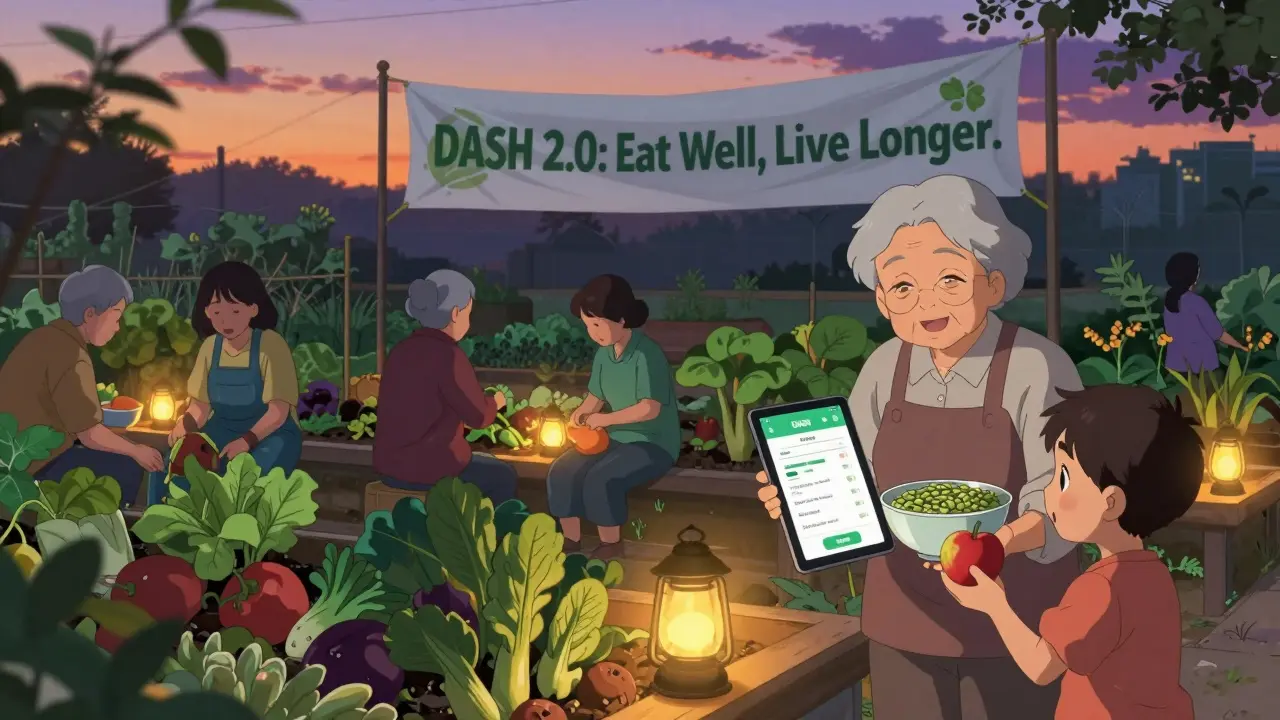
- Download a free app like DASH Diet Helper. It tracks sodium and portions without you doing the math.
Most people take 2-4 weeks to get comfortable with serving sizes. Don’t stress about perfection. If you hit 80% of the plan, you’ll still see results.
And if you’re on blood pressure meds? Talk to your doctor. Many people reduce or even stop meds after 6-8 weeks on DASH. But never do it alone. Monitor your pressure at home. Keep a log.
Real People, Real Results
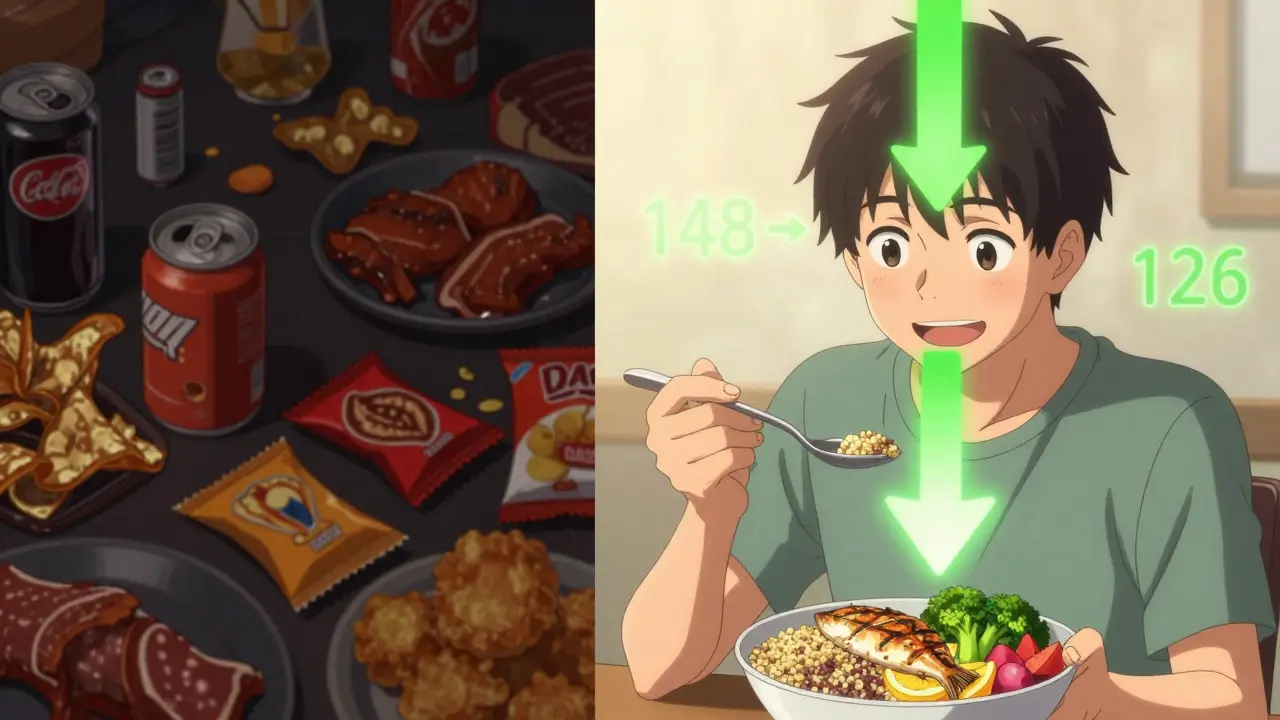
On Reddit’s r/HighBloodPressure, users report drops of 15-20 mmHg systolic in just 3 weeks. One 54-year-old man went from 148 to 126 mmHg in six weeks-no medication changes. His secret? DASH + 1,500 mg sodium limit.
A Mayo Clinic survey of 1,200 DASH followers found 68% reached their target blood pressure within 8 weeks. The biggest complaint? Meal planning felt complicated. That’s why apps and free guides from the NHLBI are so helpful. You don’t need a dietitian. You just need to start.
And the long-term? About 40% stick with it after a year. That’s better than most diets. Why? Because it’s not a diet. It’s a way of eating that fits into real life. You can eat it at restaurants, at family dinners, on vacation. You don’t have to be perfect. You just have to keep going.
What’s Next for DASH
The NIH is now testing DASH 2.0-adding a 12-hour eating window (no food after 8 p.m.). Early results show an extra 8.2 mmHg drop in blood pressure. That’s huge.
And AI is coming. A $2.3 million trial is testing algorithms that adjust your DASH plan based on your glucose levels, sleep, and activity. Imagine your phone telling you: “Today’s meals should have less sodium because your BP spiked yesterday.” That’s the future.
But the biggest barrier isn’t science. It’s access. One in three Americans with high blood pressure lives in poverty. They can’t always afford fresh produce or time to cook. That’s why policy changes-like expanding DASH recipes in SNAP programs-are just as important as the diet itself.
For now, the best thing you can do is start small. Eat one more vegetable. Skip the salt shaker. Drink water instead of soda. You don’t need to be perfect. You just need to begin.
Can the DASH diet help me lose weight without counting calories?
Yes. The DASH diet naturally leads to weight loss because it replaces processed, high-calorie foods with fiber-rich, filling options like vegetables, fruits, whole grains, and legumes. Most people lose 1-3 kg (2-7 lbs) in 8-12 weeks without intentionally cutting calories. The key is portion control and avoiding added sugars and sodium, which drive hunger and fat storage.
Is the DASH diet safe for people with diabetes?
Absolutely. DASH is often recommended for people with type 2 diabetes because it improves insulin sensitivity and lowers blood pressure-two major risk factors for complications. The diet’s focus on whole grains, legumes, and non-starchy vegetables helps stabilize blood sugar. Studies show it reduces HbA1c levels by 0.5% to 1% over 6 months, comparable to some diabetes medications.
Do I need to buy special foods or supplements for the DASH diet?
No. The DASH diet uses ordinary, affordable foods: brown rice, canned beans, frozen vegetables, plain yogurt, chicken breast, apples, and oats. You don’t need protein powders, detox teas, or expensive superfoods. The only tool you might find helpful is a sodium-tracking app, but even that’s optional. Everything you need is in your local grocery store.
Can I follow DASH if I’m lactose intolerant?
Yes. You can replace dairy with fortified plant-based alternatives like almond, soy, or oat milk. Make sure they’re unsweetened and contain at least 300 mg of calcium per cup. Yogurt can be swapped for lactose-free versions or non-dairy probiotic-rich foods like sauerkraut and kimchi. The calcium and potassium benefits remain intact.
How long does it take to see results from the DASH diet?
Blood pressure can drop in as little as two weeks. Many people see a 5-10 mmHg reduction in systolic pressure within that time. Weight loss, if it happens, usually becomes noticeable after 4-6 weeks. For full cardiovascular benefits-like improved cholesterol and reduced inflammation-it takes 3-6 months of consistent eating.
Is the DASH diet expensive to follow?
Not if you plan smart. Frozen vegetables, canned beans (rinsed), eggs, oats, and seasonal fruits are cheaper than processed snacks and meat. Buying in bulk, cooking at home, and avoiding pre-packaged meals saves money. In fact, many people spend less on groceries after switching to DASH because they stop buying chips, soda, and frozen dinners.
Can I drink alcohol on the DASH diet?
Moderation is key. The DASH diet allows up to one drink per day for women and two for men. But alcohol raises blood pressure, so if your numbers are high, it’s best to cut back or avoid it entirely. If you do drink, choose wine or light beer over sugary cocktails, and never mix it with soda or juice.
Does the DASH diet work for older adults?
Yes. In fact, older adults benefit the most. High blood pressure becomes more common with age, and DASH helps reduce the risk of stroke, heart attack, and kidney disease. It’s also gentle on digestion and supports bone health through calcium and potassium. Many seniors report better energy and less swelling in their legs after switching to DASH.
Start today. One meal at a time. Your blood pressure-and your body-will thank you.