
Every year, millions of people take herbal supplements thinking they’re harmless because they’re "natural." But here’s the truth: just because something comes from a plant doesn’t mean it’s safe to mix with your prescription meds. In fact, some herbal products can make your heart medication useless, cause dangerous bleeding, or send your blood pressure crashing. These aren’t rare cases-they’re happening right now, often without anyone noticing.
Why Herbal Supplements Aren’t Just "Gentle"
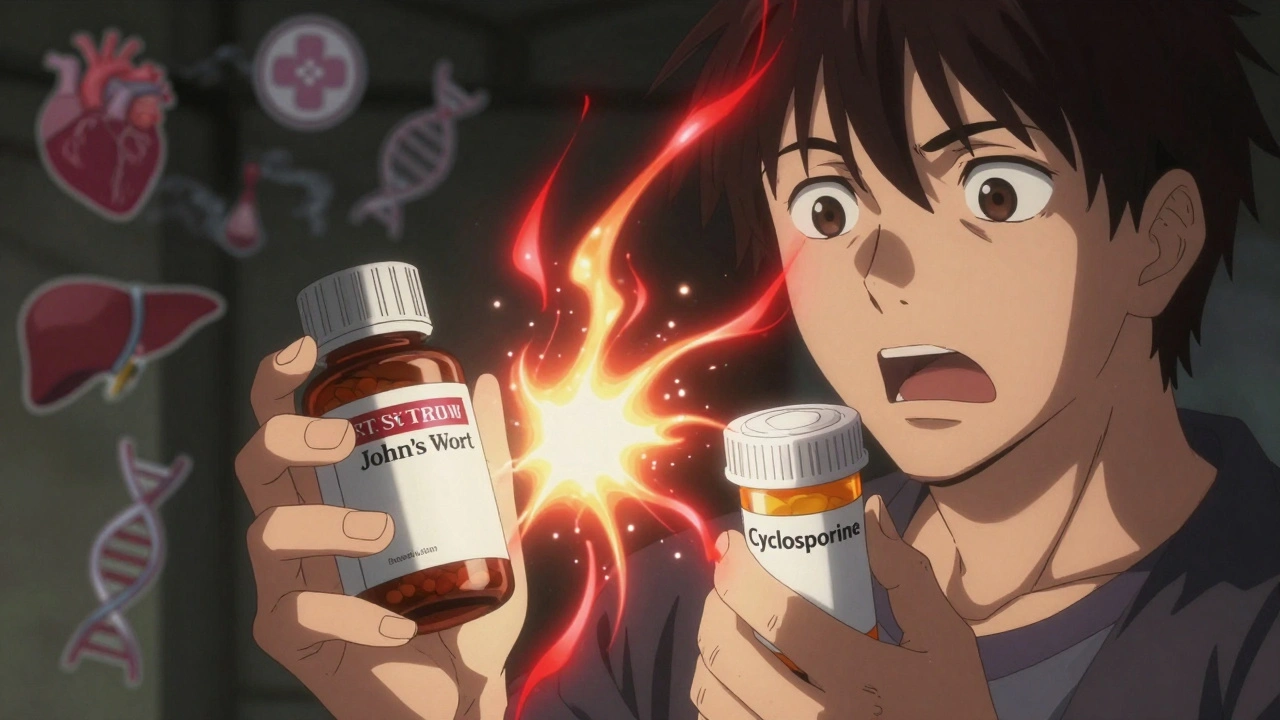
People assume herbal supplements are like tea or vitamins-safe, mild, and harmless. But that’s a dangerous myth. St. John’s wort, for example, isn’t just a calming herb. It’s a powerful enzyme inducer that can slash the levels of life-saving drugs in your body by up to 70%. That means if you’re on a transplant medication like cyclosporine, taking St. John’s wort could lead to organ rejection. Or if you’re on birth control, it could cause an unplanned pregnancy. These aren’t theoretical risks. They’ve been documented in clinical studies and real hospital cases. The same goes for ginkgo biloba. Many take it for memory or circulation, but it interferes with blood clotting. When combined with warfarin or aspirin, it increases bleeding risk by about 30%. One hematologist in Sydney reported three emergency cases in a single year where patients had unexplained internal bleeding-all linked to ginkgo they never told their doctor about. Even garlic, often praised for heart health, can reduce the effectiveness of HIV medications by over 50%. Goldenseal, popular for immune support, can boost blood levels of common drugs like metoprolol or dextromethorphan by 30-50%, leading to overdose symptoms like dizziness, slow breathing, or heart rhythm problems.The Hidden Mechanism: How Herbs Change How Your Body Handles Drugs
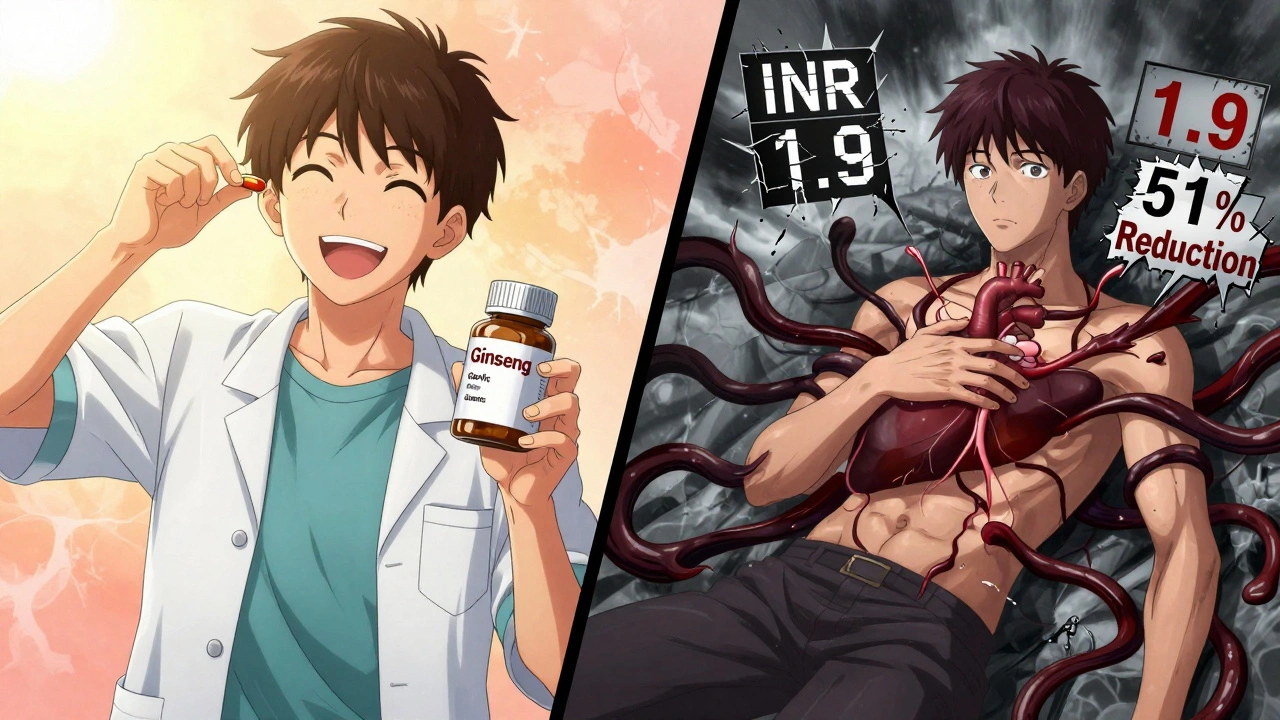
Herbs don’t just add to your meds-they change how your body processes them. Most drugs are broken down by enzymes in your liver, especially a group called cytochrome P450 (CYP). The most important one is CYP3A4, which handles about half of all prescription medications. Some herbs, like St. John’s wort and garlic, turn this enzyme on full blast, making your body flush out drugs too fast. Others, like goldenseal and black cohosh, shut it down, causing drugs to build up to toxic levels. Then there’s P-glycoprotein, a transporter that controls how much of a drug gets absorbed from your gut into your bloodstream. St. John’s wort also blocks this system, which is why it reduces digoxin levels by 25%-a drug used for heart failure. Lower levels mean your heart can’t pump properly. Higher levels? You risk poisoning. Pharmacodynamic interactions are just as risky. These happen when herbs and drugs do the same thing in your body. Danshen, a Chinese herb used for heart health, thins your blood like warfarin. When taken together, they can increase bleeding risk by 35%. Ginseng, often taken for energy, has vitamin K-like effects that can cancel out warfarin’s action. One patient’s INR dropped from 4.9 to 1.9 in just two weeks after starting ginseng-enough to trigger a stroke.High-Risk Herbs and the Drugs They Ruin
Not all herbs are equally dangerous. But some are known troublemakers. Here’s what you need to watch out for:- St. John’s wort: Interacts with at least 15 drug classes. Reduces levels of antidepressants, birth control, HIV drugs, transplant meds, and heart medications. One study found it cut cyclosporine levels by 57% in transplant patients.
- Ginkgo biloba: Increases bleeding risk with blood thinners like warfarin, aspirin, or clopidogrel. Linked to multiple cases of brain and gastrointestinal bleeding.
- Danshen (Salvia miltiorrhiza): Can cause irregular heartbeat when taken with digoxin. A 2023 Mayo Clinic alert flagged a 35% higher risk of arrhythmia.
- Goldenseal: Boosts levels of drugs like metoprolol, dextromethorphan, and statins. Can lead to dangerously high blood levels-even fatal in some cases.
- Hawthorn: Lowers blood pressure and increases digoxin toxicity. Patients on beta-blockers have dropped to systolic pressures of 85 mmHg after combining it with their meds.
- Garlic: Reduces saquinavir (HIV drug) levels by 51%. Also increases bleeding risk with anticoagulants.
Some herbs like milk thistle, saw palmetto, and valerian are lower risk-but even valerian can make sedatives like benzodiazepines too strong. The problem isn’t just the herbs themselves. It’s that most people don’t realize they’re interacting with anything at all.
Why Doctors Don’t Always Know
You’d think your doctor would ask about what you’re taking. But they rarely do. In a 2016 study of 299 hospital patients in Israel, 25% were using herbal supplements-but doctors didn’t know about it in 72% of cases. Why? Because patients don’t mention them. They think it’s not "medicine." Or they’re afraid their doctor will judge them. A 2022 Consumer Reports survey found that 68% of supplement users never told their doctor. That’s not just oversight-it’s a safety gap. And it’s not just patients. A 2024 review found that only 3% of primary care providers routinely screen for herb-drug interactions. Even pharmacists miss them. American ginseng interactions were the most commonly misidentified in training studies, with a 62% error rate. The system isn’t designed to catch this. Under the 1994 Dietary Supplement Health and Education Act (DSHEA), herbal products don’t need to prove safety or interaction risks before hitting the market. The FDA doesn’t test them. Only 15% of supplement labels include any warning about drug interactions. In 2022, the FDA issued just 12 warning letters about interaction risks-even though over 80,000 herbal products are sold in the U.S.What You Should Do Right Now
If you’re taking any prescription medication and use herbal supplements, here’s what to do:- Make a list. Write down every herb, tea, tincture, or capsule you take-even if you think it’s harmless. Include turmeric, green tea, chamomile, and ginger.
- Bring it to your next appointment. Don’t wait for your doctor to ask. Say: "I’m taking these herbs. Can you check if they’re safe with my meds?"
- Be specific. Don’t say "I take ginkgo." Say "I take 120 mg of ginkgo biloba daily for memory." Dosage matters.
- Check your blood tests. If you’re on warfarin, ask your doctor to monitor your INR more closely after starting or stopping any herb.
- Don’t assume "natural" means safe. The most dangerous interactions come from the supplements people think are the safest.
Pharmacists are your best allies here. At Mayo Clinic, pharmacists spend an average of 12 minutes per patient counseling on herb-drug risks. For St. John’s wort, it’s 18 minutes. That’s because they know the risks. Don’t skip the pharmacy visit when you pick up your script.
What’s Changing-and What’s Not
The good news? Research is catching up. In 2023, the NIH spent $12.7 million studying herb-drug interactions. The FDA released draft guidance in 2023 pushing for mandatory interaction testing for new herbal products. Europe now requires full interaction studies for herbal medicines to be sold legally. New tools are emerging too. The University of California’s Herb-Drug Interaction Prediction Engine, released in March 2024, uses AI to predict risks with 87% accuracy. It’s already flagged 17 new interactions from Taiwan’s national health database, including ginseng reducing the effectiveness of blood pressure drugs. But the reality is this: until patients start speaking up and providers start asking, these interactions will keep slipping through the cracks. The market is growing fast-$104.8 billion globally in 2023-and most people still believe herbal products are safer than pills. That’s the biggest danger of all.Final Thought: Natural Doesn’t Mean Neutral
Herbs aren’t harmless. They’re pharmacologically active. They change how your body works. And when they mix with drugs, the results can be life-threatening-or fatal. You don’t need to stop using herbal supplements. But you do need to treat them like medicine. Talk to your doctor. Check your labels. Track your symptoms. And never assume that because something comes from a plant, it won’t hurt you.Can herbal supplements interfere with blood thinners like warfarin?
Yes. Several herbs can interfere with warfarin. Ginkgo biloba increases bleeding risk by about 30% when taken with warfarin. Danshen (Salvia miltiorrhiza) has similar effects and can raise the risk of irregular heartbeat. Ginseng may reduce warfarin’s effectiveness by acting like vitamin K, causing INR levels to drop dangerously low. Always monitor your INR closely if you take any herbal product while on warfarin.
Is St. John’s wort safe to take with antidepressants?
No. St. John’s wort can cause a dangerous condition called serotonin syndrome when taken with SSRIs, SNRIs, or other antidepressants. It also reduces the effectiveness of many antidepressants by lowering their blood levels. In some cases, patients have had to be hospitalized after combining St. John’s wort with prescription antidepressants. It’s not a safe alternative-it’s a serious risk.
Do herbal supplements need to be listed on a medication review?
Absolutely. Medication reviews should include all supplements, teas, tinctures, and botanicals. Studies show that asking specifically about "herbs or natural products" catches 35% more users than asking if they take "supplements." Hospitals and pharmacists are now trained to ask this way. Don’t wait to be asked-bring your list.
Are herbal supplements regulated like prescription drugs?
No. Under the 1994 DSHEA law in the U.S., herbal supplements don’t need FDA approval before being sold. They aren’t tested for safety, purity, or drug interactions. The FDA only steps in after harm is reported. That’s why many products don’t list interaction warnings-even when they’re known to be risky. You can’t assume a product is safe just because it’s on the shelf.
What should I do if I experience side effects after starting a herbal supplement?
Stop taking the supplement immediately and contact your doctor or pharmacist. Note the timing-did symptoms start within days or weeks of starting the herb? Common signs include unusual bleeding, dizziness, rapid heartbeat, nausea, or changes in mood or energy. Keep the product label and bring it with you. Many cases of herb-drug interactions are misdiagnosed because the connection isn’t made.
Are there any herbal supplements that are generally safe with medications?
Some herbs like milk thistle, saw palmetto, and cranberry have low interaction potential in most cases. But "low risk" doesn’t mean "no risk." Even these can interact in sensitive individuals or at high doses. Valerian may increase sedation when combined with benzodiazepines. Always check with your provider before starting any new herbal product, no matter how "safe" it seems.
How can I find out if my herbal supplement interacts with my meds?
Ask your pharmacist-they have access to clinical databases like Lexicomp or Micromedex that list known interactions. You can also check the National Center for Complementary and Integrative Health (NCCIH) website for evidence-based summaries. But don’t rely on internet blogs or supplement labels. Real interaction data comes from peer-reviewed studies and clinical reports, not marketing claims.
If you’re taking heart meds, blood thinners, antidepressants, or immunosuppressants, treat herbal supplements like you’d treat a new prescription: with caution, awareness, and professional guidance. Your safety isn’t worth guessing.


