
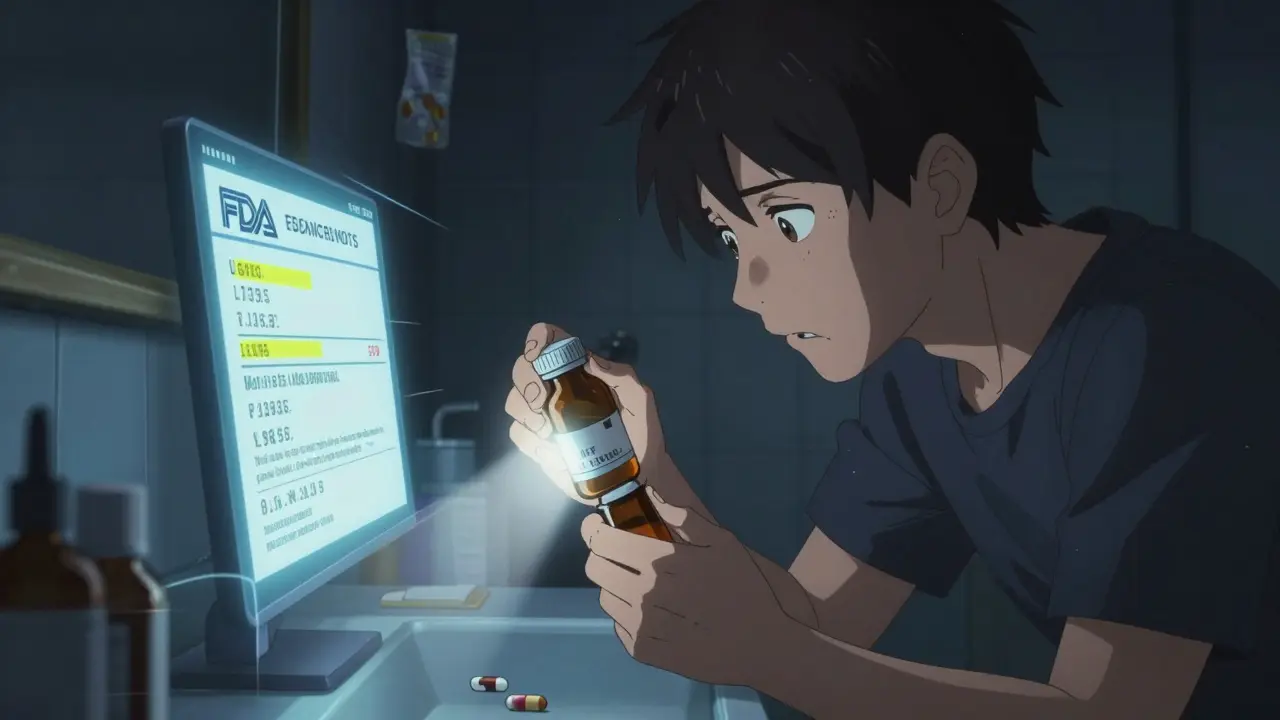
When you're clearing out expired medications at home or in a pharmacy, the most important thing isn't the date on the bottle-it's the lot number and whether that batch has been recalled. Many people assume that if the expiration date has passed, the medicine is unsafe. But sometimes, the real danger isn't age-it's contamination, mislabeling, or manufacturing defects tied to a specific batch. That’s why checking the lot number against official recall databases is just as critical as reading the expiration date.
Why Lot Numbers Matter More Than You Think
Every pill bottle, vial, or blister pack has a lot number printed on it. This isn’t just a random code. It’s a unique identifier that traces the medicine back to the exact production run. If a batch is found to be unsafe-say, it contains foreign particles, has degraded faster than expected, or was made under unsanitary conditions-the manufacturer and the FDA issue a recall. But you won’t know about it unless you check the lot number. In the U.S., the FDA requires all prescription and over-the-counter drugs to have both an expiration date (EXP) and a lot number on the packaging. Since 2010, this dual labeling has been mandatory under the Drug Supply Chain Security Act. The expiration date tells you when the drug is guaranteed to be effective and safe. The lot number tells you whether that specific batch is part of a recall. Here’s the hard truth: you cannot calculate an expiration date from a lot number. Some people try to guess it based on manufacturing dates hidden in the code. That’s risky. Pfizer might use 230515A to mean May 15, 2023, while Merck uses MK22B047 where 22 stands for 2022. There’s no universal system. Even if you decode the manufacturing date, you still don’t know how long the drug lasts. Some antibiotics expire in 12 months. Others last 36. It varies by formulation, storage conditions, and manufacturer. The only safe way to know? Read the EXP date printed on the package.Step-by-Step: How to Check for Recalls
Clearing expired meds isn’t just about tossing old bottles. You need to verify safety. Here’s how to do it right:- Find the lot number and expiration date on the packaging. Look on the side of the bottle, the back of the box, or the foil of blister packs. If the label is faded or damaged, take a photo with good lighting. The FDA recommends 500+ lux of light for accurate reading.
- Check the expiration date first. If it’s passed, set the medication aside. Don’t assume it’s still safe just because it looks fine. Chemical breakdown can happen without visible changes.
- Go to the FDA’s official recall database. Visit the FDA’s Recalls, Market Withdrawals & Safety Alerts page. You can search by lot number, drug name, or manufacturer. This database is updated daily and includes all recalls since 2009.
- Search by lot number. Enter the exact code as printed. Even a missing letter or number can throw off the search. If the lot number is long and complex (like L1234567B), copy and paste it to avoid typos.
- Check the manufacturer’s website. Many companies post their own recall notices. For example, if your medicine is from Teva, go directly to Teva’s safety page. Sometimes recalls are announced there before they appear on the FDA site.
- Don’t rely on pharmacy alerts alone. While big chains like CVS and Walgreens use automated systems to flag expiring lots, independent pharmacies often don’t. If you’re clearing meds from a small pharmacy, assume you’re on your own.
- Document everything. Take a photo of the lot number and expiration date. Keep a note of the date you checked. If you’re a pharmacy worker, log this in your inventory system. You need records for at least two years under DEA rules.
What Happens If You Miss a Recall?
The consequences aren’t theoretical. In 2023, the FDA reported 217 recall incidents where expired or contaminated meds were not properly tracked due to lot number errors. One case involved a hypertension medication that turned toxic in a specific batch. Patients who took it suffered severe dizziness and low blood pressure. None of them knew their lot number was flagged because they only checked the expiration date. A 2024 study from Harvard Medical School found that 74% of medication errors during inventory clearance came from misreading or ignoring lot numbers. In one hospital, staff assumed a batch was safe because the expiration date was two months away. But the lot number matched a recall for bacterial contamination. The meds were thrown out-but only after 14 patients had already been given them. International meds are especially tricky. European labels sometimes say “MFG: 2022 + 36 months” instead of “EXP: 08/2025.” People assume that means the drug expires in 2025. But if the shelf life is only 24 months, the real expiration is 2024. Dr. Marcus Wright from the Institute for Safe Medication Practices documented 43 cases in 2023 where this caused $2.7 million in unnecessary waste. People threw out perfectly good meds because they misread the format.How Pharmacies Are Fixing This
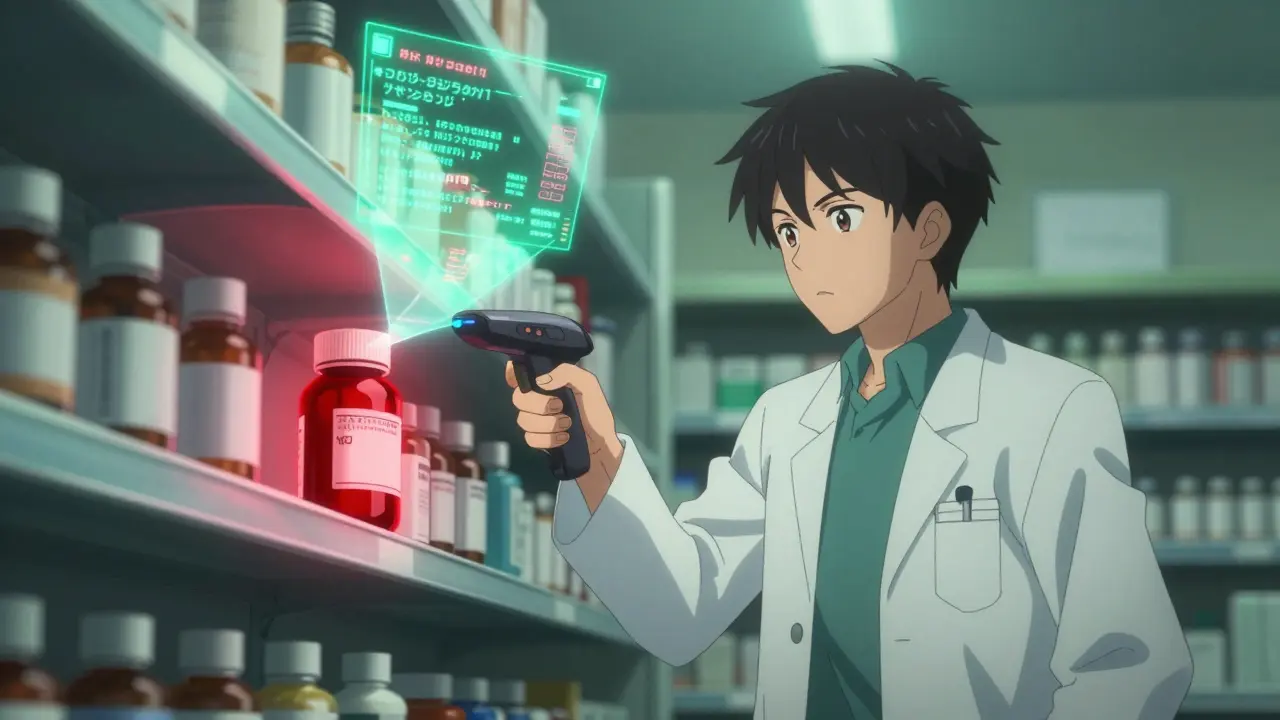
Big pharmacies aren’t guessing anymore. They’re using barcode scanners linked to manufacturer databases. When a bottle is scanned, the system pulls up the lot number, expiration date, and recall status all at once. Systems like IFS Inventory and MedKeeper cut human error from 12.7% down to 0.3%. UC San Diego Medical Center cut their inventory clearance time from 3 hours to 22 minutes using this method. The FDA is pushing for full electronic tracking by November 2025. That means every pharmacy will be required to scan lot numbers into a digital system. Right now, 98.7% of chain pharmacies are there. But only 42.3% of independent pharmacies have adopted this tech. That’s a dangerous gap. If you work at a small pharmacy, you’re still at risk. AI tools are now helping too. The FDA approved Medplore’s AI scanner in April 2024. It can read expiration dates from blurry, damaged, or poorly lit labels with 99.2% accuracy. That’s huge-because 31% of medication labels get damaged during shipping or storage.
What You Should Do Right Now
If you’re clearing expired meds at home:- Never guess expiration dates. Always read the printed EXP date.
- If the label is missing or unreadable, throw the medication out. It’s not worth the risk.
- Check the FDA recall database before tossing anything. You might be saving someone else from a bad batch.
- Use a flashlight or phone light to read faded labels. Don’t rely on dim room lighting.
- Don’t flush pills unless the label says to. The FDA recommends mixing them with coffee grounds or cat litter and throwing them in the trash.
- Train staff on the ASHP 7-step clearance protocol.
- Use barcode scanners with automatic recall checks.
- Keep a printed list of manufacturer contact info-update it every quarter.
- Never rely on memory or assumption. Always verify with official sources.
FAQ
Can I tell if a medication is expired just by looking at it?
No. Some medications degrade without changing color, smell, or texture. Others might look perfect but have lost potency. The only reliable way to know is to check the printed expiration date. If it’s gone, assume it’s expired-even if it looks fine.
What if the lot number is missing from the packaging?
If the lot number isn’t printed, the product may be counterfeit or improperly packaged. Do not use it. Contact the pharmacy where you bought it and report the issue. The FDA tracks these cases closely. You can also report it directly through the FDA’s MedWatch portal.
Do I need to check recalls for over-the-counter drugs too?
Yes. OTC drugs like pain relievers, antacids, and allergy meds are just as likely to be recalled. In 2023, a popular children’s acetaminophen batch was recalled due to incorrect dosing. Always check the FDA database-even for common meds you’ve had for years.
How often should I check for recalls?
Check before you dispose of any medication, especially if it’s expired or nearing its expiration date. Also, check monthly if you’re managing a home or clinic inventory. Recalls can happen at any time, and the FDA updates its database daily.
Is it safe to use expired medication if it’s been stored properly?
The FDA says no. Expiration dates aren’t arbitrary-they’re based on stability testing. After the date, potency drops and chemical changes can occur. Some drugs, like insulin or liquid antibiotics, become dangerous after expiration. Never use expired meds, even if they look fine.


