
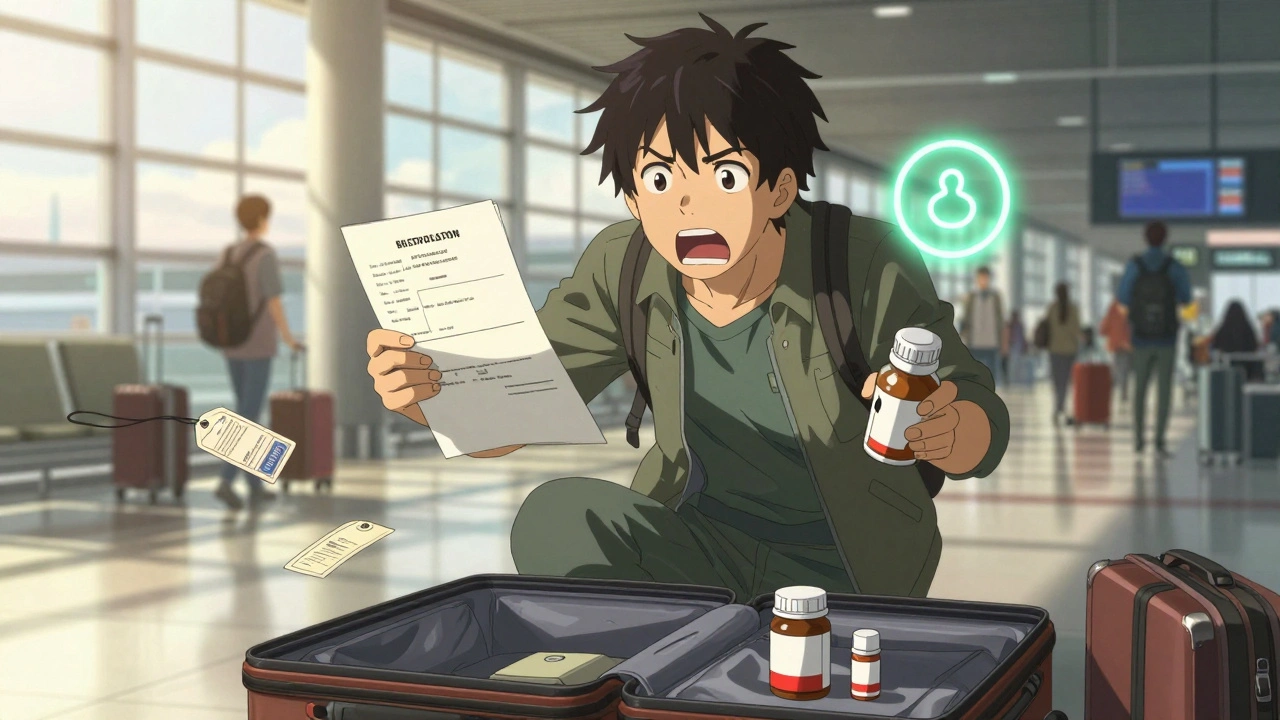
If you’re traveling and suddenly realize your medications are gone-stolen from your bag, lost in transit, or left behind in a hotel-you’re not alone. Every year, thousands of travelers face this exact panic. The good news? You can get help. The bad news? It’s not always easy, and doing it wrong can put your health at risk. This isn’t about hoping for luck. It’s about knowing exactly what to do, step by step, before you even leave home.
Before You Leave: Prepare Like a Pro
The best time to handle a lost medication crisis is before you board the plane. Most people wait until it’s too late. Don’t be one of them.Start with your prescriptions. Get a letter from your doctor that lists every medication you take, including the generic name, dosage, and reason for use. Don’t just write ‘blood pressure pill’-list lisinopril 10 mg daily. Include your diagnosis (e.g., ‘type 2 diabetes,’ ‘generalized anxiety disorder’) and your doctor’s contact info. This letter is your lifeline.
Keep your medications in their original bottles with pharmacy labels. In 63% of countries, customs and pharmacies require this to verify legitimacy. If you’ve repackaged pills into a pill organizer, you’re risking denial at borders or pharmacies. Keep the originals in your carry-on, along with a printed copy of your prescription and doctor’s letter.
Take at least a seven-day extra supply in your carry-on. IATA reports 1 in 150 checked bags get lost or delayed. If your checked luggage vanishes, your meds shouldn’t go with it.
For temperature-sensitive drugs like insulin, carry a portable cooling pack. Forty-one percent of travelers report their meds losing effectiveness after exposure to extreme heat or cold during transit. Don’t risk it.
What to Do When Medications Are Lost or Stolen
Step 1: Stay calm. Panicking won’t help. Step 2: Act fast.If your meds were stolen, file a police report immediately. Airlines require theft reports within 21 days for baggage claims under IATA Resolution 701. Even if you didn’t fly, local police reports are needed for insurance claims. Get a copy. Keep it.
If you’re on a flight and your checked bag didn’t arrive, go straight to the airline’s baggage service office. Report it within 24 hours. They can often locate and deliver your bag quickly-especially if you’re in a major hub.
Now, contact your travel insurance provider. If you have comprehensive coverage (68% of plans include it), they’ll connect you to a 24/7 assistance line. Companies like Allianz and MedAire have global networks of local doctors and pharmacies. They’ll verify your prescription, arrange a teleconsultation or in-person visit, and get you the right meds-legally and safely.
If you don’t have insurance, you’re on your own. But you’re not helpless.
How to Get a New Prescription Abroad
Most countries won’t fill a foreign prescription. That’s not a rule-it’s the law. The International Pharmaceutical Federation found 89% of countries prohibit pharmacies from honoring prescriptions from other nations.Your only legal path: see a local doctor.
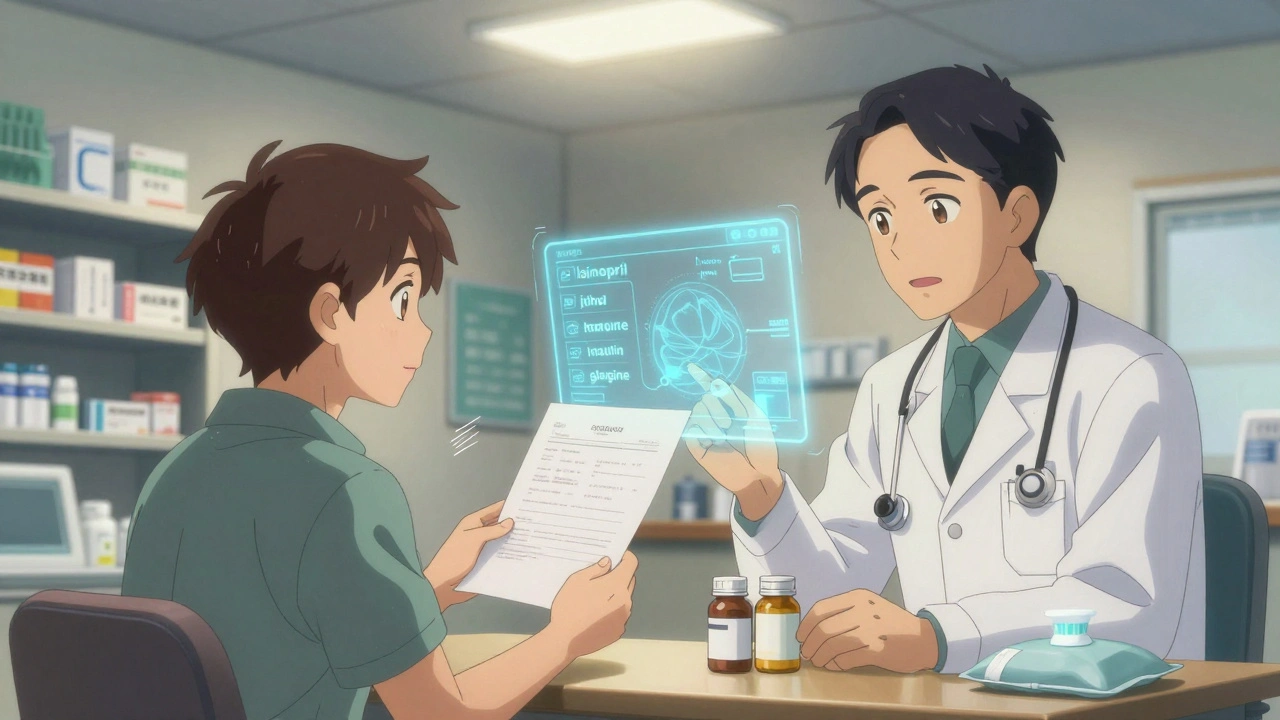
Bring your doctor’s letter and original prescription bottles. These are your proof. Without them, you’re 3.7 times more likely to face delays, according to the Journal of Travel Medicine. With them, you’re far more likely to get help.
Doctors in Western Europe and Canada are generally more familiar with U.S. prescriptions and have better systems for verifying them. Success rates for replacement within 24 hours are around 82%. In Southeast Asia, that drops to 54%. Why? Stricter controls, less access to international medical records, and higher rates of counterfeit drugs.
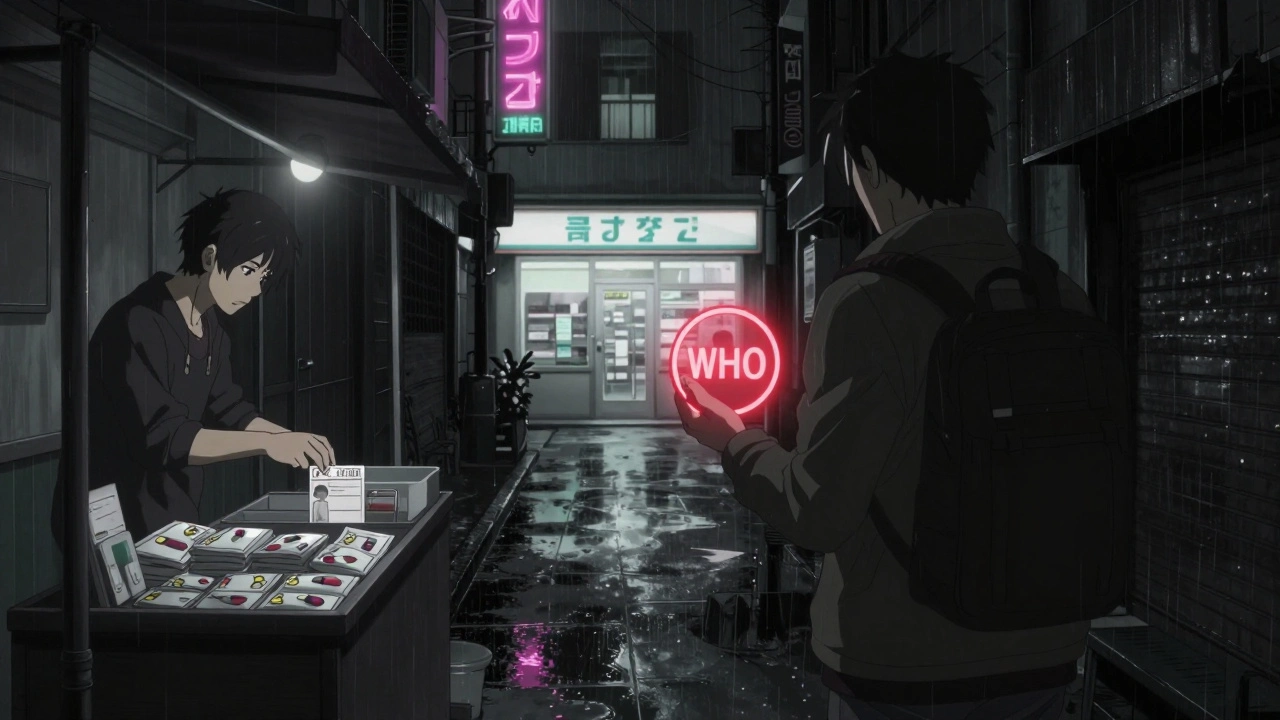
Watch out for fake meds. The WHO estimates 500,000 deaths a year come from counterfeit drugs, especially in parts of Southeast Asia and Africa. If a pharmacy looks sketchy, prices seem too low, or the packaging looks off-walk away. Even if you’re desperate.
For chronic conditions like diabetes, hypertension, or psychiatric meds, 76% of international doctors require an in-person exam before prescribing. They won’t just trust your word. Be ready to explain your condition, show your history, and possibly get blood tests or a quick check-up.
Controlled Substances: The Big Red Flag
This is where things get serious. If you’re taking Adderall, Ritalin, OxyContin, Vicodin, or any other Schedule II controlled substance, you’re in a different world.U.S. federal law doesn’t allow refills on these drugs. Even at home, you need a new prescription. Abroad? Forget it. Most countries treat these as illegal narcotics. Possessing them without a local prescription can lead to arrest, fines, or deportation.
The DEA and Ryan Haight Act block telehealth doctors from prescribing these drugs online-even to U.S. citizens abroad. No exceptions. No loopholes.
Your only option? Contact your prescribing doctor immediately. If they can issue a new prescription and fax or email it to a local clinic, you might get lucky. But don’t count on it. Your best bet is to carry extra supplies. If you’re traveling with these meds, you should already have at least a 30-day backup in your carry-on.
What Medications Are Harder to Replace?
Some drugs are simply harder to find overseas. The European Centre for Disease Prevention and Control found that cardiovascular meds (28%), psychiatric drugs (24%), and insulin (19%) are the most commonly missed or hard to replace.Insulin? Bring twice as much as you think you need. Use a cooling case. Know the generic names (e.g., glargine, lispro) because brand names vary by country.
Antidepressants? Sertraline is widely available. But if you’re on a niche drug like vortioxetine? You might be out of luck. Always research ahead.
For common meds like antibiotics or blood pressure pills, replacements are usually possible. But don’t assume. Check the regulations of your destination country before you go. The CDC’s Yellow Book 2024 says 31% of medication emergencies could be avoided with pre-trip research.
Alternatives If You Can’t Get Your Meds
If you can’t get your exact prescription, you might need a substitute. But don’t guess.Ask the local doctor: ‘Is there a therapeutically equivalent drug available here?’ They might prescribe a different brand or class with the same effect. For example, if you take atorvastatin and it’s unavailable, they might give you rosuvastatin-same class, similar results.
Never take someone else’s meds. Never buy from street vendors. Even if it looks identical. Counterfeit drugs can be laced with toxic substances or contain zero active ingredient.
Some travelers use telehealth services like MyUSADr to get U.S. prescriptions for non-controlled substances. But again-no controlled drugs. And you still need a local doctor to fill it.
Costs and Insurance: What You’ll Pay
Replacing meds abroad isn’t free. Without insurance, expect to pay:- $75-$150 in Western Europe
- $40-$90 in Southeast Asia
- $120-$200 in Latin America
These are averages for common prescriptions. Specialty drugs can cost much more.
Comprehensive travel insurance usually covers up to $500-$1,000 per incident. Basic plans? They often exclude medication replacement entirely. Check your policy before you leave. If yours doesn’t cover it, upgrade. It’s worth every dollar.
MedAire’s data shows travelers using insurance assistance get meds within 24 hours 78% of the time. Those going it alone? Only 42% succeed.
What You Should Never Do
- Don’t try to buy meds from unlicensed pharmacies or street vendors.
- Don’t take someone else’s prescription-even if it’s the same name.
- Don’t skip your dose because you think you can ‘tough it out.’
- Don’t wait until the last minute to call your doctor or insurer.
- Don’t assume your phone app (like Medisafe) will be accepted as proof. Only 17% of countries recognize digital prescriptions.
Final Checklist Before You Travel
- Get a doctor’s letter with generic drug names and dosages
- Carry meds in original bottles with pharmacy labels
- Bring at least a 7-day extra supply in your carry-on
- For insulin or temperature-sensitive drugs: bring cooling packs
- Know your destination’s drug laws (check CDC Yellow Book)
- Confirm your travel insurance covers medication replacement
- Save your insurer’s 24/7 emergency number in your phone
- Take a photo of your prescriptions and doctor’s letter and email it to yourself
Traveling with medication isn’t about luck. It’s about preparation. The difference between a smooth recovery and a medical crisis is what you do before you leave-not after you lose your pills.
Can I get my prescription refilled at a pharmacy abroad?
Almost never. In 89% of countries, pharmacies are not allowed to fill foreign prescriptions. You must see a local doctor who can issue a new prescription based on your medical history and documentation.
What if I lost my controlled substance like Adderall or OxyContin?
You cannot get these refilled abroad. U.S. federal law prohibits refills on Schedule II drugs, and most countries treat them as illegal narcotics. Your only option is to contact your prescribing doctor immediately and hope they can issue a new prescription. Always carry extra supplies-never rely on being able to replace these overseas.
Is it safe to buy medications from local pharmacies abroad?
Only if it’s a licensed, reputable pharmacy. The WHO estimates 1 in 10 medications in some regions are counterfeit. Look for official signs, ask for the pharmacy’s license, and avoid street vendors or shops that look unprofessional. If the price seems too good to be true, it probably is.
Do I need to declare my medications at customs?
Yes, in many countries. Even if you’re not asked, carry your doctor’s letter and original bottles. Some countries require you to declare all prescription drugs upon entry. Failure to do so can lead to confiscation or legal trouble, even if your meds are legal at home.
Can I use a digital copy of my prescription on my phone?
Not reliably. Only 17% of countries accept digital prescriptions as official documentation. Always carry printed copies and original bottles. A photo on your phone might help as backup, but it won’t replace physical proof.
What if my travel insurance doesn’t cover medication replacement?
You’ll need to pay out of pocket. Costs vary: $40-$200 depending on location and drug type. Contact your doctor to see if they can fax a new prescription to a local clinic. Always carry extra meds to avoid this situation entirely.
How do I know if a medication I find abroad is safe?
Check the generic name against your original prescription. Ask the pharmacist to show you the packaging and batch number. If it looks different from what you’re used to, or if the packaging seems cheap or misspelled, walk away. Ask your doctor ahead of time which equivalents are acceptable.


