
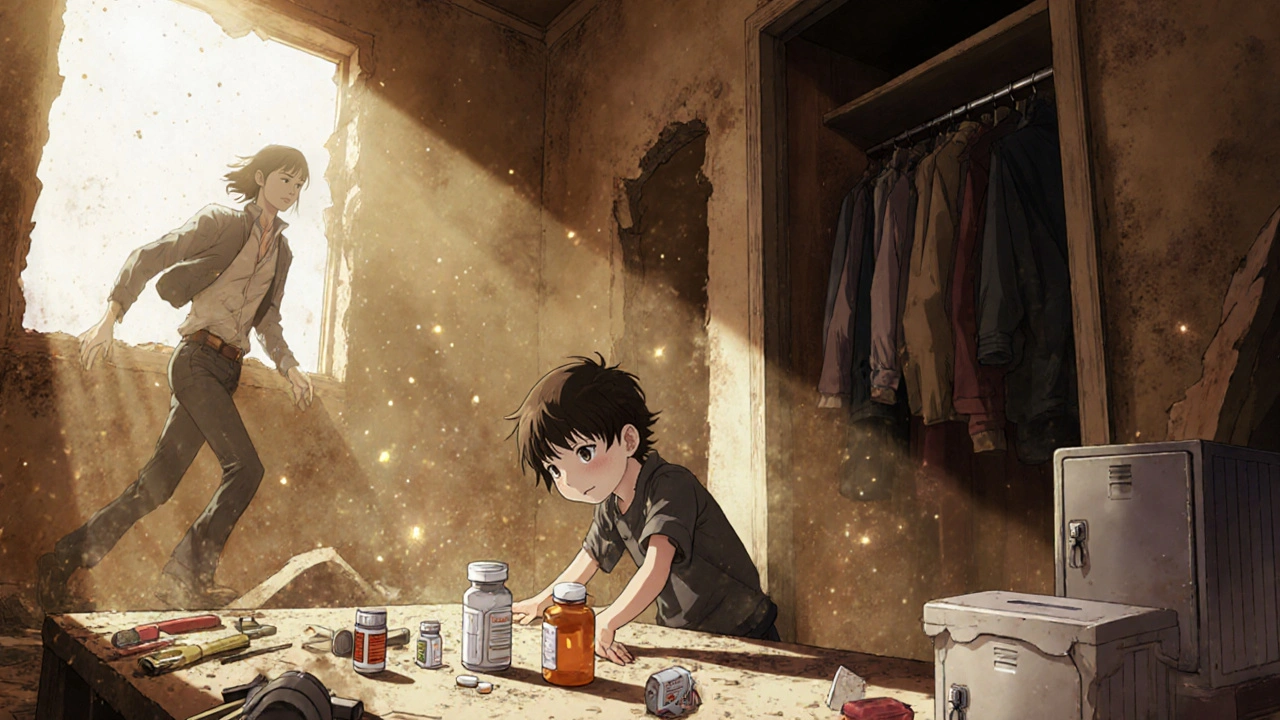
When you’re tearing down walls or packing up boxes for a move, your medications shouldn’t be an afterthought. A pill bottle left on a dusty countertop, insulin sitting in a hot car, or a bottle of painkillers tucked into a box with tools - these aren’t just careless mistakes. They’re risks. Risks to kids, pets, and even your own health. In Sydney, where home renovations are common and moves happen year-round, many people don’t realize how easily medications can be lost, damaged, or accessed by the wrong person during these chaotic times.
Why Medications Are at Risk During Moves and Renovations
Most people store meds in the bathroom cabinet - cool, right? Wrong. Bathrooms are humid. Steam from showers breaks down pills and liquids over time. The same goes for kitchens near the stove or windowsills where sunlight hits. The U.S. Environmental Protection Agency says 55% of Americans take prescription meds regularly, but almost none of them know how to protect them during household disruptions. During renovations, your usual storage spot might be ripped out. During a move, meds get tossed into boxes with books, clothes, or tools. No labels. No temperature control. No locks. That’s when accidents happen. A toddler finds a bottle of opioids. A diabetic’s insulin freezes in the back of a moving van. Expired meds get mixed with new ones. And if you don’t know what’s in that box, you might take the wrong dose - or worse, someone else does.What Temperature Your Medications Need
Not all meds are the same. Most pills and capsules need to stay between 59°F and 77°F (15°C-25°C). That’s room temperature. Not hot. Not cold. Not near a radiator or a window. Insulin, some injectables, and liquid antibiotics? They need refrigeration: 36°F to 46°F (2°C-8°C). Freeze them? They’re ruined. No warning label. No visible change. Just useless. During a move, don’t let your meds ride in the trunk. Don’t leave them in a parked car for an hour while you sign paperwork. Even a few hours in 90°F heat can destroy potency. For refrigerated meds, use a small cooler with ice packs. Check the temperature with a cheap digital thermometer. If it’s above 46°F for more than a few hours, call your pharmacist. Don’t guess.Lock Them Up - Even Temporarily
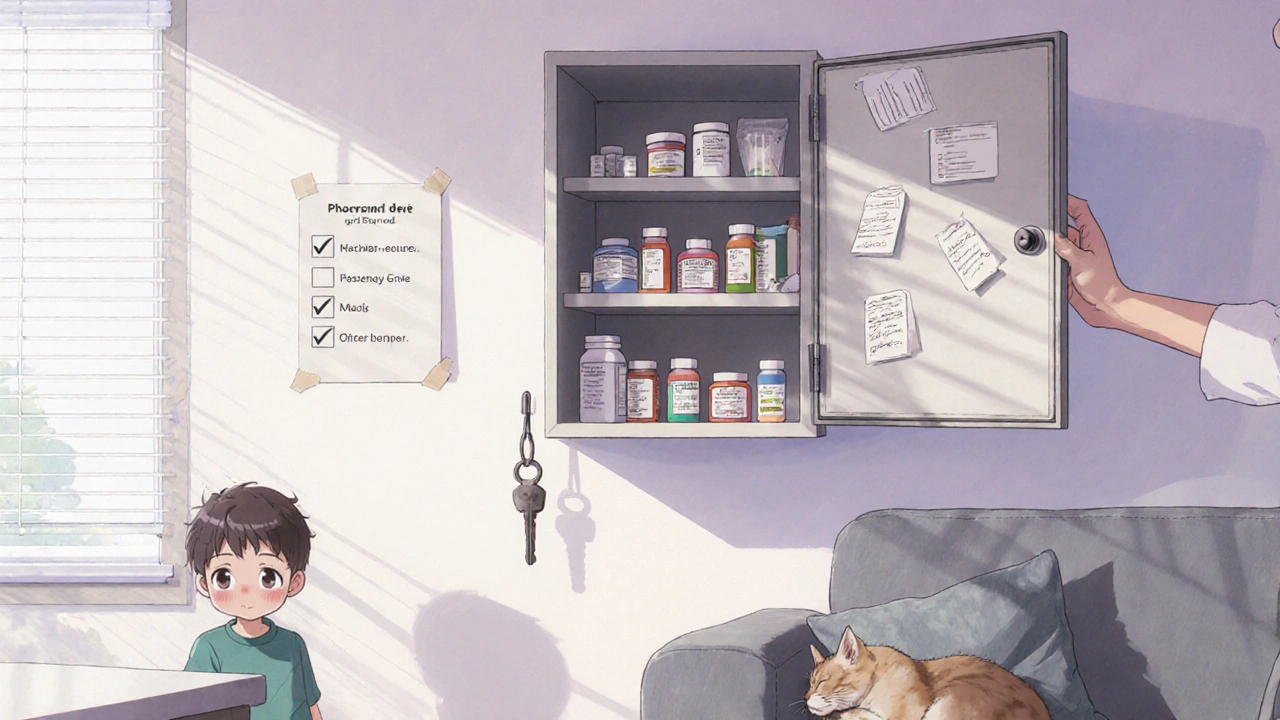
The EPA says homes should store medicines in locked cabinets, safes, or locked boxes. That’s not optional. Especially if you have kids, teens, or visitors. During renovations, your medicine cabinet might be gone. So where do you put them? Find a secure spot in a room that’s still intact - like a bedroom closet, a locked filing cabinet, or even a small lockbox you can buy for under $30. Gun safes, fireproof boxes, or toolboxes with combination locks work too. Just make sure it’s out of sight and out of reach. Not on the floor. Not in a drawer you forget about. At counter height or higher. Safe Kids Worldwide says that’s the sweet spot to keep kids from grabbing them. And don’t rely on “I’ll just keep them in my purse.” That’s not secure. Purse? Bag? Backpack? Those are easy targets. Lock it. Period.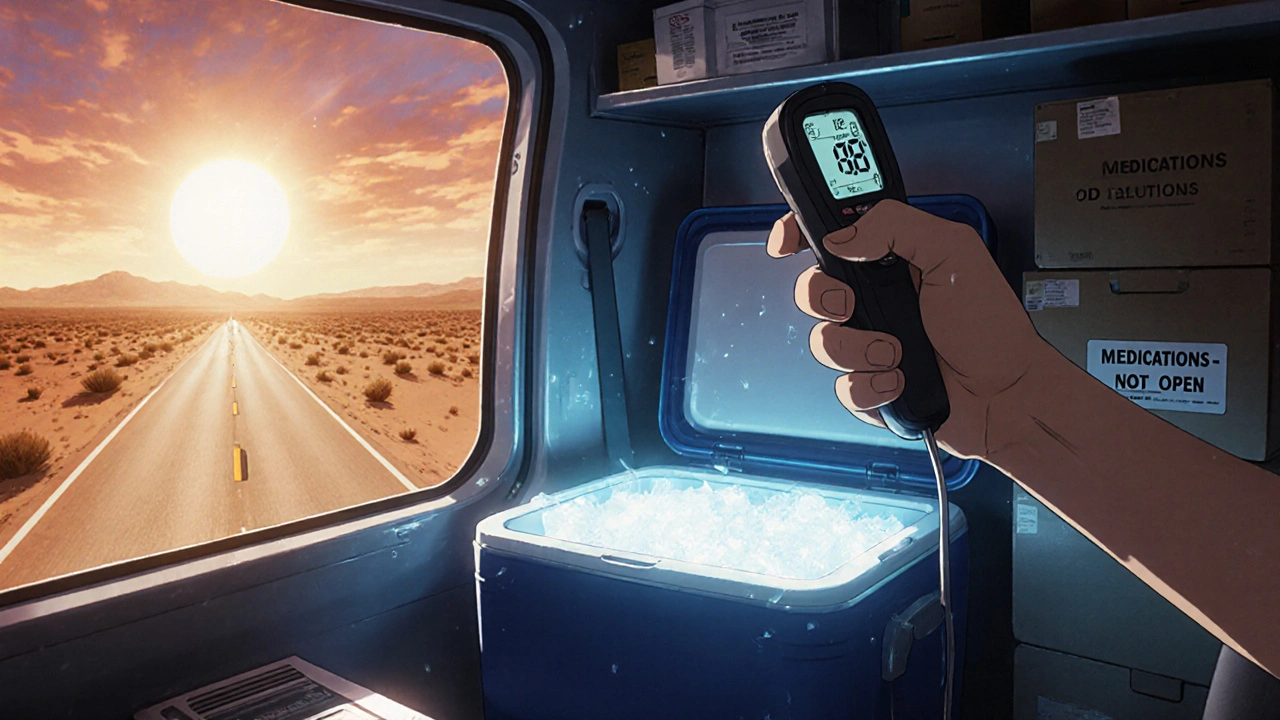
Keep Original Bottles - No Exceptions
Never transfer pills to a pill organizer unless you’re using them daily. Even then, keep the original bottle as backup. Why? Because the label has the name, dosage, doctor’s name, pharmacy, and expiration date. If you toss a pill into a random container, you’re gambling. What if you’re stressed during a move and grab the wrong bottle? You might take a high-dose opioid thinking it’s your ibuprofen. When packing for a move, keep each med in its original container. Tape the cap shut if it’s loose. Put them in a small, labeled box - “Medications - Do Not Open.” Keep that box with you, not in the moving truck. If you’re driving, put it on the seat next to you. If you’re flying, carry it in your hand luggage.Dispose of What You Don’t Need - Before You Move
Before you start packing, clean out your medicine cabinet. Toss expired, unused, or weird-looking pills. But don’t just flush them or throw them in the trash. That’s dangerous - for the environment and for people who might dig through your bins. The best option? Use a drug take-back program. In Australia, many pharmacies and hospitals run drop-off bins. Call your local pharmacy or check the Therapeutic Goods Administration website. If there’s no drop-off nearby, here’s the safe way to dispose at home:- Take pills out of the bottle.
- Mix them with something unappetizing - used coffee grounds, kitty litter, or dirt.
- Put the mix in a sealed plastic bag.
- Toss it in the regular trash.
Special Cases: Insulin, Injectables, and Controlled Substances
If you use insulin, epinephrine pens, or injectables, you need a plan. These aren’t like aspirin. They’re fragile. If they get too hot or too cold, they stop working. Don’t risk it. For insulin: Use a small insulated cooler with a cold pack. Don’t let it freeze. Test the temperature before you use it. If it looks cloudy or has particles, don’t use it - even if it’s not expired. Call your doctor. For controlled substances like opioids or benzodiazepines: Lock them. Always. And if you’re moving across state lines or countries, check local laws. Some places have strict rules about transporting these meds.What to Do After You Move or Finish Renovations
Once you’re settled, don’t just dump your meds back into the bathroom. Reassess. Find a new secure spot. Label it. Make sure everyone in the house knows where it is - and that it’s locked. Check expiration dates. Toss anything old. Make a list of what you have and when you need refills. Set a calendar reminder for pharmacy visits. Keep a backup list in your phone or wallet - in case of emergency. And if you’re unsure about any med? Call your pharmacist. They’re not just there for filling scripts. They’re your safety net. Ask: “Is this safe to store at room temperature?” “Can I keep this in my new bedroom?” “What happens if it gets warm?”Final Checklist: Before You Move or Start Renovating
- ✅ Clean out expired or unused meds - dispose of them properly.
- ✅ Keep all meds in original bottles with labels intact.
- ✅ Pack meds in a small, labeled box - keep it with you, not in the truck.
- ✅ For refrigerated meds: use a cooler with ice packs and a thermometer.
- ✅ Store meds in a locked, dry, cool spot - not the bathroom or kitchen.
- ✅ Never leave meds in a car, even for 10 minutes.
- ✅ After moving: reorganize meds in a new secure location.
Home renovations and moves are stressful enough. Don’t add the risk of accidental poisoning, lost meds, or ineffective treatment to the list. A few minutes of planning now can prevent a hospital visit later. Your family, your health, and your peace of mind are worth it.
Can I store my medications in the garage during a renovation?
No. Garages are rarely temperature-controlled. In Sydney, summer temps can hit 40°C, and winter nights can drop below 5°C. That’s way outside the 15°C-25°C range most meds need. Humidity and dust also damage packaging. Stick to a locked closet or bedroom cabinet instead.
What if I don’t have a locked cabinet during a move?
Buy a small lockbox - they cost less than $30 and fit in a suitcase. Or use a locked tool box, fireproof safe, or even a locked drawer in a piece of furniture you’re taking with you. The goal isn’t to have a high-tech safe - it’s to prevent access by kids, pets, or others. Any lock that’s hard to open without a key or code works.
Can I throw old pills in the recycling bin?
No. Recycling bins aren’t designed for pharmaceutical waste. Pills can leak into soil and water. Always use a drug take-back program, or mix them with coffee grounds or kitty litter in a sealed bag before tossing them in the trash. Flushing is only okay for specific high-risk drugs like fentanyl patches - check the label first.
How do I know if my insulin is still good after being in a hot car?
You can’t tell by looking. If insulin was exposed to temperatures above 30°C for more than a few hours, it’s likely damaged. Don’t risk it. Use a new vial. Insulin is too critical to guess with. Always carry a spare in a cooler when traveling, and never rely on the same one if it’s been in extreme heat.
Should I bring all my meds when I move?
Only bring what you’ll use in the next 30 days. Toss expired, unused, or duplicate meds before you pack. That reduces clutter, lowers risk, and makes your new home safer. If you need refills, arrange them ahead of time with your new pharmacy. Don’t haul 10 bottles you haven’t touched in a year.


