
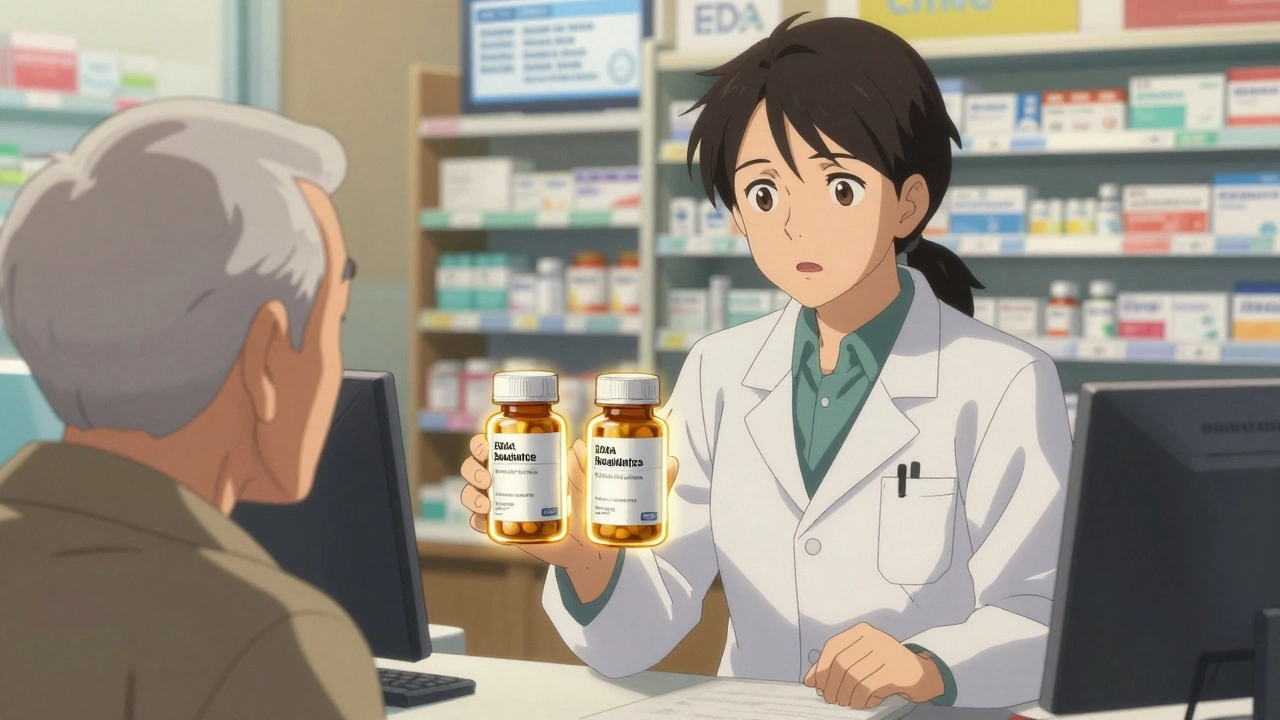
When a patient picks up a prescription and sees a pill that looks completely different from what they’re used to, their first thought isn’t always, "This is cheaper." It’s often, "Is this even the same drug?" That moment of doubt is real, and it’s happening every day in pharmacies across the country. Nearly 27% of patients express hesitation about generic medications, according to a 2021 study in the Journal of the American Pharmacists Association. And it’s not just about price. It’s about trust, appearance, and fear of the unknown.
Why Patients Doubt Generics
Patients aren’t being irrational. They’re responding to real changes they can see and feel. A pill that was once a blue oval becomes a white rectangle. The name on the bottle changes. The size, color, or shape is different. For someone managing a chronic condition like high blood pressure or diabetes, that shift feels risky. A 2019 University of Michigan study found that 78% of patients cite pill appearance as their top concern. There’s also a myth that generics contain less active ingredient. FDA surveys show 43% of patients believe generics only have 80% of the active drug. That’s not true. By law, generics must deliver the same amount of active ingredient, within a tight range of 80-125% bioequivalence to the brand-name version. That’s not a guess-it’s science, verified through clinical testing. But most patients don’t know that. Only 32% are aware of the FDA’s strict standards, according to 2022 data from the National Community Pharmacists Association. And then there’s the fear that generics are made in lower-quality facilities. That’s another myth. The same factories often make both brand and generic versions. The FDA inspects both equally. But without clear communication, patients assume the cheaper option is the lesser one.What Doesn’t Work
Saying, "It’s the same drug, just cheaper," is one of the worst things you can say. It’s true, but it misses the point. A 2023 review in U.S. Pharmacist found that this kind of dismissive language drops acceptance rates to just 31%. Patients don’t want to feel like they’re being sold a second-rate product. They want to feel heard. Focusing only on cost also backfires. Dr. Thomas Moore’s 2021 study in JAMA Internal Medicine showed that when cost is the only reason given, patient trust drops by 22%. People worry that if the only advantage is price, then maybe the quality is compromised. That’s not a rational fear-it’s a human one. And timing matters. If you wait until the patient is at the counter to explain the switch, it’s already too late. A 2022 FDA report found that 89% of patients accept generics when they’re educated at the time of prescribing. Only 63% accept them when the explanation happens at the pharmacy. That’s a 26-point gap. The conversation needs to start before the pill is even dispensed.What Actually Works
The most effective approach isn’t about giving facts-it’s about building trust. The "Ask-Tell-Ask" method has been proven in a 2020 study across 15 clinics involving over 1,200 patients. It works like this:- Ask: "What have you heard about this generic version?"
- Tell: "It has the same active ingredient as your old pill, and the FDA requires it to work the same way. Here’s what that means."
- Ask: "Can you tell me in your own words how you think this will work for you?"
The VALUE Framework
A 2023 review compared 12 communication methods. The most effective? The VALUE technique:- Validate their concern: "I understand why seeing a different pill makes you nervous."
- Acknowledge their feelings: "It’s not just about the pill-it’s about your health, and that matters."
- Listen actively: Don’t interrupt. Let them finish.
- Understand their perspective: "You’ve been on the brand for years. That’s a long time to trust something."
- Educate with empathy: Show, don’t just tell. Use visuals.
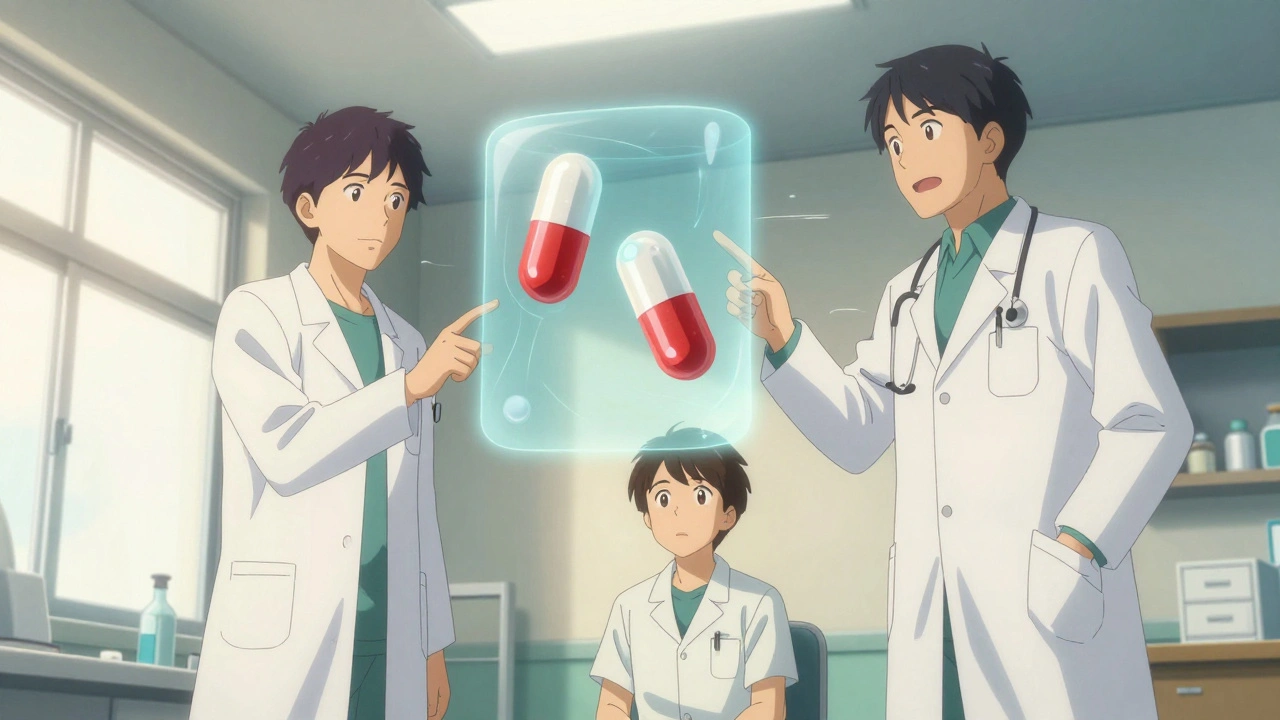
Use Visuals. Show, Don’t Just Tell.
A 2022 Healthcare Hotline survey found that 68% of patients would accept a generic if they could see a side-by-side comparison of the old and new pill. That’s why the FDA launched its Generics Smart digital toolkit in 2023. It includes 3D images of pills, videos showing how bioequivalence testing works, and even virtual reality tours of manufacturing labs. In a pilot at 15 CVS pharmacies, using these tools increased acceptance by 29%. You don’t need VR to do this. Print out two photos-one of the brand, one of the generic-and place them side by side on the counter. Point out the identical active ingredient listed on both. Say: "This part is the same. The rest is just packaging."Teamwork Makes the Difference
The best results come when prescribers and pharmacists work together. A 2022 American Medical Association report showed that when both parties communicate about generics, acceptance jumps to 85%. That’s higher than when only the pharmacist talks (67%) or only the doctor does (59%). Here’s how it works in practice: The doctor writes the prescription and adds a note: "Patient has expressed concern about generics. Please explain bioequivalence and show visual comparison." The pharmacist then has the context and the tools to have a better conversation. Electronic health records can help too. New systems now include automated prompts when a brand-name drug is prescribed: "Consider generic substitution. Patient may benefit from education." That small nudge changes behavior.Don’t Forget the Teach-Back Method
One of the most powerful tools in any clinician’s toolkit is the teach-back method. After explaining, ask: "Can you explain back to me how you’ll know this generic will work the same way?" In a Kaiser Permanente case study, using teach-back with 12,000 patients raised generic acceptance from 54% to 81%. Why? Because if a patient can explain it in their own words, they’ve internalized it. They’re not just nodding along-they understand.
What About Older Patients and Rural Communities?
Hesitation isn’t evenly distributed. The 2023 AHRQ report found that 38% of patients over 65 are hesitant, compared to 22% of younger adults. Rural patients show even higher rates-47% versus 29% in urban areas. Why? Older patients often have more medications, more experience with brand names, and less exposure to digital health tools. Rural patients may have fewer pharmacy visits, less access to follow-up care, and more reliance on long-standing prescriptions. For these groups, repetition matters. Don’t assume one conversation is enough. Offer a printed handout. Schedule a follow-up call. Use simple language. Avoid jargon like "bioequivalence." Say: "It works the same. The FDA made sure of it."Time Is the Biggest Barrier
Let’s be honest: most providers don’t have five minutes to spend on this. A 2020 JAMA Internal Medicine study found that physicians average just 18 seconds before interrupting patients who raise medication concerns. And half of all psychosocial concerns go unnoticed. But here’s the good news: Medicare Part D now reimburses for 10-minute Medication Therapy Management (MTM) sessions specifically for discussing medication concerns. That’s your opening. Use it. Train your staff to flag patients who’ve switched generics before. Build a 3-minute script into your workflow. You don’t need a perfect conversation. You need a consistent one. Even a 90-second chat-"I know this looks different, but it’s the same medicine. Here’s a picture."-can make a difference.Document It
Starting in January 2024, the FDA requires all generic substitution discussions to be documented in patient records using standardized language. That’s not bureaucracy-it’s accountability. It ensures that every patient gets the same level of care, no matter which pharmacy they visit. Use phrases like:- "Patient expressed concern about generic substitution. Explained bioequivalence and provided visual comparison. Patient agreed to trial."
- "Teach-back confirmed patient understands active ingredient is identical."
What’s Next?
The future is personalization. The NIH just funded a $2.3 million study testing AI-driven communication tools that adapt to individual patient beliefs. Imagine a system that knows a patient distrusts generics because they had a bad experience years ago-and automatically suggests a different approach. For now, the tools you have are enough. You don’t need fancy tech. You need honesty, empathy, and a willingness to listen. Generics aren’t just cheaper. They’re safe. They’re effective. And they’re saving patients and the system billions every year. But none of that matters if patients don’t believe it. Your job isn’t to convince them. It’s to help them feel safe enough to try.Why do patients think generics don’t work as well as brand-name drugs?
Patients often believe generics are less effective because of changes in pill appearance-color, shape, or size-which triggers suspicion. Misinformation is also common; 43% of patients mistakenly think generics contain only 80% of the active ingredient. Many also assume lower price equals lower quality, even though the FDA requires generics to meet the same strict standards as brand-name drugs. Lack of education and past negative experiences, like switching to a generic that didn’t seem to work (often due to placebo effects or unrelated health changes), reinforce these beliefs.
Is it true that generics are made in lower-quality factories?
No. The FDA inspects both brand-name and generic manufacturing facilities using the same standards. In fact, many brand-name companies also produce generic versions of their own drugs. The FDA conducts over 3,500 inspections annually across global facilities, and both types of drugs must pass identical quality tests. The difference isn’t in the factory-it’s in the marketing costs. Generics don’t spend billions on advertising, so they can be sold at a lower price without sacrificing safety or effectiveness.
How can I explain bioequivalence to a patient in simple terms?
Say this: "The active ingredient in this generic pill is exactly the same as in the brand-name version. The FDA requires it to work the same way in your body-within a very small range. Think of it like two different brands of aspirin. They look different, but they both contain the same medicine to relieve pain. The only difference is the name on the bottle and the price." You can add: "Every generic must pass the same tests as the brand before it’s sold. That’s not just a recommendation-it’s the law."
What should I say if a patient says, "I’ve been on this brand for years and it works better for me"?
Acknowledge their experience first: "I hear you-that’s important. You’ve been doing well on this medication, and that matters." Then explain: "Sometimes, when people switch to a new pill-even one that’s identical-they notice differences in how they feel. That’s often because the shape, color, or size changed, not because the medicine changed. Your body is reacting to the new look, not the active ingredient." Offer to try the generic for a short time, and suggest tracking symptoms. If there’s a real issue, you can always switch back. Most patients find no difference at all.
Can I use the same approach for all patients?
No. One-size-fits-all doesn’t work with medication concerns. Older adults, people in rural areas, and those with low health literacy need more time and simpler language. Use visuals. Repeat key points. Avoid jargon. For younger, tech-savvy patients, you might share a link to the FDA’s Generics Smart toolkit. Always start by asking what they already know-then tailor your response to their level of understanding and concern.
How do I handle it if a patient refuses a generic outright?
Don’t push. Instead, say: "I understand this isn’t the right choice for you right now. Let’s talk about what would make you feel more comfortable trying it in the future." Document their reasons. Offer to re-engage later. Sometimes, a patient just needs time. If they’re on a high-cost medication, ask if they’d be open to a small trial-just one month-to see how they feel. Most people who refuse at first will reconsider after seeing the pill comparison or hearing a personal endorsement.
Are there any tools I can use to make this easier?
Yes. The FDA offers free tools: printed counter mats with side-by-side pill images, brochures explaining bioequivalence, and videos showing how generics are tested. Many pharmacies also have access to digital pill identifiers that let you pull up images of both brand and generic versions. Print two photos and place them on the counter. Point out the identical active ingredient. That simple act reduces hesitation by nearly 70%.
Why does timing matter so much?
Because the moment a patient sees the new pill, their brain goes into alert mode. If they’ve already picked it up and are confused, it’s harder to change their mind. But if they hear about the switch before they even get to the pharmacy-during their doctor’s visit-they’re more open. Studies show 89% accept the generic when educated at prescribing time, versus 63% when told only at the counter. That’s why collaboration between prescribers and pharmacists is so powerful.


