
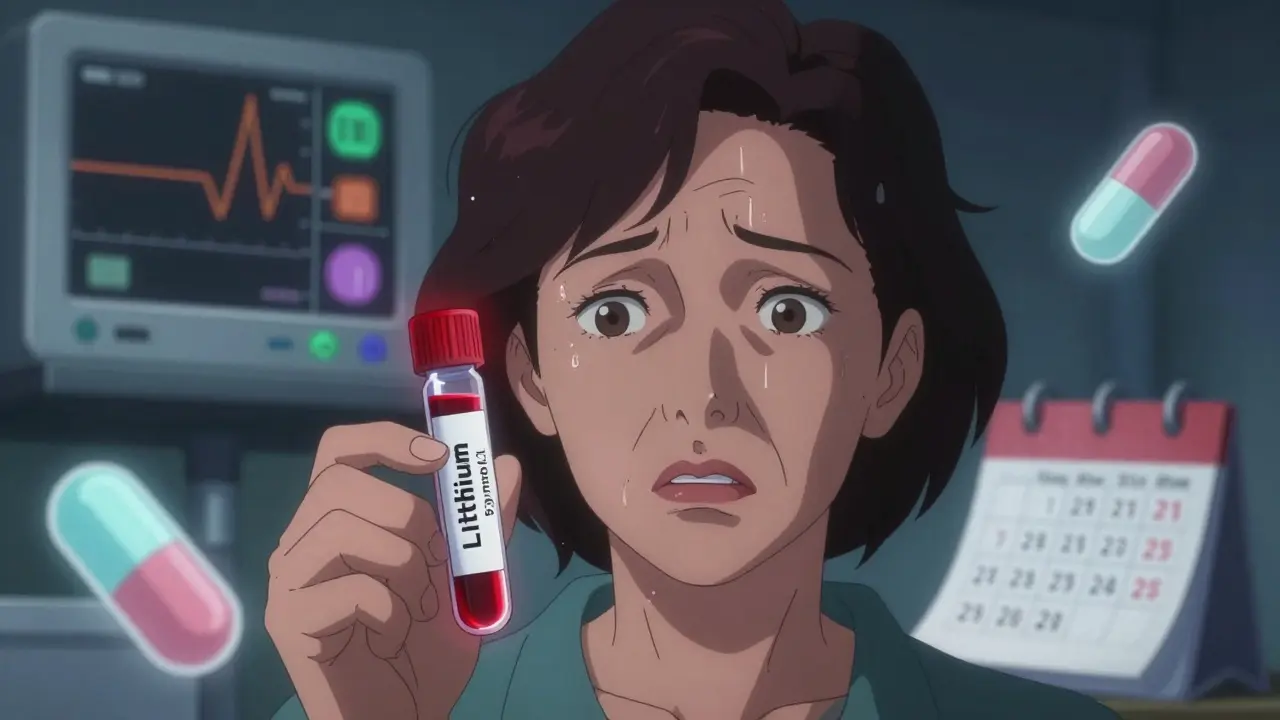
Lithium Toxicity Risk Calculator
Current Lithium Status
Medications You're Taking
Raises lithium levels by 25-40%
Raises lithium levels by 10-25%
Raises lithium levels by 15-30%
Raises lithium levels by 15-30%
Raises lithium levels by 5-10%
Many people with bipolar disorder rely on lithium to stabilize their mood - and for good reason. It’s one of the few medications proven to cut suicide risk by nearly half. But here’s the catch: lithium has a razor-thin safety margin. Too little, and it doesn’t work. Too much, and it can land you in the hospital - or worse. The biggest danger? Common drugs like diuretics and NSAIDs can quietly push lithium levels into the toxic range without you noticing.
Why Lithium Is So Fragile
Lithium isn’t broken down by your liver. It doesn’t get stored in fat or bound to proteins. Instead, it travels through your bloodstream and gets filtered out by your kidneys. Almost all of it is removed through glomerular filtration, and then your kidneys reabsorb some of it back into your blood - the same way they handle sodium. That’s the problem. Anything that messes with how your kidneys handle sodium? It’ll mess with lithium too.The safe range for lithium in your blood? Between 0.6 and 1.2 mmol/L. That’s it. Cross 1.5 mmol/L, and you’re in mild toxicity territory - think nausea, shaky hands, or dizziness. Hit 2.0 mmol/L? That’s moderate, with confusion, muscle weakness, and vomiting. Over 2.5 mmol/L? That’s severe. Seizures, kidney failure, coma. And yes, people have died from this.
Here’s what makes this even scarier: you might not feel anything until it’s too late. Lithium doesn’t always cause obvious symptoms right away. By the time you notice, levels could already be dangerously high. That’s why regular blood tests aren’t optional - they’re lifesaving.
Diuretics: The Silent Lithium Boosters
Diuretics - often called water pills - are prescribed for high blood pressure, heart failure, or swelling. But not all diuretics are created equal when it comes to lithium.Thiazide diuretics - like hydrochlorothiazide and bendroflumethiazide - are the worst offenders. They act on the part of the kidney where lithium gets reabsorbed. Studies show they can spike lithium levels by 25% to 40%. In some cases, levels have jumped fourfold. One case report from New Zealand described a 72-year-old woman who went from a safe level (0.8 mmol/L) to toxic (1.9 mmol/L) after starting a thiazide. She didn’t survive.
Loop diuretics - like furosemide - are less risky, but still dangerous. They raise lithium levels by 10% to 25%, especially in people with already reduced kidney function (eGFR below 60). Still, if you need a diuretic and you’re on lithium, furosemide is the safer pick.
Here’s the bottom line: if you’re on lithium and your doctor prescribes a diuretic, you need to act. Get your lithium level checked within 4 to 5 days. You may need to lower your lithium dose by 20% to 25%. And don’t assume your doctor knows - if you’re seeing a new provider for high blood pressure, make sure they know you’re on lithium.
NSAIDs: The Over-the-Counter Trap
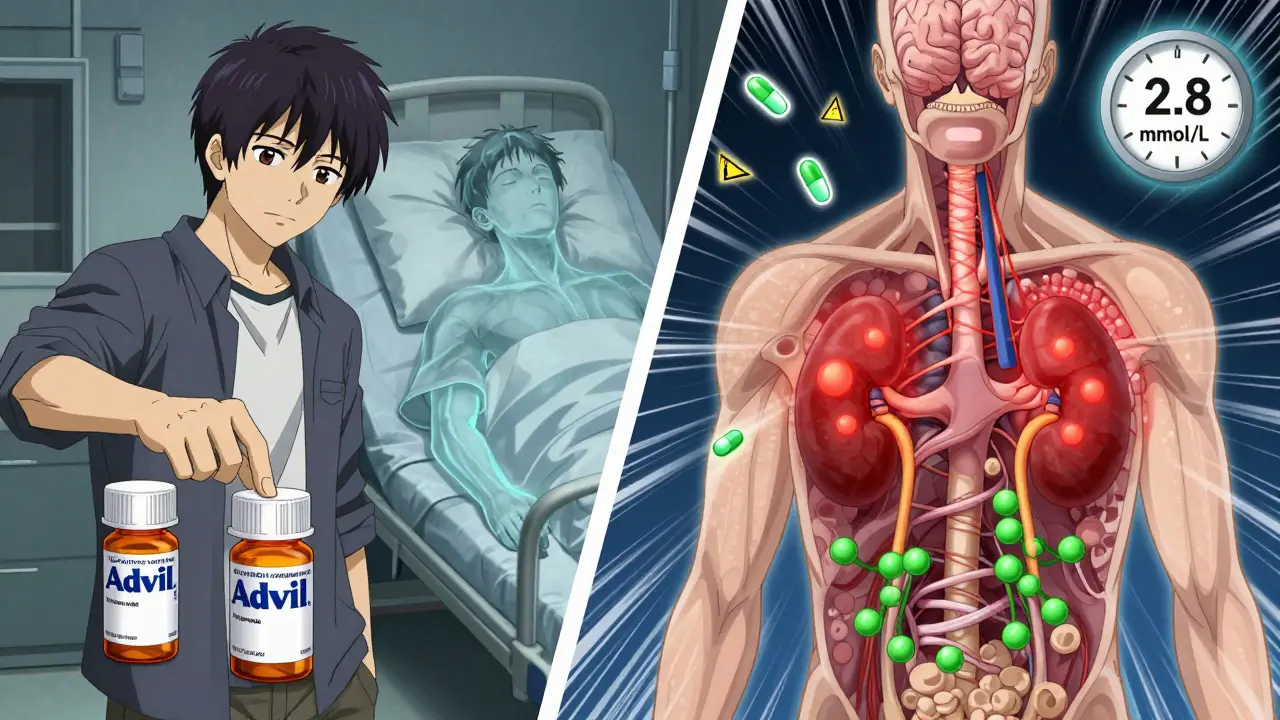
NSAIDs - ibuprofen, naproxen, diclofenac - are everywhere. You can buy them without a prescription. But they’re not harmless when paired with lithium.These drugs block prostaglandins in the kidneys. That reduces blood flow to the kidneys by 10% to 20%. Less blood flow means less lithium gets filtered out. The result? Lithium builds up.
Not all NSAIDs are equal. Indomethacin is the worst, raising lithium levels by 20% to 40%. Piroxicam and naproxen are next, with 15% to 30% increases. Even ibuprofen - the go-to for headaches - can push levels up by 15% to 30%. And here’s the scary part: people take these daily for arthritis, back pain, or menstrual cramps. They don’t think it’s a big deal.
One study described a patient who took 600 mg of ibuprofen three times a day for back pain. Within days, lithium levels hit 2.8 mmol/L - severe toxicity. Even after dialysis, doctors warned: intracellular lithium doesn’t clear as fast. You can still crash hours or days later.
What’s the safest option? Celecoxib. It has the weakest effect, raising lithium levels by only 5% to 10%. If you need an NSAID long-term, ask your doctor about switching to celecoxib. But even then - monitor levels.
Other Drugs That Can Trigger Toxicity
It’s not just diuretics and NSAIDs. Other common meds can also interfere:- ACE inhibitors (like lisinopril): raise lithium by 15% to 25%
- ARBs (like valsartan): increase levels by 10% to 20%
- Calcium channel blockers (like verapamil): don’t raise lithium levels, but can worsen tremors and dizziness
- Antidepressants (especially SSRIs like fluoxetine): can increase lithium levels by 10% to 20%
And don’t forget supplements. Herbal products like St. John’s Wort or green tea extract? No one knows how they interact. The NHS warns: there’s not enough data to say they’re safe. If you’re taking anything - even a vitamin or tea - tell your psychiatrist.
What You Need to Do: A Practical Checklist
If you’re on lithium, here’s your action plan:- Get a baseline test. Before starting any new drug, check your lithium level and kidney function (eGFR).
- Test early and often. If you start a diuretic or NSAID, get your lithium level checked in 4 to 5 days. Then again at 1 week, and monthly for the first 3 months.
- Don’t self-medicate. If you have a headache or joint pain, don’t grab ibuprofen. Ask your doctor first. Even one dose can be risky.
- Know your numbers. Keep a log: lithium level, dose, date, and any new meds. Share this with every doctor you see.
- Watch for symptoms. Shaky hands, nausea, confusion, frequent urination, or muscle weakness? Call your doctor immediately. Don’t wait for a blood test.
Doctors should reduce your lithium dose by 15% to 25% when starting an NSAID or diuretic. But if you’re older, have kidney disease, or are dehydrated, the risk is even higher. Drink plenty of water. Avoid saunas, intense exercise, or hot weather. Sweating wipes out sodium - and that makes your kidneys hold onto lithium like a lifeline.
What’s Changing in 2026
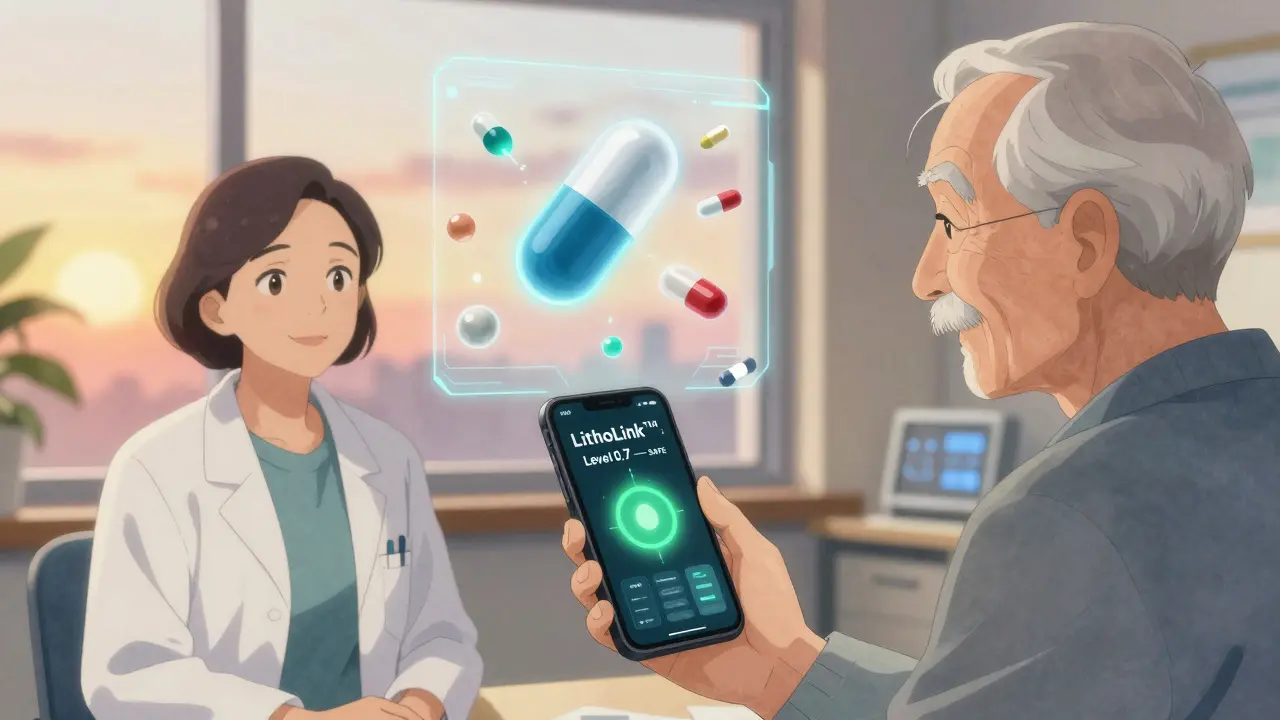
New tools are helping. In 2023, the FDA approved a smartphone-connected device called LithoLink™ that lets you test your lithium level at home. Results go straight to your doctor. It’s not perfect - but it helps people who forget appointments or live far from labs.Researchers are also studying genetic factors. Some people have a variation in the CYP2D6 gene that makes them process lithium slower. If you’re a poor metabolizer, even small doses of NSAIDs can be dangerous. Genetic testing isn’t routine yet - but it’s coming.
And there’s hope on the horizon: a new nano-encapsulated form of lithium citrate is in Phase II trials. Early results show it causes 40% less fluctuation in blood levels when taken with ibuprofen. That could mean fewer crashes, fewer hospital visits, and more people staying on lithium safely.
Final Thought: Lithium Still Matters
Lithium isn’t perfect. But for many, it’s the only thing that stops suicidal thoughts. The goal isn’t to stop using it - it’s to use it smarter. Every person on lithium should have a plan: clear rules about what meds to avoid, a schedule for blood tests, and a list of symptoms to watch for. Talk to your doctor. Write it down. Keep it handy.You don’t need to live in fear. But you do need to be informed. Because when lithium and common drugs collide, the stakes aren’t just high - they’re life or death.
Can I take ibuprofen if I’m on lithium?
It’s risky. Ibuprofen can raise lithium levels by 15% to 30%, especially with regular use. If you need pain relief, talk to your doctor first. They might suggest acetaminophen (Tylenol) instead - it doesn’t affect lithium. If you must use ibuprofen, get your lithium level checked within 5 days and avoid long-term use.
How often should lithium levels be checked?
When stable, every 3 to 6 months is standard. But if you start a new drug like a diuretic or NSAID, check levels every 4 to 5 days for the first week, then weekly for the first month. After that, monthly for 3 months. If you’re over 65, have kidney issues, or are dehydrated, check even more often.
What diuretic is safest with lithium?
Furosemide (a loop diuretic) is safer than thiazides like hydrochlorothiazide. Thiazides raise lithium levels in 75% to 85% of users. Furosemide only increases levels in 15% to 25%. If you need a diuretic, ask if furosemide is an option - and monitor levels closely.
Can lithium toxicity be reversed?
Yes, but it depends on severity. Mild cases (levels 1.5-2.0 mmol/L) often improve with stopping the interacting drug and drinking fluids. Moderate to severe cases (above 2.0 mmol/L) may need hospitalization. In critical cases, hemodialysis is required - because lithium doesn’t just stay in the blood. It builds up in brain and muscle cells, and it takes longer to clear from there.
Are there any NSAIDs that are safe with lithium?
Celecoxib (Celebrex) has the weakest interaction, raising lithium levels by only 5% to 10%. It’s not risk-free, but it’s the safest NSAID option if you absolutely need one. Still, monitor levels. Avoid all other NSAIDs - including over-the-counter ones like Advil or Aleve - unless your doctor says otherwise.


