
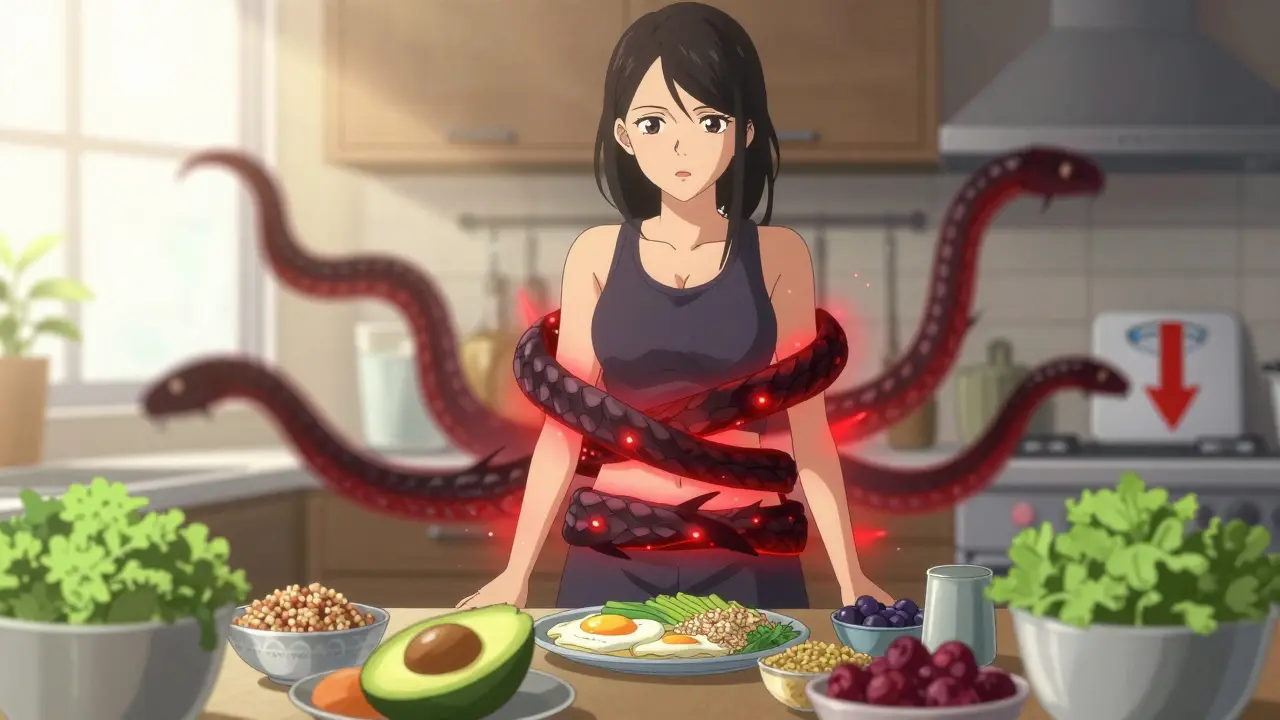
Why Losing Weight with PCOS Feels Impossible
If you have PCOS and have tried every diet under the sun-keto, intermittent fasting, low-fat, calorie counting-you’re not broken. You’re not lazy. You’re fighting a biological system that’s working against you.
Most people think weight gain is just about eating too much and moving too little. But with PCOS, it’s not that simple. The real culprit? Insulin resistance. It’s not just a side effect-it’s the engine driving the whole problem.
When your body becomes resistant to insulin, your pancreas pumps out more and more to try and force glucose into your cells. That extra insulin doesn’t just sit around. It tells your body to store fat, especially around your belly. It also tells your ovaries to make more testosterone. More testosterone means more abdominal fat, more cravings, and less chance of ovulating. It’s a loop: insulin resistance → weight gain → worse insulin resistance → more weight gain.
Studies show 70-95% of women with PCOS who are overweight have insulin resistance. But even lean women with PCOS? Up to 75% still have it. That means your weight doesn’t define whether you have this problem. It’s hidden, metabolic, and deeply tied to how your body handles food.
How Insulin Resistance Turns Food Into Fat
Insulin isn’t just a blood sugar regulator. It’s your body’s main fat-storage hormone. When insulin levels stay high-like they do with PCOS-your body stops burning fat and starts storing it. Even if you eat the same amount as someone without PCOS, your body is more likely to turn it into fat, especially visceral fat around your organs.
Here’s how it works:
- Cravings spike: High insulin crashes your blood sugar after meals, triggering intense hunger, especially for sugar and carbs. You’re not weak-you’re biologically wired to eat more.
- Fat storage kicks in: Insulin blocks the enzyme that breaks down fat. So even if you’re in a calorie deficit, your body won’t touch stored fat until insulin drops.
- Appetite hormones go haywire: Insulin resistance lowers leptin (the fullness hormone) and raises ghrelin (the hunger hormone). You feel hungry even after eating.
- Abdominal fat sticks: Unlike typical female fat distribution (hips and thighs), PCOS pushes fat into your belly. That’s not just cosmetic-it’s dangerous. Belly fat releases inflammatory chemicals that make insulin resistance worse.
This isn’t about willpower. It’s biochemistry. Trying to lose weight with PCOS without fixing insulin resistance is like trying to drain a bathtub with the tap still running.
The Health Risks You Can’t Ignore
Weight gain with PCOS isn’t just about how you look. It’s about how long you’ll live-and how well.
Women with PCOS are up to seven times more likely to develop type 2 diabetes. Half of all women with PCOS will have prediabetes by age 40. And it’s not just diabetes. High insulin levels raise blood pressure, lower good cholesterol (HDL), and increase triglycerides. That’s the recipe for heart disease.
Abdominal fat is especially risky. It’s not just fat-it’s active tissue that releases inflammatory signals. That inflammation worsens insulin resistance, triggers acne and hair growth, and increases your risk of endometrial cancer due to unopposed estrogen.
And then there’s sleep apnea. One in three women with PCOS and excess weight has it. That means interrupted breathing at night, poor sleep, more fatigue, and even worse insulin resistance the next day.
This isn’t scare tactics. This is data from the CDC, the NHS, and peer-reviewed studies. PCOS isn’t just a reproductive issue. It’s a metabolic disorder. And if you ignore the weight, you’re ignoring your long-term health.

What to Eat: The Real PCOS Diet
There’s no magic PCOS diet. But there is a science-backed approach: lower insulin spikes.
You don’t need to cut out carbs entirely. But you need to choose them wisely-and pair them with protein and fat to slow digestion.
Here’s what works:
- Choose low-glycemic carbs: Oats, quinoa, sweet potatoes, legumes, berries, apples. These release sugar slowly. Avoid white bread, pasta, rice, and sugary cereals.
- Protein at every meal: Eggs, chicken, fish, tofu, Greek yogurt. Protein keeps insulin stable and reduces cravings. Aim for 20-30g per meal.
- Healthy fats are your friend: Avocado, nuts, olive oil, fatty fish. Fat slows carb absorption and helps balance hormones.
- Fiber is non-negotiable: 25-30g daily. Vegetables, chia seeds, flaxseed, beans. Fiber binds to excess estrogen and insulin in the gut and helps flush them out.
- Limit added sugar: Even “healthy” sugars like honey, maple syrup, and agave spike insulin. Read labels-sugar hides in sauces, yogurts, and even “low-fat” products.
One simple rule: If it comes in a box and has more than 5g of sugar per serving, skip it. If it’s white and refined, avoid it.
And eat regularly. Skipping meals makes insulin levels swing wildly. Aim for 3 meals and 1-2 snacks, spaced 4-5 hours apart. Don’t let yourself get starving-that’s when cravings take over.
What to Avoid (Even If It’s “Healthy”)
Some foods marketed as healthy are actually PCOS traps:
- Fruit juice: Even 100% organic juice removes fiber and dumps sugar into your bloodstream fast. Eat the whole fruit instead.
- Gluten-free processed snacks: Many are just sugar and starch with a fancy label. Check the ingredients.
- Low-fat dairy: Fat helps slow insulin spikes. Full-fat yogurt and cheese are better than skimmed versions loaded with thickeners and sugar.
- Artificial sweeteners: Studies suggest they may still trigger insulin responses and increase cravings. Stick to water, herbal tea, or sparkling water with lemon.
Also, avoid extreme diets. Starvation, prolonged fasting, or cutting carbs to zero can stress your body and raise cortisol. That makes insulin resistance worse. Balance is key.

Small Changes That Actually Work
You don’t need to overhaul your life overnight. Start with one change and build from there.
- Swap your morning cereal for scrambled eggs with spinach and avocado. You’ll feel full longer and avoid the 10 a.m. crash.
- Drink water before meals. Thirst is often mistaken for hunger. One study showed this simple habit reduced calorie intake by 13%.
- Walk 20 minutes after dinner. Light movement after eating lowers blood sugar spikes by up to 30%.
- Get 7 hours of sleep. Poor sleep increases ghrelin and lowers leptin. Your body will crave carbs if you’re tired.
- Track your meals for one week. Not to count calories-but to notice patterns. Do you crave sugar after stress? After skipping breakfast? Awareness is the first step to change.
Weight loss with PCOS is slow. Don’t expect 10 pounds in two weeks. Aim for 1-2 pounds a month. That’s sustainable. That’s healing. That’s real progress.
It’s Not Just About the Scale
Progress isn’t always visible on the scale. You might not lose weight right away-but you might notice:
- Less bloating
- Better sleep
- Clearer skin
- More energy
- Regular periods returning
Those are wins. They mean your insulin is improving. Your hormones are rebalancing. Your body is healing.
And when your insulin drops, your body finally starts burning fat. Not because you’re starving yourself. But because you stopped feeding the cycle.
When to Ask for Help
If you’ve tried diet changes and still feel stuck, talk to your doctor. Metformin, a medication that improves insulin sensitivity, is often prescribed for PCOS. It’s not a quick fix-but it can help break the cycle when combined with diet.
Consider seeing a registered dietitian who specializes in PCOS. They can help you build a plan that fits your life, not a rigid rulebook.
And if emotional eating is part of your struggle? You’re not alone. Many women with PCOS use food to cope with stress, frustration, or shame. Therapy or support groups can help you untangle that.
You’re not fighting just your body. You’re fighting a system that told you weight loss is about discipline. But with PCOS, it’s about biology. And biology can be managed.
Start small. Stay consistent. Be kind to yourself. The scale isn’t the boss. Your health is.
Can you lose weight with PCOS without medication?
Yes, many women lose weight with PCOS through diet and lifestyle changes alone. The key is focusing on reducing insulin resistance by eating low-glycemic foods, getting enough protein and fiber, avoiding sugar, and moving regularly. Medications like metformin can help speed things up, but they’re not required. Diet and habits are the foundation.
Why do I crave sugar so much with PCOS?
High insulin levels cause your blood sugar to spike and crash after eating carbs. That crash triggers intense cravings for sugar to bring your energy back up. It’s not a lack of willpower-it’s your hormones. Protein and healthy fats with meals help stabilize blood sugar and reduce these crashes.
Is keto good for PCOS?
Keto can help lower insulin and improve symptoms for some women with PCOS. But it’s not necessary or sustainable for everyone. A lower-carb, balanced diet with whole foods works just as well without the restrictions. If you try keto, make sure you’re eating enough fiber and healthy fats, and don’t cut out vegetables.
Does losing weight cure PCOS?
No, but it can reverse many symptoms. Losing just 5-10% of body weight can restore ovulation, improve insulin sensitivity, reduce acne and hair growth, and lower diabetes risk. PCOS doesn’t disappear, but its impact can shrink dramatically with weight management.
Why is belly fat so hard to lose with PCOS?
High insulin and testosterone push fat storage to the abdomen. Belly fat is also more metabolically active and releases chemicals that worsen insulin resistance. That’s why it’s stubborn. The solution isn’t more crunches-it’s lowering insulin through diet, sleep, and stress management.
How long does it take to see results from a PCOS diet?
Most women notice less bloating and more energy within 2-4 weeks. Cravings often drop after 3-6 weeks. Weight loss usually starts slowly-around 0.5 to 1 pound per week. Hormonal improvements like better skin or regular periods can take 3-6 months. Patience and consistency matter more than speed.


