
Pharmacist Flagging Issues: What You Need to Know About Medication Safety Alerts
When a pharmacist flagging issue, a warning triggered by a pharmacist to prevent a harmful medication error. Also known as medication safety alert, it’s often the last line of defense before a wrong drug, dose, or interaction reaches you. These flags aren’t just bureaucracy—they’re lifesavers. Every day, pharmacists spot problems that doctors miss: a patient on three blood thinners, a drug that clashes with their kidney condition, or a dosage that’s ten times too high. These aren’t rare events. A 2023 study in the Journal of Patient Safety found that over 40% of medication errors in community pharmacies are caught only because a pharmacist paused to investigate a red flag.
What triggers these flags? It’s often drug interactions, when two or more medications react in a harmful way. For example, mixing a common antidepressant like sertraline with a migraine drug like sumatriptan can cause serotonin syndrome—a dangerous spike in brain chemicals. Or dispensing errors, mistakes made when the wrong pill or dose is given out, like confusing levothyroxine with lansoprazole because their labels look similar. Even something as simple as writing "QD" instead of "once daily" can lead to a patient taking four times the intended dose. Pharmacists use software alerts, their own experience, and patient profiles to catch these before they become problems.
You’re not just a passive recipient of these alerts. You can help. Always bring a full list of your medications—prescription, over-the-counter, and supplements—to every pharmacy visit. Tell them if you’ve had side effects before. Ask: "Is this safe with everything else I’m taking?" If a pharmacist pulls you aside to ask questions, don’t brush it off. That’s them doing their job. These flags exist because real people have been hurt. One man in Ohio took a blood thinner meant for his wife because the bottles looked alike. He nearly died. That’s why pharmacists now double-check names, look at photos on file, and flag anything that doesn’t fit.
The collection below dives into the real-world cases where these flags matter most. You’ll find stories about dangerous abbreviations like QD vs QID, how switching to generics can trigger unexpected reactions, and why older adults on multiple meds are at highest risk. You’ll learn how insulin allergies, anticholinergic burden, and inhaler mistakes all show up in pharmacist alerts. These aren’t abstract concepts—they’re daily decisions made by pharmacists who see the same patterns over and over. And if you’re on any chronic medication, you’re one flag away from a preventable mistake. The posts here give you the tools to understand those warnings, ask the right questions, and make sure you’re never just a number on a screen.
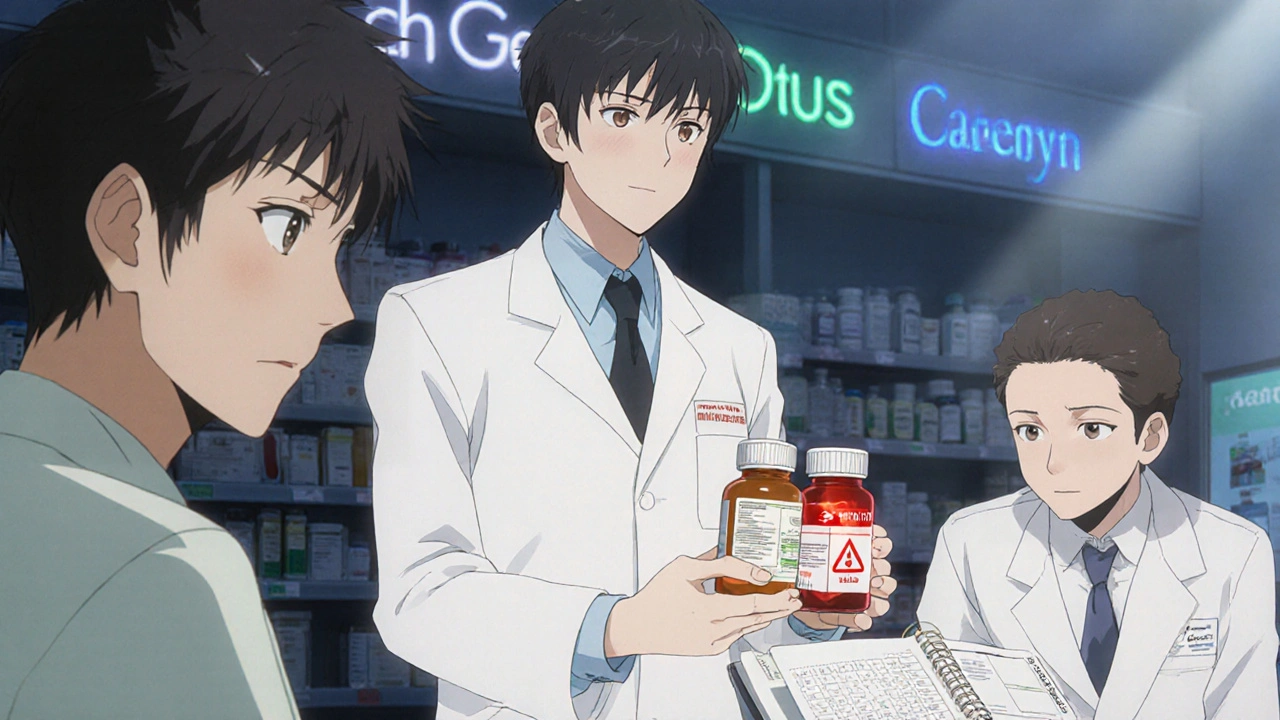
Identifying Problem Generics: When Pharmacists Should Flag Issues
Pharmacists play a critical role in catching unsafe generic drug substitutions. Learn when to flag issues with NTI drugs, look-alike names, and faulty extended-release formulations to protect patient safety.