
Therapeutic Equivalence: What It Means and Why It Matters for Your Medications
When you hear therapeutic equivalence, the official designation that two drugs produce the same clinical effect and safety profile in patients. Also known as bioequivalence, it’s the reason your pharmacist can legally swap your brand-name pill for a cheaper generic — but only if the FDA says they’re truly the same in how your body uses them. Not all drugs can be swapped this way. Some, like thyroid medicine, blood thinners, or seizure drugs, have a narrow therapeutic index, a tiny window between the dose that works and the dose that causes harm. Even small differences in how a generic version is absorbed can throw off your treatment. That’s why switching generics for these drugs isn’t just a cost-saving move — it’s a medical decision.
Therapeutic equivalence doesn’t mean the pills look the same. They don’t have to. It doesn’t even mean they’re made by the same company. What matters is whether your body gets the same amount of active ingredient into your bloodstream at the same rate. The FDA tests this through rigorous bioequivalence studies. But real-world results aren’t always clean. Some people report side effects after switching — headaches, dizziness, or even a return of symptoms. That’s not always in the studies. It’s in your experience. And it’s why generic medications, lower-cost versions of brand-name drugs approved by the FDA as therapeutically equivalent. aren’t one-size-fits-all. For most people, a generic works fine. For others, especially those on long-term, high-risk meds, the difference matters more than the price tag.
You’ll find posts here that dig into exactly this: why switching to a generic might cause diarrhea with vilazodone, why some patients feel worse after swapping thyroid meds, and how medication errors can creep in when labels are confusing. We’ll show you which drugs are safest to switch, which ones need your doctor’s green light, and what to watch for if your body reacts. This isn’t about theory. It’s about what happens when you swallow the pill — and whether the one in your hand today is truly the same as the one you took yesterday.
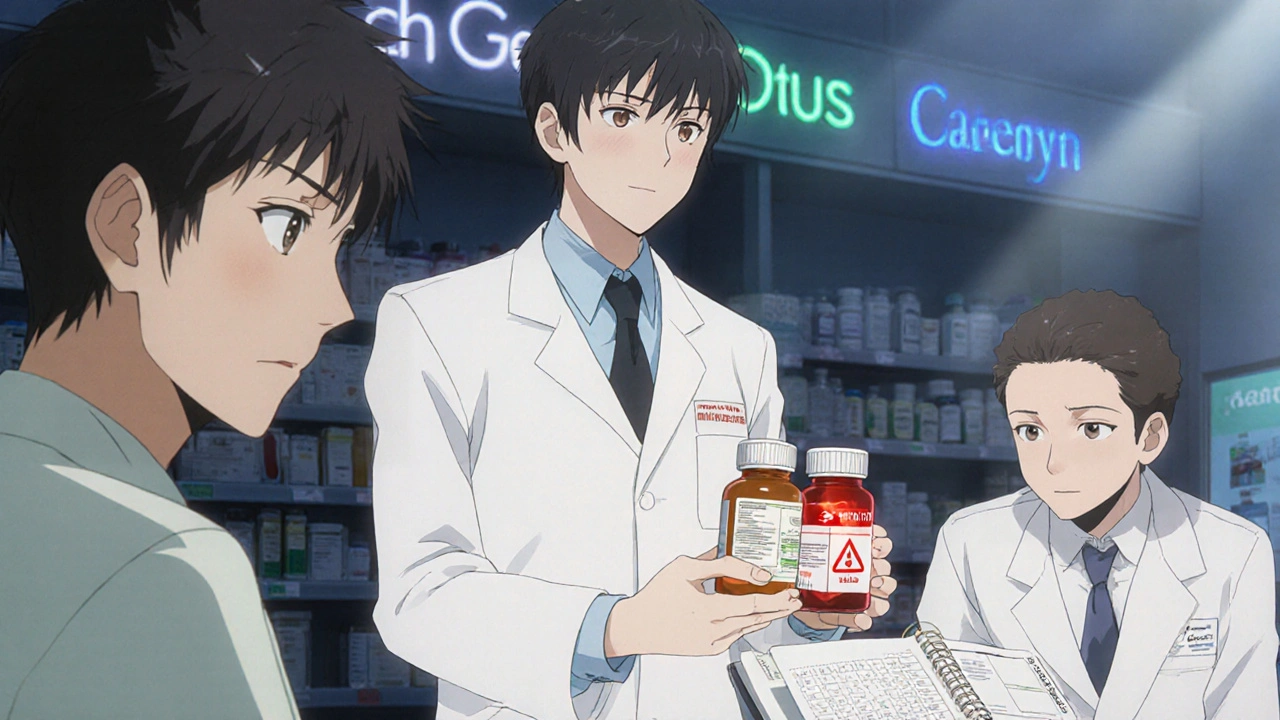
Identifying Problem Generics: When Pharmacists Should Flag Issues
Pharmacists play a critical role in catching unsafe generic drug substitutions. Learn when to flag issues with NTI drugs, look-alike names, and faulty extended-release formulations to protect patient safety.