

Workplace burnout isn’t just feeling tired after a long week. It’s a slow erosion of your energy, motivation, and sense of purpose - so deep that even weekends don’t fix it. The World Health Organization officially recognized it in 2019 as an occupational phenomenon, not a personal failing. And the numbers don’t lie: 44% of workers globally report high daily stress, and 23% say they’re burned out at work very often or always. This isn’t about being weak. It’s about systems that don’t work.
What Burnout Really Looks Like
Burnout shows up in three clear ways, according to the Maslach Burnout Inventory, the gold standard tool used by psychologists worldwide. First, you feel constantly drained - not just sleepy, but emotionally and mentally empty. Second, you start pulling away from your job. You might roll your eyes at meetings, stop caring about outcomes, or feel like you’re just going through the motions. Third, you feel less effective. Even tasks you used to handle with ease now feel impossible. You’re not lazy. Your brain is signaling that something’s broken.It’s not just in your head. Physical signs include insomnia (affects 42% of stressed workers), chronic fatigue (63% of burned-out employees), and trouble focusing (57%). These aren’t vague complaints. They’re measurable symptoms tied directly to how your body responds to prolonged stress.
Why It’s Happening: The Real Causes
Burnout doesn’t happen because you’re not good at time management. It happens because of five core workplace problems:- Excessive workload - 67% of employees say this is the biggest driver.
- Lack of control - You’re told what to do, how to do it, and when, with zero input. That’s demoralizing.
- Insufficient rewards - Pay isn’t the only reward. Recognition, respect, and fairness matter just as much. 42% feel underappreciated.
- Breakdown of community - If you feel alone at work, even in a crowded office, you’re at risk. 38% report feeling disconnected.
- Conflicting values - When your personal ethics clash with company practices, it creates deep stress. 29% say this is a problem.
These aren’t just workplace annoyances. They’re systemic failures. Dr. Christina Maslach, who created the burnout model, says it best: “Burnout is not an individual failure but a systems failure.”
How Organizations Can Prevent Burnout
Preventing burnout isn’t about free yoga classes or ping-pong tables. It’s about changing how work gets done.Start with workload. Companies that do quarterly workload audits - not yearly - reduce burnout linked to overwork by 78%. Tools that use AI to balance tasks across teams, like those tested at Salesforce and Microsoft, cut burnout by 32%. No one should be expected to do more than humanly possible.
Flexible schedules make a huge difference. One company introduced “Work-from-Home Wednesdays” and flexible start times. Result? A 27% drop in burnout. Why? Because people could work when they were most alert, not when the calendar said so.
Then there’s connection. People don’t leave jobs. They leave managers. Teams with strong organizational, role, and community connection see burnout drop by up to 40%. That means:
- Clear roles - no confusion about who does what.
- Opportunities to shape your job - not just follow orders.
- Non-work social time - coffee chats, team walks, lunch groups.
And don’t forget boundaries. Companies that enforce “digital sunset” policies - where systems automatically shut down after hours - see 31% less after-hours communication and 26% lower burnout. If your phone pings at 10 p.m., the system is broken.
The Manager’s Role: The Single Biggest Factor
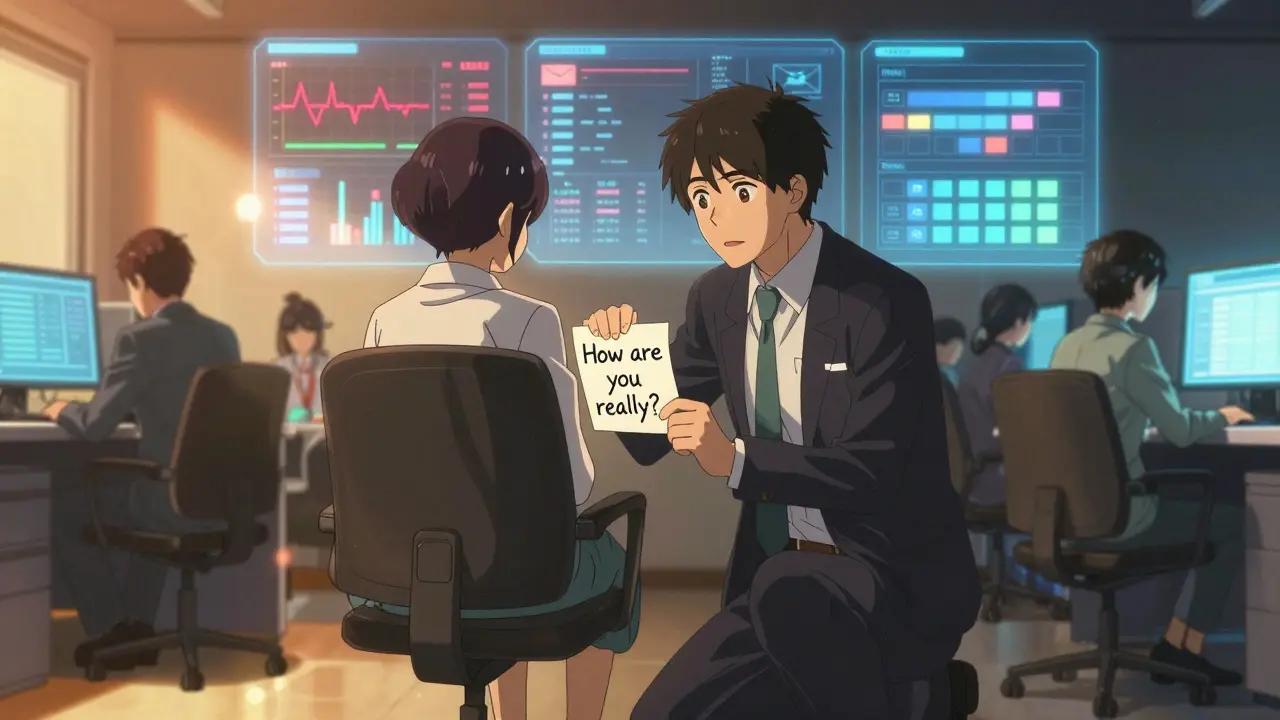
Jim Harter, Gallup’s Chief Workplace Scientist, says managers account for 70% of employee engagement. That means your boss is the most powerful tool for preventing burnout - or making it worse.Managers who have five key conversations with their team every few months see 41% lower burnout. Those conversations are about:
- Strengths - What do you do best?
- Purpose - How does your work matter?
- Wellbeing - How are you really doing?
- Growth - What do you want to learn next?
- Recognition - What have you accomplished?
Weekly 1:1s that include wellbeing check-ins cut burnout by 35%. And teams with high psychological safety - where people feel safe speaking up without fear - have 47% less burnout. That’s not fluffy leadership. That’s science.
What You Can Do: Individual Strategies That Actually Help
Organizations need to change. But you can also protect yourself.Set hard boundaries. Employees who refuse to check email after 6 p.m. report 39% lower burnout. Turn off notifications. Block your calendar. Say no. Permission to say no exists in fewer than 15% of companies - but you can still do it.
Use time-blocking. Instead of reacting to emails all day, schedule focused work blocks. A study of 1,200 knowledge workers found this improved task completion by 28% and cut burnout symptoms by 22%.
Take micro-breaks. Every 90 minutes, step away for 5-10 minutes. Walk outside. Stretch. Breathe. Research shows this boosts productivity by 13% and lowers burnout markers by 17%.
Move your body. Walking meetings are used by 68% of Fortune 500 companies. They reduce sedentary time by 27 minutes per day. And hydration matters. Companies that provide water stations and healthy snacks report 19% fewer fatigue-related absences.
For remote workers, a “bookending routine” helps. A 15-minute walk before and after work, as tested at MIT, reduces stress by 22%. It signals your brain: work is over. You’re done.
Recovering from Burnout: It Takes More Than a Vacation
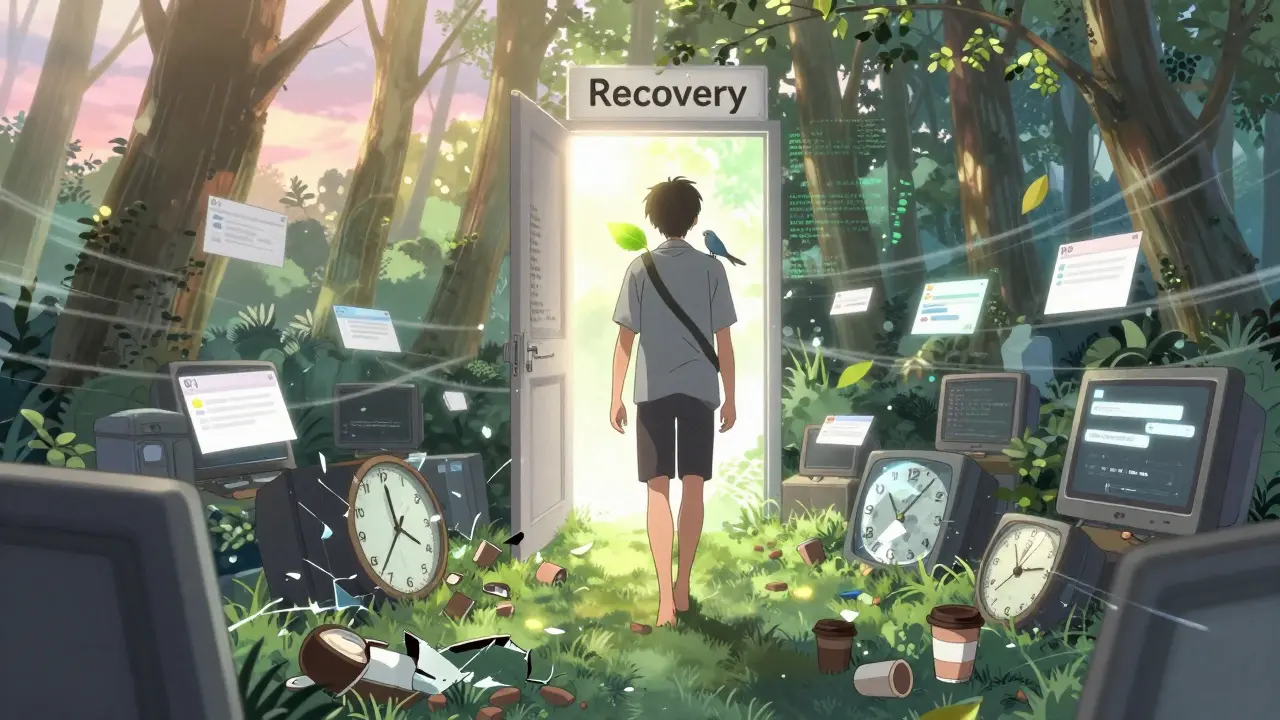
Recovery isn’t about a long weekend. It’s a structured process.First, recognize it. Use tools like Gallup’s Q12 survey to spot early signs - not wait until you’re collapsed.
Second, intervene. That means immediate changes: reduce your workload, shift responsibilities, or take temporary time off. Delaying only makes it worse.
Third, restore. This is where most fail. Recovery needs time, structure, and support. Gallup recommends a phased return: protected time, no new projects, and clear expectations.
One of the most powerful recovery tools? A 48-72 hour digital detox. People who unplug completely report a 63% drop in emotional exhaustion. No emails. No Slack. No work talk.
And don’t underestimate gratitude. Keeping a list of what you’ve accomplished - not what’s left to do - helps rebuild self-worth. Companies using this method see return-to-productivity timelines cut by 3.2 weeks.
Use your mental health benefits. Employees who seek help within 14 days of noticing symptoms recover 82% faster than those who wait.
What’s Changing Now - And What’s Coming
The tide is turning. The EU’s 2023 Work-Life Balance Directive forced companies to adopt “right to disconnect” rules. In France, after-hours work emails dropped by 37%.More companies are testing 4-day workweeks. By 2025, nearly 37% of tech firms will try it. Early results show productivity stays the same - or improves.
AI is stepping in. By late 2025, 65% of Fortune 500 companies will use AI to predict burnout by analyzing email patterns, calendar usage, and meeting frequency. It’s not spying - it’s early warning.
Neuroscience is helping too. Some companies now use Heart Rate Variability (HRV) monitors to track stress levels in real time. Pilot programs at Google and Intel show 29% greater reduction in burnout compared to traditional methods.
The biggest shift? Moving from reactive to predictive. Companies like American Express and Procter & Gamble now track sick days, EAP usage, and productivity dips to calculate burnout risk scores. They’ve cut burnout incidence by 38%.
The Bottom Line
Burnout isn’t your fault. It’s a sign that your work environment is unhealthy. You can’t meditate your way out of an impossible workload. You can’t breathe through a toxic culture.Real change happens when organizations stop treating burnout like a personal problem and start fixing the systems that cause it. Managers who listen. Policies that protect time. Workloads that make sense. Boundaries that are respected.
And if you’re already burned out - you’re not broken. You’re signaling that something needs to change. Recovery is possible. But it takes time, support, and - most importantly - a workplace that cares enough to fix what’s broken.