

Zinc & Antibiotics Timing Calculator
Find the correct timing between zinc supplements and antibiotics to maximize antibiotic effectiveness and avoid treatment failure.
Your Medication Information
Recommended Timing
Enter your medication details to see the recommended timing
Important: Zinc can significantly reduce antibiotic absorption if taken too close together.
For tetracyclines, zinc may reduce effectiveness by up to 50% if taken without proper timing.
When you're taking antibiotics and zinc supplements at the same time, you might think you're doing everything right-boosting your immune system while fighting an infection. But if you're taking them together, you could be making your antibiotic less effective. This isn't a myth. It's a well-documented interaction that can lead to treatment failure, longer illness, or even antibiotic resistance.
Why Zinc Interferes With Antibiotics
Zinc is a mineral your body needs for immune function, wound healing, and cell growth. But when it comes to certain antibiotics, zinc doesn’t just sit quietly in your gut-it actively blocks absorption. The problem isn’t that zinc is bad. It’s that it competes with antibiotics for the same pathway into your bloodstream. The key player here is a transporter protein called PEPT1. This protein helps your body absorb certain antibiotics like cephalexin, doxycycline, and ciprofloxacin. Zinc, especially in the form of zinc sulfate or zinc gluconate, binds to the same transporter. When both are in your gut at the same time, zinc wins the race. The antibiotic gets left behind, passes through your system unabsorbed, and never reaches the infection. Studies show this isn’t minor. In one 2012 study, healthy volunteers who took zinc with cephalexin saw their antibiotic’s blood levels drop by nearly 40%. With tetracycline antibiotics like doxycycline, the drop can be even higher-up to 50%. That means you might be taking the full dose, but your body is only getting half-or less.Which Antibiotics Are Affected?
Not all antibiotics are equally affected. Some are hit hard. Others barely notice zinc is there. High-risk antibiotics:- Tetracyclines: Doxycycline, minocycline, tetracycline. These bind tightly to zinc in a process called chelation, forming an insoluble complex your body can’t absorb.
- Quinolones: Ciprofloxacin, levofloxacin, moxifloxacin. Zinc reduces their absorption by 20-40%, according to the Linus Pauling Institute.
- Some β-lactams: Cephalexin and similar drugs. The 2012 NIH study confirmed a significant drop in plasma concentration when taken with zinc.
- Macrolides: Azithromycin, clarithromycin. No major interaction found.
- Aminoglycosides: Gentamicin, tobramycin. These are usually given by injection, so oral zinc doesn’t interfere.
- Penicillins: Amoxicillin. Minimal interaction, but still better to separate if you’re unsure.
How Far Apart Should You Take Them?
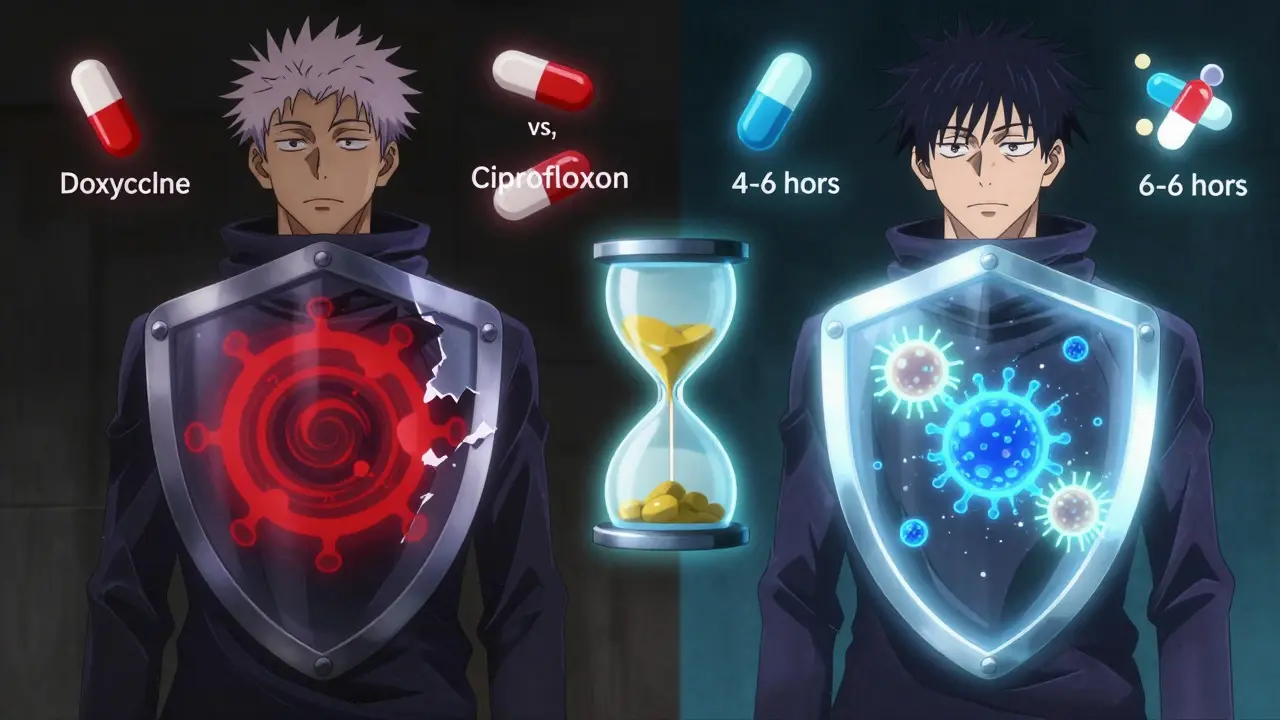
The rule isn’t vague. It’s specific. And it’s backed by pharmacokinetic data. General recommendation: Take your antibiotic at least 2 hours before or 4 to 6 hours after your zinc supplement. Why the difference? Tetracyclines bind so strongly to zinc that a 2-hour gap isn’t always enough. For doxycycline or minocycline, aim for 4-6 hours. That gives your gut time to clear the zinc before the antibiotic arrives. For quinolones like ciprofloxacin, 2 hours before or after is usually sufficient. But if you’re taking a high-dose zinc supplement (50 mg or more), go with the longer window. Higher doses mean more competition. Don’t assume “morning and night” is enough. If you take your antibiotic at 8 a.m. and your zinc at 8 p.m., that’s 12 hours apart-perfect. But if you take your antibiotic at 8 a.m. and your zinc at 10 a.m., you’ve just canceled half the antibiotic’s effect.What About Multivitamins?
This is where most people get tripped up. Many multivitamins contain 15-30 mg of zinc. That’s enough to interfere. If you take a daily multivitamin and are on antibiotics, you’re not just taking zinc with your antibiotic-you’re taking it every day, every dose. Check the label. Look for “elemental zinc.” If it’s 15 mg or more, treat it like a standalone supplement. Don’t take it within 2-6 hours of your antibiotic. If your multivitamin has zinc, take it at bedtime, at least 6 hours after your last antibiotic dose. Some people think “I only take it once a day, so it’s fine.” But if that one time overlaps with your antibiotic, you’re still risking reduced absorption.
Real-Life Consequences
This isn’t theoretical. People are getting sick because they don’t know this. On health forums, users report the same story over and over:- “Took doxycycline for Lyme and zinc for energy. Infection didn’t clear.”
- “Finished ciprofloxacin for a UTI. Symptoms came back two weeks later.”
- “Had to restart antibiotics because the first course didn’t work.”
What About Zinc Formulations?
Not all zinc is the same. Zinc sulfate is the most common and the most problematic. It’s cheap, widely used, and binds tightly to antibiotics. Zinc citrate and zinc picolinate are better tolerated. Research from the Journal of Pharmaceutical Sciences (2022) found these forms cause less interference with antibiotic absorption. Why? Their chemical structure doesn’t chelate as aggressively. If you’re on long-term antibiotics and need zinc, consider switching to zinc citrate. It’s slightly more expensive, but it reduces your risk. Still, even zinc citrate isn’t risk-free. The safest approach is still separation.How to Make This Easy
Managing timing sounds complicated. But it doesn’t have to be. Here’s a simple system:- Take your antibiotic first thing in the morning on an empty stomach (if directed).
- Wait 2-6 hours before taking zinc.
- Take zinc with lunch or dinner.
- If your antibiotic is taken twice daily, take the second dose after dinner and wait 6 hours before your zinc supplement.
- Use a phone reminder. A 2022 American Pharmacists Association report found patients using reminders had 83% compliance, compared to 47% without.
What If You Already Took Them Together?
Don’t panic. One accidental overlap won’t ruin your treatment. But if it happens more than once, you’re at risk. If you notice your infection isn’t improving after a few days-especially if you’ve been taking zinc-talk to your doctor. They might need to extend your course or switch antibiotics. Never double up on antibiotics to “make up” for missed absorption. That increases side effects and contributes to resistance.Who’s at Highest Risk?
Children, older adults, and people with gut issues (like Crohn’s or celiac disease) absorb nutrients less efficiently. If they’re on antibiotics and zinc, the interaction is even more dangerous. Pregnant women taking zinc for nausea and antibiotics for infections also need to be careful. The CDC recommends avoiding unnecessary supplements during pregnancy unless medically advised. Even healthy adults can be affected. If you’ve had recurrent infections after antibiotic courses, ask your pharmacist: “Could zinc be reducing my antibiotic’s effectiveness?”What’s the Bottom Line?
Zinc supplements are helpful. Antibiotics save lives. But when taken together without timing, they work against each other. Take antibiotics first. Wait at least 2 hours. For tetracyclines, wait 4-6 hours. Don’t rely on multivitamins. Check the label. If it has zinc, treat it like a supplement. Use reminders. Your phone is the easiest tool to stay on schedule. Know your antibiotic class. If it’s doxycycline, ciprofloxacin, or cephalexin-timing matters. This isn’t about avoiding zinc. It’s about using it wisely. Separating doses isn’t a hassle-it’s the difference between healing and waiting longer. And in the case of antibiotics, that delay can have serious consequences.Can I take zinc and antibiotics at the same time if I have a serious infection?
No. Even in serious infections, taking zinc and antibiotics together reduces the antibiotic’s effectiveness. This can lead to treatment failure, prolonged illness, or antibiotic resistance. Always separate doses by at least 2 hours, and 4-6 hours for tetracyclines.
Does zinc affect all antibiotics the same way?
No. Tetracyclines (like doxycycline) and quinolones (like ciprofloxacin) are strongly affected. Macrolides (like azithromycin) and aminoglycosides are not. Always check the antibiotic class and consult your pharmacist if unsure.
What if I’m taking a multivitamin with zinc?
Many multivitamins contain 15-30 mg of elemental zinc-enough to interfere. If you’re on a tetracycline or quinolone antibiotic, avoid taking your multivitamin within 2-6 hours of your dose. Take it at bedtime, 6 hours after your last antibiotic.
Is zinc citrate safer than zinc sulfate with antibiotics?
Yes. Zinc citrate and zinc picolinate cause less interference with antibiotic absorption than zinc sulfate because they chelate less aggressively. But even these forms aren’t risk-free. Separating doses by 2-6 hours is still the safest approach.
How long should I wait after my antibiotic before taking zinc?
Wait at least 2 hours after taking your antibiotic before taking zinc. For tetracycline antibiotics (doxycycline, minocycline), wait 4-6 hours. If you’re taking a high-dose zinc supplement (50 mg or more), go with the longer window.
Can I take zinc after my antibiotic if I take it at night?
Yes. If you take your antibiotic in the morning, taking zinc at night (6+ hours later) is ideal. If you take your antibiotic at night, take zinc in the morning-after a 2-6 hour gap. Consistency matters more than the exact time of day.
Will zinc reduce the effectiveness of my antibiotic if I only take it once?
One accidental overlap is unlikely to ruin your treatment. But repeated overlaps-like taking zinc every day with your antibiotic-can significantly reduce its effectiveness over time. If you’re unsure, separate them consistently.
Should I stop taking zinc while on antibiotics?
Not necessarily. You can still take zinc, but you need to time it right. Stopping zinc may deprive your body of immune support, especially if you’re recovering from illness. The goal is to take them at separate times, not to stop one.


