
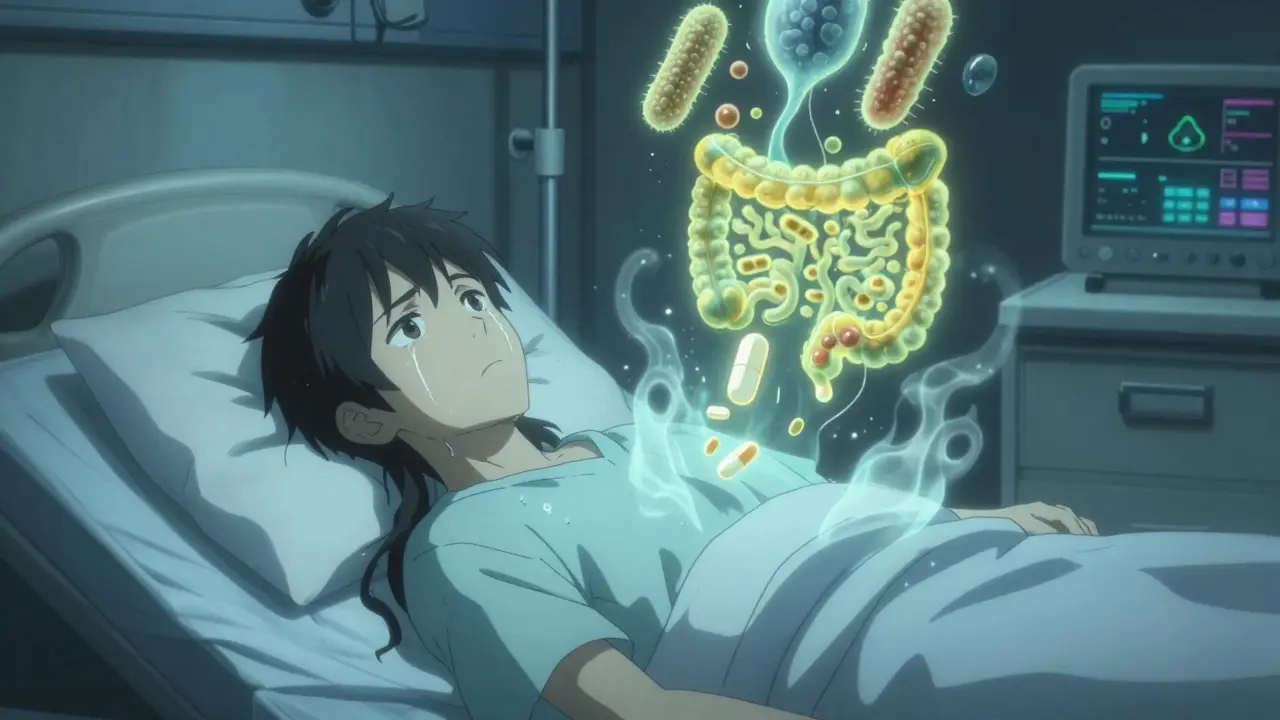
When you take an antibiotic for a sore throat or a sinus infection, you expect to feel better. But for some people, the very drug meant to fix one problem ends up causing another - severe, watery diarrhea that won’t go away. This isn’t just a stomach upset. It’s often caused by Clostridioides difficile, a dangerous bacterium that thrives when antibiotics wipe out the good bacteria in your gut.
What Is Clostridioides difficile?
Clostridioides difficile is a spore-forming, anaerobic bacterium that lives harmlessly in the intestines of some people - until something disrupts the balance. Antibiotics, especially broad-spectrum ones like clindamycin, fluoroquinolones, or cephalosporins, kill off the friendly bacteria that normally keep C. diff in check. Without those competitors, C. diff multiplies fast and releases toxins that attack the lining of the colon. That’s when diarrhea, cramps, and fever start.
It’s not rare. In the U.S., it causes nearly half a million infections every year, according to the CDC. About 1 in 5 people who get it will have it come back, even after treatment. And for older adults, especially those over 65, it can be deadly - they make up 80% of cases and face 10 to 15 times higher death rates than younger patients.
How Do You Get It?
C. diff doesn’t just appear out of nowhere. You usually get it by swallowing spores - tiny, tough forms of the bacteria that can survive for months on doorknobs, bed rails, or toilet seats. These spores are resistant to regular hand sanitizers and many hospital disinfectants. That’s why it spreads so easily in hospitals and nursing homes.
But the biggest risk isn’t the hospital itself - it’s the antibiotics. Up to 25% of all antibiotic-associated diarrhea cases are caused by C. diff. The risk goes up the longer you’re on antibiotics, and the more powerful they are. Even a short 5-day course of clindamycin can trigger it. And symptoms? They can show up as early as the first day of antibiotics - or not until two months after you’ve stopped them.
What Does It Feel Like?
At first, it might seem like a mild stomach bug. You have loose stools - three or more a day - maybe some cramping or bloating. But if it’s C. diff, it doesn’t get better. The diarrhea becomes frequent, watery, and sometimes bloody. Fever, nausea, and loss of appetite follow. In severe cases, the colon swells, the heart races, and the abdomen distends. That’s when it turns into a medical emergency. About 1 in 10 people with severe C. diff will need surgery to remove part of their colon.
Here’s the tricky part: you can carry C. diff without symptoms. Up to half of hospitalized patients have the bacteria in their gut but don’t get sick. That’s why doctors don’t test everyone with loose stools. They only test if you’ve been on antibiotics recently and have clear signs of infection.

How Is It Diagnosed?
Testing isn’t perfect. A simple stool test might miss the infection, or it might show C. diff even when it’s not causing harm. That’s why labs use a two-step process: first, a test for a protein called GDH that signals C. diff is present, then a second test to check for actual toxins. If only the first test is positive, you might just be a carrier - not sick.
Doctors also look at your symptoms and medical history. If you’ve been on antibiotics and now have diarrhea, and your white blood cell count is above 15,000 or your albumin level is below 3 g/dL, that’s a red flag for severe disease. Imaging like a CT scan might show thickening of the colon wall - a sign of serious inflammation.
How Is It Treated?
For years, metronidazole was the go-to drug. But it’s no longer recommended. Studies show it fails more often than newer options. Today, the first-line treatments are either fidaxomicin or vancomycin.
Fidaxomicin (200 mg twice daily for 10 days) is preferred because it kills C. diff without wiping out as many good gut bacteria. This means fewer recurrences - about 15% compared to 35% with vancomycin. Vancomycin (125 mg four times a day for 10 days) is still effective and cheaper, so it’s often used when fidaxomicin isn’t available.
For people who keep getting it back - the 20-30% who have one recurrence, and the 40-60% of those who have more - the most effective treatment now is fecal microbiota transplant (FMT). This isn’t sci-fi. It’s a procedure where stool from a healthy donor is processed and delivered into the patient’s colon, usually by colonoscopy or capsule. It restores the gut’s natural balance. Success rates? 85-90%. That’s far better than repeating antibiotics, which only work about half the time.
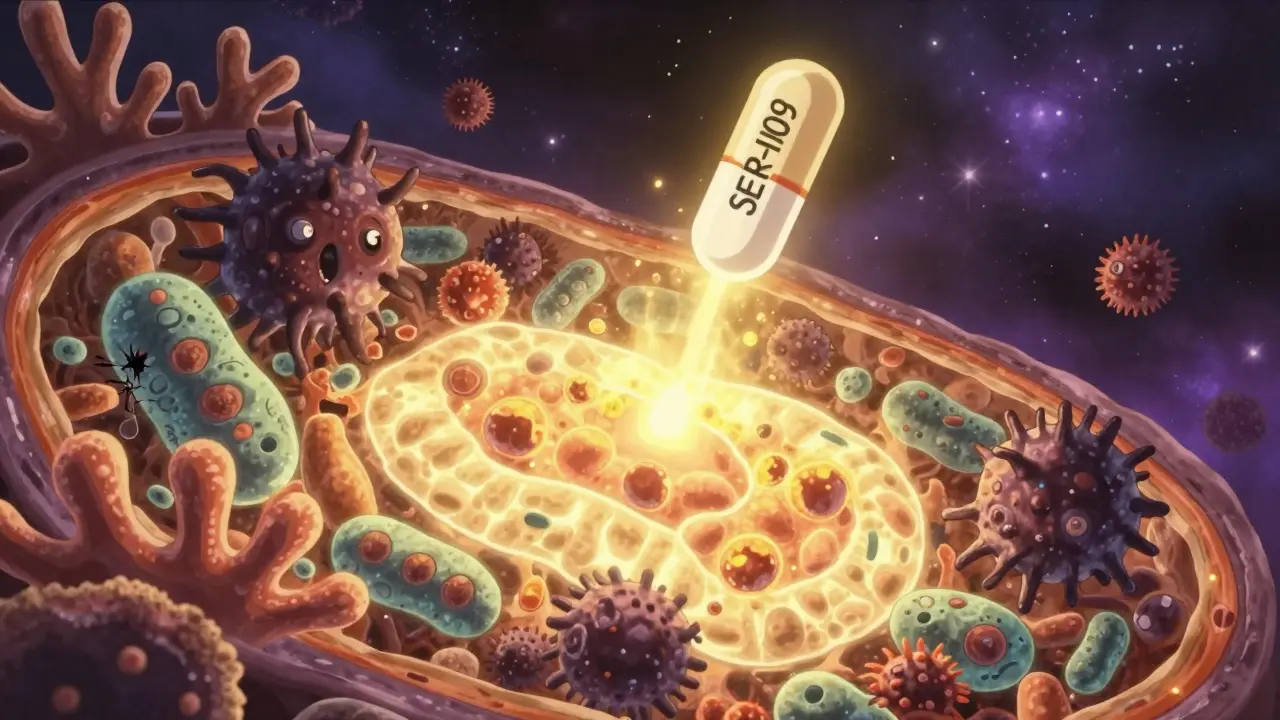
In April 2023, the FDA approved the first microbiome-based drug for recurrent C. diff: SER-109. It’s a pill made of purified bacterial spores from healthy donors. In clinical trials, it cut recurrence by 88% over 8 weeks. This is the future: targeted, non-antibiotic treatments that rebuild your gut instead of destroying it.
What About Probiotics?
You’ve probably seen ads for probiotics to prevent diarrhea from antibiotics. But the evidence doesn’t back it up for C. diff. A 2022 Cochrane review of nearly 10,000 people found no significant protection against C. diff from probiotics. Some studies showed a small drop in general antibiotic-associated diarrhea, but not specifically from C. diff. The American College of Gastroenterology now says: don’t use probiotics to prevent C. diff. They’re not harmful, but they’re not the answer.
How Do You Prevent It?
The best way to stop C. diff is to stop unnecessary antibiotics. That’s antibiotic stewardship - using the right drug, at the right dose, for the right length of time. Hospitals with strong stewardship programs have cut C. diff rates by 25-30%.
Handwashing with soap and water is critical. Alcohol-based hand sanitizers don’t kill C. diff spores. Only soap and water can. In hospitals, patients with C. diff are put in private rooms, and staff wear gowns and gloves. Surfaces are cleaned with EPA-registered disinfectants - specifically those on List K - that contain bleach or hydrogen peroxide. Regular cleaners? Useless against spores.
Even outside the hospital, you can reduce your risk. Don’t ask for antibiotics for viral infections like colds or flu. If you’re prescribed one, take it exactly as directed - no skipping doses, no saving leftovers. And if you start having diarrhea while on antibiotics, tell your doctor right away. Don’t assume it’s just a side effect.
Why Is This Getting Worse?
Over the past decade, we’ve seen a shift. Hospital cases have dropped by 24% since 2011, thanks to better infection control. But community cases - infections in people who haven’t been hospitalized - are rising. Why? More outpatient antibiotic use, more people on long-term antibiotics for chronic conditions, and more exposure to spores in the environment.
Plus, new strains like NAP1/027 are nastier. They make more toxins and form more spores. They’re harder to treat and more likely to come back. And with aging populations and more people on immune-suppressing drugs, we’re creating more vulnerable hosts.
The Bottom Line
Clostridioides difficile is not a minor inconvenience. It’s a serious, sometimes deadly infection that’s directly tied to how we use antibiotics. The good news? We have better tools now than ever before. Fidaxomicin, FMT, and SER-109 are changing the game. But the most powerful tool remains simple: don’t use antibiotics unless you really need them. And if you do, watch for diarrhea - and speak up early.
The future of C. diff care isn’t just about killing bacteria. It’s about protecting the trillions of good bacteria in your gut - and understanding that sometimes, the best medicine is not giving medicine at all.
Can you get C. diff without taking antibiotics?
Yes, but it’s rare. Most cases happen after antibiotic use. However, people with weakened immune systems, those who’ve had recent gastrointestinal surgery, or those living in long-term care facilities can get C. diff even without recent antibiotics. Community-acquired cases are increasing, possibly due to environmental exposure or overuse of antibiotics in the past.
Is C. diff contagious?
Yes. C. diff spreads through the fecal-oral route. Spores from infected stool can contaminate surfaces, objects, and hands. If someone touches a contaminated surface and then touches their mouth, they can become infected. That’s why handwashing with soap and water is essential - alcohol-based sanitizers don’t kill the spores.
How long does it take to recover from C. diff?
Most people start feeling better within a few days of starting treatment. But full recovery can take weeks. Even after symptoms go away, the bacteria can linger. Recurrence is common - up to 30% of people have another episode within 30 days. That’s why follow-up care and avoiding unnecessary antibiotics afterward are critical.
Can C. diff cause long-term damage?
In severe cases, yes. Fulminant colitis can lead to colon perforation, sepsis, or death. Even after recovery, some people develop post-infectious irritable bowel syndrome (IBS) or chronic diarrhea. Repeated infections can permanently alter gut microbiota, making future infections more likely. Early treatment and prevention are key to avoiding long-term issues.
Are there any new treatments on the horizon?
Yes. Beyond FMT and SER-109, researchers are testing monoclonal antibodies that neutralize C. diff toxins, and engineered probiotics designed to outcompete the bacteria. Oral microbiome therapies are being studied for prevention in high-risk patients. The focus is shifting from killing C. diff to restoring the gut ecosystem - a more sustainable, less destructive approach.


