

Imagine feeling winded just by walking to the mailbox or noticing your ankles swelling for no apparent reason. For many, these seem like signs of aging or being "out of shape." However, these are often the first red flags of Pulmonary Hypertension is a progressive disorder characterized by abnormally high blood pressure in the pulmonary arteries, which forces the right side of the heart to work harder to pump blood through the lungs. If left unchecked, this pressure leads to a dangerous condition called right heart strain and eventually full heart failure.
The scary part? Most people don't find out they have it for years. In fact, patients often face diagnostic delays averaging nearly three years, frequently being misdiagnosed with asthma or COPD. But the outlook has changed. While survival rates were grim in the 1980s, modern combination therapies have pushed 5-year survival rates to over 60%. The key to these results is early detection and aggressive management of the heart's workload.
Quick Summary of Key Insights
- What it is: High blood pressure specifically in the lung arteries (mPAP > 20 mmHg).
- The Danger: It causes the right ventricle to thicken and stretch, leading to right heart failure.
- Key Symptoms: Shortness of breath (dyspnea), swelling in legs/abdomen, and extreme fatigue.
- Gold Standard Test: Right heart catheterization is the only way to definitively diagnose and categorize PH.
- Treatment: Moving from single drugs to "triple therapy" to target multiple biological pathways.
Understanding the Five Groups of PH
Not all pulmonary hypertension is the same. The World Health Organization classifies the condition into five distinct groups because the treatment for one might be useless-or even harmful-for another.
- Group 1 (PAH): Pulmonary arterial hypertension. This is where the arteries themselves are diseased.
- Group 2: PH caused by left heart disease. This is actually the most common type, though often missed.
- Group 3: PH resulting from chronic lung diseases or low oxygen levels (like severe COPD).
- Group 4: Chronic thromboembolic PH (CTEPH), usually caused by old blood clots in the lungs.
- Group 5: PH with unclear or multifactorial causes.
Spotting the Symptoms: When to Worry
The most common symptom is progressive dyspnea-shortness of breath that feels disproportionate to your actual lung function. You might notice you can't keep up with your peers or that a flight of stairs leaves you gasping. Other physical markers include a prominent S2 heart sound, a "heave" felt on the right side of the chest, and jugular venous distension (bulging veins in the neck).
As the condition progresses, the body struggles to handle fluid. This leads to peripheral edema, where fluid builds up in the ankles and legs, or ascites, where the abdomen swells. If you find yourself needing to prop up your head with extra pillows to breathe at night, it's time to see a specialist.
Right Heart Strain: What Happens to the Heart?
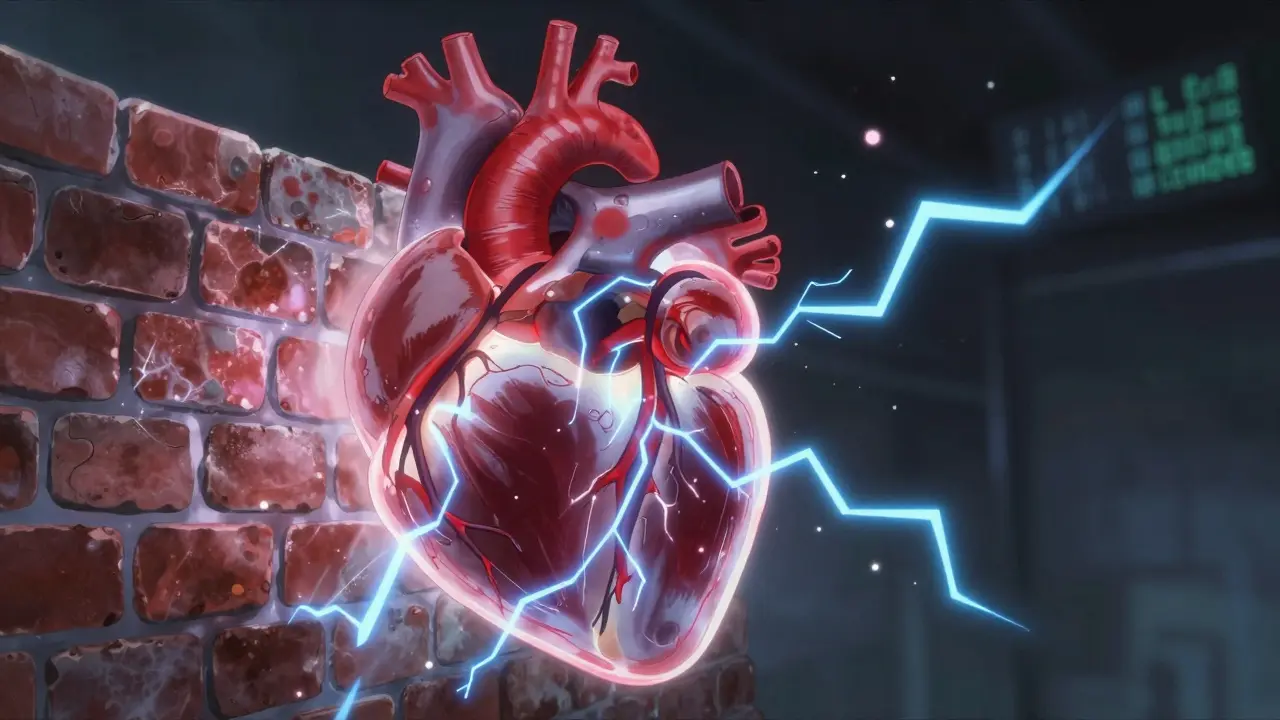
The right ventricle is designed to be a low-pressure pump. When pulmonary arterial pressure rises, the right ventricle has to push against a "brick wall." To cope, the heart undergoes remodeling. This is what doctors call Right Heart Strain.
Physically, the heart wall thickens (hypertrophy) to create more power. On an echocardiogram, a wall thickness greater than 5mm is a major warning sign. Eventually, the muscle wears out and the ventricle begins to stretch or dilate (end-diastolic area > 22 cm²). When the pump becomes too dilated, it can no longer squeeze effectively, which is measured by the TAPSE (Tricuspid Annular Plane Systolic Excursion). A TAPSE value below 17mm tells doctors that the right heart is failing.
| Metric | Normal/Baseline | PH Warning Sign | What it Indicates |
|---|---|---|---|
| RV Wall Thickness | < 5mm | > 5mm | Ventricular Hypertrophy |
| TAPSE | > 17mm | < 17mm | Impaired Squeeze/Function |
| RV End-Diastolic Area | Standard | > 22 cm² | Ventricular Dilation |
| B-type Natriuretic Peptide (BNP) | Low | > 180 pg/mL | Heart Wall Stress/Stretch |
The Diagnostic Journey: From Screen to Gold Standard
If a doctor suspects PH, they usually start with an Echocardiography. It's a non-invasive ultrasound that estimates the pressure in the lungs. However, it isn't perfect; it frequently overestimates pressure by 10-15 mmHg and only has about 56% specificity. It's a great screening tool, but it's not a diagnosis.
To get a real answer, you need a Right Heart Catheterization. This involves threading a thin tube through a vein into the heart to measure the mean pulmonary arterial pressure (mPAP) directly. If the mPAP is greater than 20 mmHg at rest, the diagnosis is confirmed. While it carries small risks like arrhythmias or hematomas, it is the only way to distinguish between pre-capillary PH (lung artery issues) and post-capillary PH (heart failure issues).
Doctors also use the 6-minute walk test to see how the body handles exertion. If a patient can't cover 380 meters in six minutes, it's often a sign of a worse prognosis and a need for more aggressive therapy.

Modern Therapy: Moving Beyond Monotherapy
Treatment has shifted dramatically. We no longer just use one drug; we use combination therapy to attack the disease from different biological angles. This often involves a mix of endothelin receptor antagonists, PDE5 inhibitors, and prostacyclin analogs.
A huge breakthrough is Sotatercept, a disease-modifying therapy that targets TGF-β signaling. Unlike older drugs that just relax the blood vessels, this therapy actually tries to stop the remodeling of the vessel walls. Clinical trials have shown it can reduce the risk of death or clinical worsening by 44%.
For those with severe cases, intravenous prostacyclins are used. These require a permanent central line and a continuous infusion pump, but they are life-saving for patients whose hearts are on the brink of failure. The goal is always to lower the BNP levels and improve the 6-minute walk distance, shifting the patient into a lower risk category on the REVEAL 2.0 scale.
Can pulmonary hypertension be cured?
While most forms of PH are chronic and require lifelong management, some can be treated or reversed. For example, Group 4 (CTEPH) can sometimes be improved through a surgery called pulmonary thromboendarterectomy to remove clots. Others, like Group 3, are managed by treating the underlying lung disease.
Why is the right heart catheterization necessary if I have an echo?
An echocardiogram only estimates pressure based on blood flow patterns. It cannot accurately tell the difference between PH caused by the lungs and PH caused by left-sided heart failure. Because the treatments for these two are completely different-and treating Group 2 PH with Group 1 drugs can be dangerous-direct pressure measurement is mandatory.
What are the "red flag" symptoms I should tell my doctor about?
You should report progressive shortness of breath that doesn't improve with rest, unexplained swelling in your ankles or legs, and extreme fatigue during simple tasks. Mention if you have a history of connective tissue diseases or sleep apnea, as these are common triggers.
What is the REVEAL 2.0 risk score?
The REVEAL 2.0 is a clinical tool used by specialists to predict 1-year survival. It looks at 19 different parameters, including your NT-proBNP levels, the distance you can walk in 6 minutes, and your functional class. It helps doctors decide if you need a simple medication or an intensive triple-therapy regimen.
Does pulmonary hypertension affect women more than men?
Yes, statistics show a higher prevalence among women, with a female-to-male ratio of approximately 2:1. This is often linked to hormonal factors and a higher incidence of connective tissue diseases in women, which can trigger Group 1 PAH.
Next Steps for Patients and Caregivers
If you suspect you have PH, don't settle for a general diagnosis of "being out of shape." Ask for a referral to a multidisciplinary PH clinic. These centers combine cardiologists, pulmonologists, and specialized nurses who can coordinate your care and reduce the risk of hospitalization.
For those already diagnosed, focus on serial monitoring. Regularly scheduled echocardiograms are vital to track TAPSE and right ventricular area changes. If your 6-minute walk distance starts to drop, it's a signal to your medical team that your current therapy needs adjustment before a crisis occurs.


