
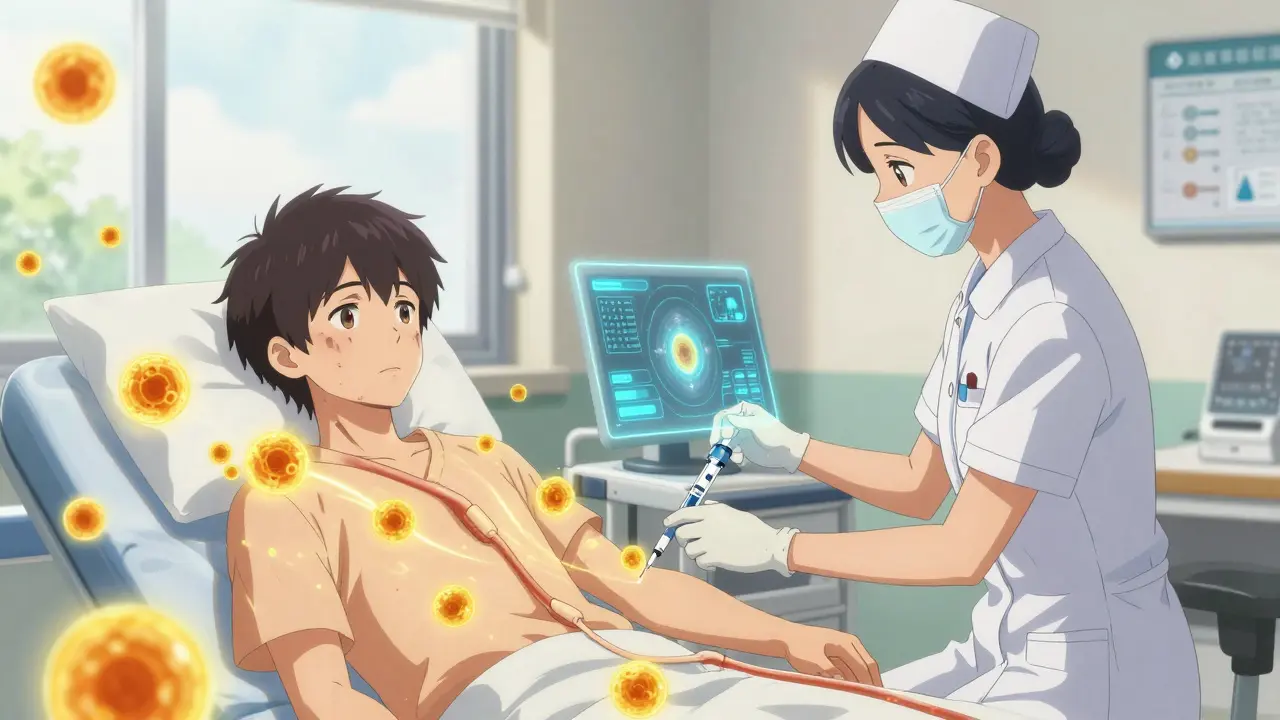
When someone is undergoing chemotherapy, the goal isn’t just to kill cancer cells-it’s to keep the person alive, comfortable, and able to keep going. That’s where supportive care comes in. It’s not a side note. It’s not optional. It’s the backbone of modern cancer treatment. Without proper management of side effects like low white blood cells, nausea, and pain, even the most powerful chemotherapy can fail-not because it doesn’t work, but because the patient can’t tolerate it.
Growth Factors: Keeping Your Immune System from Collapsing
Chemotherapy doesn’t just target cancer. It also wipes out healthy white blood cells, especially neutrophils, which are your body’s first line of defense against infection. When those numbers drop too low, you’re at risk for febrile neutropenia-a fever caused by infection that can land you in the hospital, delay treatment, or even be life-threatening.
That’s where growth factors like filgrastim and pegfilgrastim come in. These drugs stimulate your bone marrow to make more neutrophils. They’re not cure-alls, but they’re proven. In high-risk patients, they cut the chance of febrile neutropenia from nearly 17% down to under 10%. That’s a 46% drop. For someone on a curative regimen, that means they can finish all their chemo cycles on time-without breaks.
Pegfilgrastim is the most commonly used. One 6 mg shot, given 24 to 72 hours after chemo, lasts the whole cycle. It’s not cheap-originator brands cost $6,000 to $7,000 per dose in the U.S., but biosimilars now bring it down to $3,500-$4,500. Still, cost is a barrier. A 2022 study found 42% of community oncology clinics underuse these drugs because of insurance hurdles or patient out-of-pocket costs.
Side effects? Bone pain is common-up to 30% of patients feel it. Some need extra pain meds. Rare but serious risks include spleen rupture and lung issues. That’s why timing matters: never give it within 24 hours of chemo. And never skip the dose if your white count is still low. Delaying it can cost you more than money-it can cost you your treatment schedule.
Antiemetics: Taking Back Control from Nausea and Vomiting
Chemo-induced nausea and vomiting (CINV) used to be something patients just endured. Now, we know better. With the right combination, up to 85% of patients with high-risk chemo-like cisplatin-can avoid vomiting entirely. The key? Not one drug. Three.
The NCCN guidelines say: for high emetogenic risk, you need a 5-HT3 blocker (like palonosetron), an NK1 blocker (like aprepitant), and dexamethasone. Palonosetron works for the first 24 hours. Aprepitant covers the delayed nausea that hits days later. Dexamethasone boosts both. Together, they’re a game-changer.
Patients on Reddit and cancer forums say things like: "My last chemo, I took the three-drug combo. I didn’t throw up once. Before that? I was in bed for three days." But here’s the problem: only 58% of U.S. oncology practices consistently follow this protocol. Some still use a single pill, thinking it’s enough. It’s not. The data is clear: incomplete antiemetic prophylaxis is substandard care.
Newer combos like netupitant/palonosetron (NEPA) combine two drugs in one pill, improving adherence. But they cost 30-50% more. For patients on Medicare Part D, that can mean hundreds in copays. And even with perfect prophylaxis, 20-30% still get breakthrough nausea. That’s why rescue meds like ondansetron or lorazepam are kept on hand. It’s not failure-it’s strategy.
Pain Relief: More Than Just Opioids
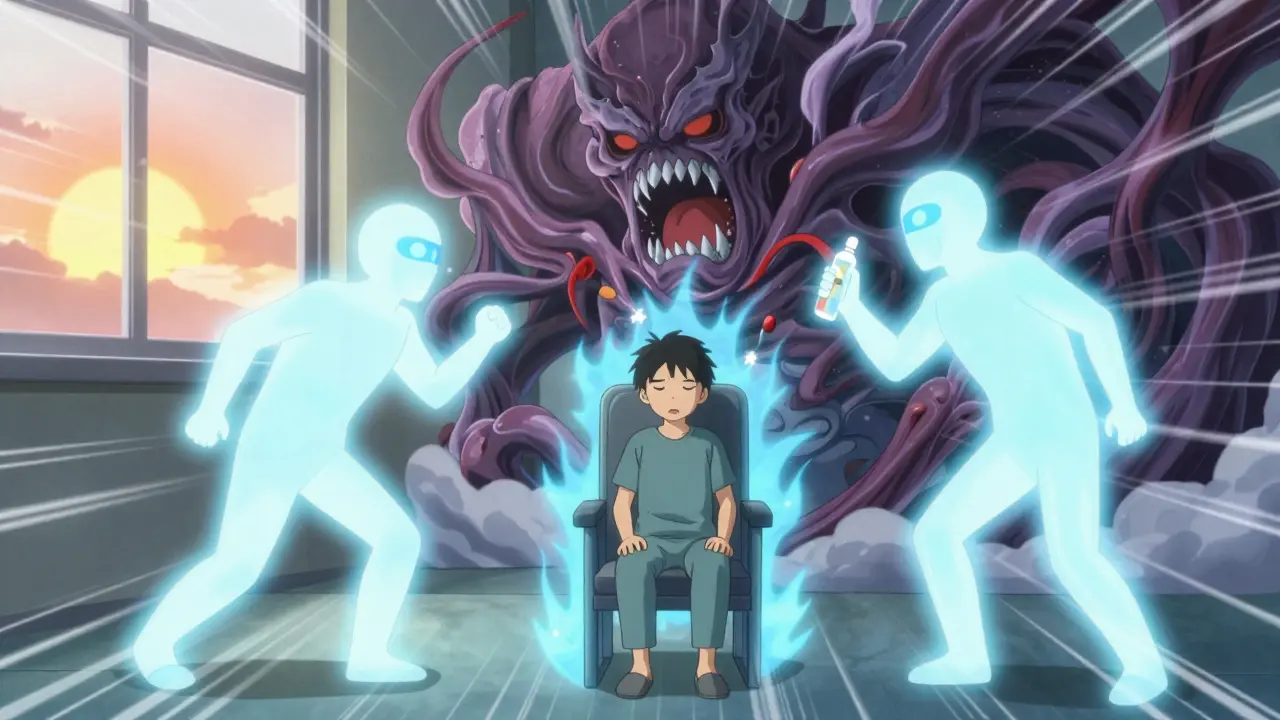
Pain in cancer isn’t one thing. It can be bone-deep from metastases. It can be burning from nerve damage. It can be cramping from blockages. And it’s everywhere-up to 80% of advanced cancer patients feel moderate to severe pain.
The old WHO pain ladder-start with acetaminophen, move to codeine, then morphine-is outdated. Today, we use multimodal pain control. That means combining drugs that work in different ways. For bone pain, you might use a low-dose opioid like oxycodone plus a bone-targeting drug like zoledronic acid. For nerve pain, gabapentin or pregabalin are better than opioids. For breakthrough pain, fast-acting fentanyl lozenges.
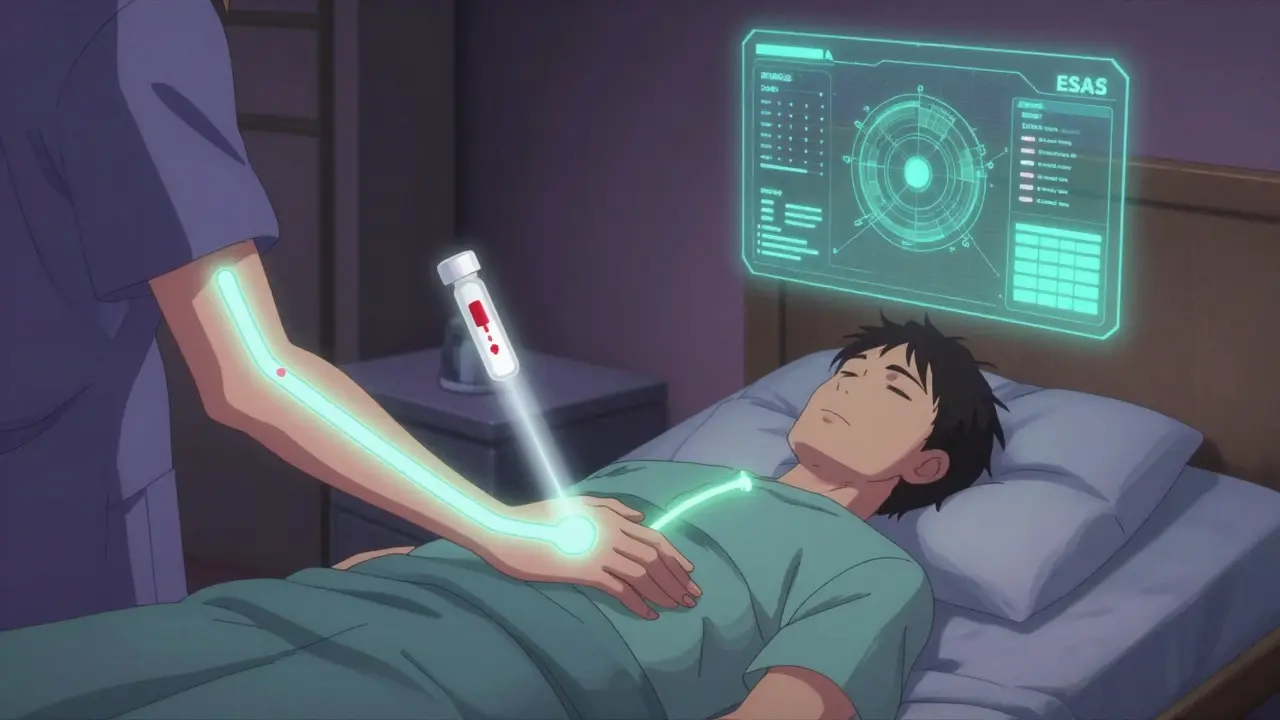
Studies show 70-90% of cancer pain can be controlled-but only if you personalize it. One patient might need 100 mg of morphine daily. Another might respond to a nerve block. Opioid rotation (switching drugs) is needed in 20-30% of cases because of side effects or lack of relief. Constipation? Nearly universal. Sedation? Happens in half. That’s why we don’t just prescribe-we monitor. Tools like the Edmonton Symptom Assessment System (ESAS) are used at every visit to track pain, nausea, fatigue, and depression.
The opioid crisis made doctors wary. But withholding pain relief isn’t safety-it’s neglect. The NCCN updated its guidelines in 2023 to clarify: when pain is severe, opioids are not a last resort. They’re the standard. And for patients who can’t use opioids, new non-opioid options are emerging-like nav1.7 inhibitors in early trials, which block pain signals at the nerve level with no risk of addiction.
Real-World Gaps: Cost, Access, and Consistency
Here’s the uncomfortable truth: we have the tools. We have the evidence. But we don’t always use them.
A 2023 Patient Advocate Foundation survey found 38% of cancer patients struggled to afford supportive care meds. Pegfilgrastim, aprepitant, even generic gabapentin-when stacked together, monthly costs can hit $500-$800. That’s more than rent for some. Medicare Part D doesn’t cover all. Private insurers often require prior authorizations that delay care by days.
And access isn’t equal. In U.S. academic centers, 85% have dedicated supportive care teams. In rural clinics? Just 38% have formal protocols. In low-income countries, many patients get no antiemetics at all. WHO estimates 30-40% of global cancer patients lack basic pain relief.
That’s why training matters. Oncology nurses need 8-12 hours of training just to give growth factors safely. Pain specialists need 20-40 hours to manage opioid risks and neuropathic pain. But most clinics don’t fund that. The result? Patients suffer.
What’s Next? Biosimilars, AI, and Better Tools
The future of supportive care is bright-and getting cheaper. Five biosimilar growth factors are now FDA-approved. They’ve cut costs by 20-35%. A new NK1 antagonist, fosnetupitant, was approved in 2023 with better absorption. And in 2023, the NCCN updated its guidelines to include cannabis for neuropathic pain-though evidence is still limited.
AI is stepping in too. Memorial Sloan Kettering is testing algorithms that predict which patients are most likely to get febrile neutropenia based on age, chemo type, lab values, and even weather. If it works, we could stop giving growth factors to low-risk patients and focus them where they’re needed most.
Meanwhile, new non-opioid pain drugs are in phase 2 trials. One, HTS-18000, targets multiple nausea pathways at once. If it works, it could replace the three-drug combo with one pill.
Supportive care isn’t just about comfort. It’s about survival. It’s about dignity. It’s about letting someone live-not just survive-through treatment. And with better access, better funding, and better tools, we can make sure no one has to choose between their health and their wallet.
Are growth factors only for high-risk patients?
No. While they’re most critical for high-risk patients (those with over 20% risk of febrile neutropenia), the 2023 NCCN update now recommends them for intermediate-risk patients with multiple risk factors-like age over 65, prior chemo, or poor nutrition. It’s not just about the chemo drug anymore-it’s about the whole person.
Can I skip antiemetics if I don’t feel nauseous?
Absolutely not. Nausea and vomiting often hit hours or days after chemo. By the time you feel sick, it’s too late to prevent it. Prophylaxis means preventing before it starts. If you skip your antiemetics, you’re not being brave-you’re risking days in bed, dehydration, and treatment delays.
Is morphine the only option for severe cancer pain?
No. Morphine is common, but it’s not the only option. Oxycodone, hydromorphone, fentanyl patches, and even methadone are used depending on the patient. For nerve pain, gabapentin or pregabalin often work better. For bone pain, bisphosphonates or radiation help. The goal isn’t to find the strongest drug-it’s to find the right combination for your body.
Why do I need to take dexamethasone for days after chemo?
Dexamethasone doesn’t just fight nausea right away-it keeps working. For high-risk chemo like cisplatin, nausea can last 5-7 days. A single dose won’t cut it. That’s why we taper it over 3-4 days: to keep the NK1 and 5-HT3 receptors blocked long enough to prevent delayed vomiting. Skipping the taper means your nausea comes back.
Can I use over-the-counter painkillers instead of prescription opioids?
For mild pain, yes-acetaminophen or ibuprofen can help. But for moderate to severe cancer pain, they’re not enough. Cancer pain often needs stronger drugs. If you’re relying only on OTC meds and still hurting, talk to your doctor. You’re not being a burden-you’re being honest. And that’s the first step to relief.
Is supportive care covered by insurance?
Most insurance plans cover growth factors, antiemetics, and pain meds-but not always easily. Prior authorizations, step therapies, and high copays are common. Biosimilars help reduce costs. If you’re struggling to afford your meds, ask your oncology social worker. Many drug companies have patient assistance programs, and nonprofit groups can help with copay aid.
Supportive care isn’t about being weak. It’s about being smart. It’s about using every tool we have to keep you strong enough to fight. If you’re on chemo, don’t suffer in silence. Ask for help. Ask for the right drugs. Ask for the right dose. Your body is doing enough. Let the medicine do the rest.


