
Home Renovation Safety: Protect Yourself from Common Hazards
When you're tearing down walls or sanding old floors, home renovation safety, the practices and precautions needed to avoid injury and long-term health damage during home improvement projects. Also known as DIY renovation safety, it's not just about wearing gloves—it's about stopping silent threats before they hurt you. Most people think of falls or cuts when they hear "safety," but the real dangers are invisible. Old paint, dust from insulation, and fumes from solvents don't scream for attention—they creep in slowly, and by the time you feel it, it's too late.
Take lead paint exposure, the risk of poisoning from inhaling or ingesting lead dust from paint used in homes built before 1978. It’s not a myth. The EPA found that over 35 million U.S. homes still have lead-based paint. Sanding or scraping it without a respirator or wet method sends fine particles into the air. Kids and pregnant women are especially at risk—lead can damage developing brains. You don’t need a lab test to know it’s there; if your house is older than 1978, assume it’s there until proven otherwise.
tool safety, the proper handling, maintenance, and protective measures required when using power tools during home projects is another silent killer. A circular saw can cut your finger in a second. But a misused drill or a frayed extension cord? Those kill quietly. Most injuries happen because people skip the basics: unplugging tools before changing blades, wearing eye protection, or keeping cords away from water. You don’t need to be an electrician to know that wet hands and power tools don’t mix.
Then there’s chemical exposure, the risk of harm from breathing in or touching toxic substances like paint thinners, adhesives, and mold removers. A can of paint stripper might say "non-toxic" on the label, but that doesn’t mean it’s safe to breathe. Many contain methylene chloride, which can cause dizziness, liver damage, or even death in enclosed spaces. Always work with windows open, use a ventilation fan, and never rely on smell to tell you it’s safe.
And don’t forget dust. Drywall, asbestos, fiberglass—these aren’t just irritants. Long-term exposure to fine particles can lead to chronic lung disease. A simple N95 mask isn’t optional. It’s the minimum. If you’re ripping out old insulation or cutting tile, you need more than a bandana. Respirators rated for fine particles aren’t expensive, but skipping them is.
What you’ll find below aren’t generic tips. These are real stories from people who got hurt, got lucky, or figured it out the hard way. You’ll see how one wrong move with a hammer can lead to lead poisoning. How a $15 respirator saved someone’s lungs. How a simple checklist kept a family safe while redoing their kitchen. No fluff. No theory. Just what works when you’re elbow-deep in dust and sweat.
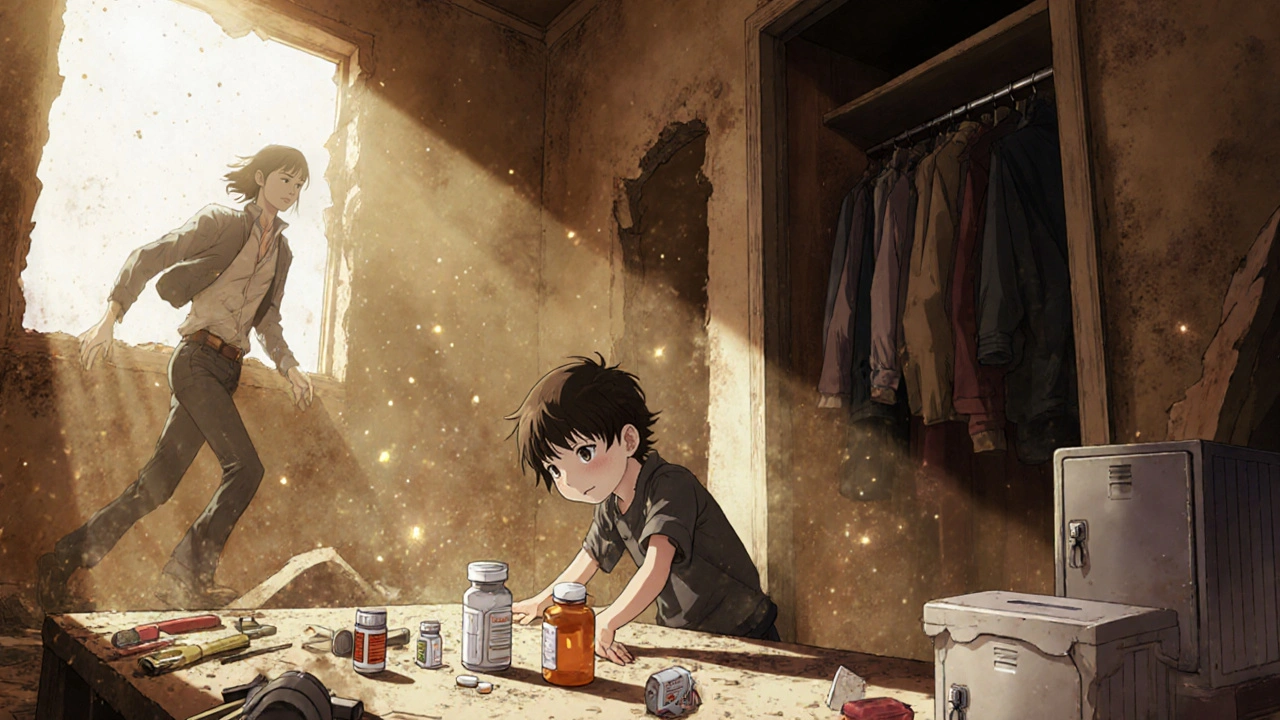
How to Secure Medications During Home Renovations or Moves
Learn how to safely store, transport, and dispose of medications during home renovations or moves to prevent accidental access, damage, or overdose. Essential tips for families in Sydney and beyond.