
Medication Switching: When and Why It Goes Wrong — And How to Stay Safe
When you switch from one medication to another — whether it’s a brand name to a generic, or one drug to a similar alternative — you’re making a medication switching, the practice of changing prescribed drugs for reasons like cost, availability, or physician recommendation. Also known as drug substitution, it’s common, often necessary, and usually safe — but not always. For most people, swapping a generic for a brand-name pill makes no difference. But for others, even tiny changes in formulation can cause real problems.
That’s where narrow therapeutic index, a term for drugs where small changes in blood levels can lead to serious harm or treatment failure comes in. Medications like warfarin, levothyroxine, phenytoin, and lithium fall into this category. Their effectiveness depends on staying within a very tight range. A generic version might have slightly different fillers, release rates, or absorption patterns — enough to push your levels out of the safe zone. That’s why pharmacists are trained to flag these switches. And why you should never assume all generics are equal.
Side effects after switching aren’t always about the active ingredient. Sometimes it’s the coating, the dye, or how fast the pill breaks down in your stomach. People report headaches, dizziness, mood swings, or even seizures after switching to a generic thyroid med or seizure drug. These aren’t imagined. Studies show real spikes in hospital visits after generic switches for NTI drugs. And if you’re on multiple meds, the risk multiplies — especially if you’re older and taking drugs with anticholinergic burden, the cumulative effect of medications that block acetylcholine, a brain chemical linked to memory and focus. Even a small change can throw off your whole system.
It’s not just generics. Switching between brands — like going from one insulin to another, or swapping one antidepressant for another — can also trigger reactions. Insulin allergies, changes in mood with vilazodone, or sudden diarrhea with new formulations aren’t rare. And if you’re on immunosuppressants, switching meds can affect how well your vaccines work. This isn’t about fear. It’s about awareness.
What you’ll find below isn’t theory. It’s real stories from people who switched and got sick. It’s guidance from pharmacists who know which generics to question. It’s the science behind why your body reacts — and what you can do to stop it before it starts. Whether you’re on blood thinners, thyroid meds, epilepsy drugs, or antidepressants, this collection gives you the tools to ask the right questions, spot red flags, and protect your health when a pill changes — even if the name on the label doesn’t.
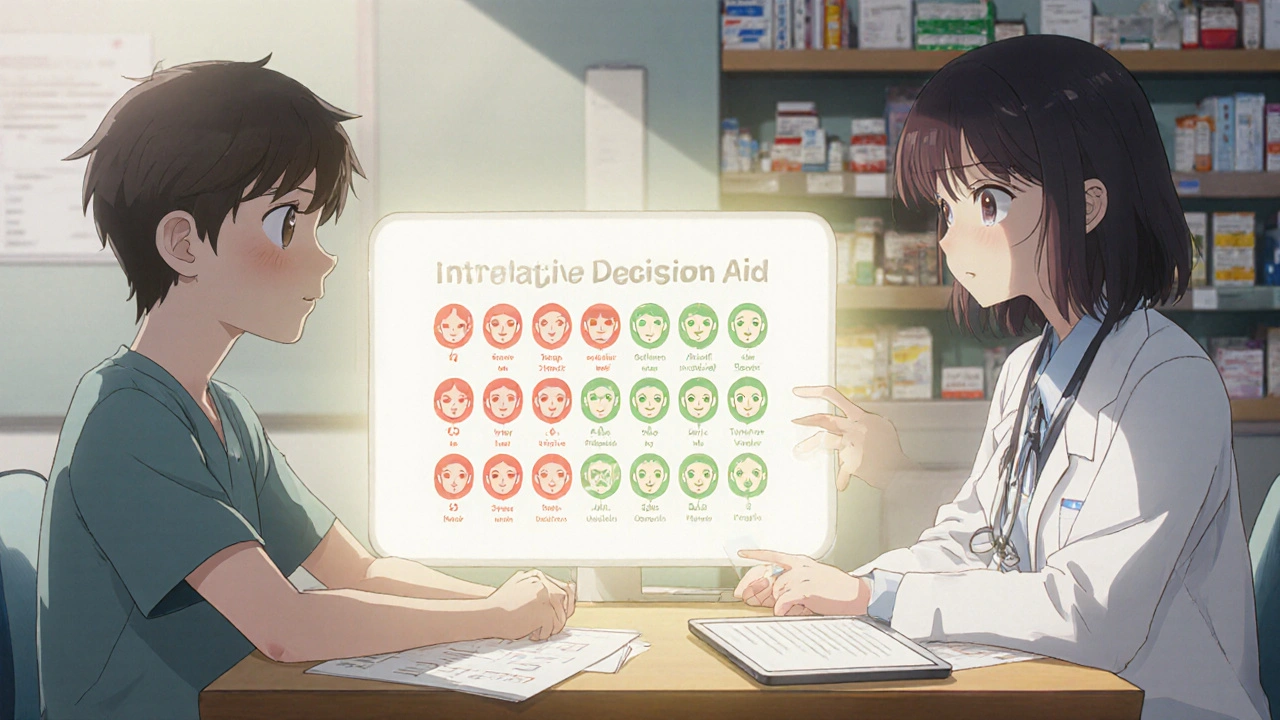
Decision Aids for Switching Medications: Understand the Risks and Benefits
Decision aids help patients understand the real risks and benefits of switching medications, using clear data and personal values to guide choices. They reduce confusion, improve adherence, and put you in control of your treatment.