
Patient Hesitation: Why People Delay or Refuse Medications and What You Can Do
When someone avoids taking their medicine—even when it’s clearly needed—that’s patient hesitation, the reluctance or refusal to start, continue, or follow through with prescribed treatments despite medical advice. It’s not about being stubborn or ignorant. It’s often about fear, confusion, past experiences, or invisible psychological forces at work. Also known as treatment refusal, this behavior shows up in people skipping insulin, avoiding blood thinners, or stopping antidepressants after a few days. And it’s one of the biggest reasons treatments fail.
Behavioral economics, the study of how people make choices under uncertainty, often irrationally. Also known as drug decision-making, it explains why someone might pick a pricier brand-name drug over a cheaper generic—even when both work the same way. This isn’t about money alone. It’s about loss aversion (fearing side effects more than they value benefits), present bias (preferring comfort today over long-term health), and distrust in systems that feel impersonal. When a patient worries that switching to a generic might cause problems—like the ones reported with NTI drugs, medications with a narrow therapeutic index where tiny changes in blood levels can cause harm. Also known as narrow therapeutic index, these include warfarin, phenytoin, and thyroid meds—their hesitation isn’t irrational. It’s rooted in real stories and documented risks.
And it’s not just about pills. Medication adherence, the extent to which a patient follows their prescribed treatment plan. Also known as treatment compliance, it’s affected by how complicated the regimen is, whether side effects are explained upfront, and if the patient feels heard. A child with asthma won’t use their inhaler correctly if they don’t understand the spacer. Someone on immunosuppressants after a transplant might skip doses because they feel fine—until rejection sneaks up. Even something as simple as forgetting to take a pill can turn into a crisis when the stakes are high. The good news? Small changes make a big difference. Clear instructions, decision aids that show real risks and benefits, and conversations that focus on the patient’s values—not just clinical guidelines—can turn hesitation into action.
What you’ll find below isn’t a list of generic advice. These are real cases: why people refuse steroid eye drops because they fear glaucoma, why someone on vilazodone sticks with it despite diarrhea, how insulin allergies are handled, and how pharmacists catch dangerous generic switches. You’ll see how lifestyle, fear, cost, and misinformation all tie into why patients hold back—and how smart, simple interventions help them move forward. This isn’t about blaming patients. It’s about understanding them.
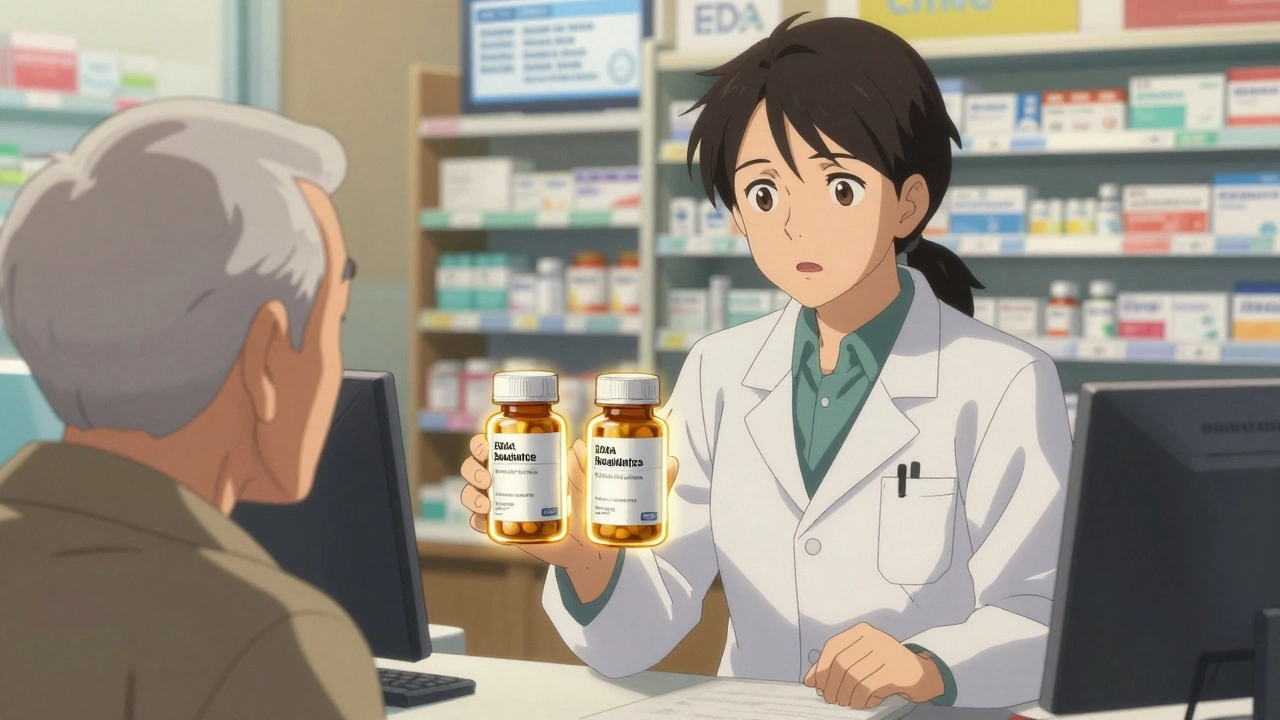
How to Talk to Patients About Generic Medications: Proven Communication Strategies
Learn proven communication strategies to help patients feel confident about switching to generic medications. Discover what works, what doesn’t, and how to build trust with simple, evidence-based approaches.