
Risks and Benefits: Weighing Medication Trade-Offs for Safer Health Choices
When you take a pill, you’re not just getting the cure—you’re also accepting the risks and benefits, the balance between what a drug can do for you and what it might do to you. This isn’t theoretical. Every medication, from a simple antibiotic to a new weight-loss injection, comes with a trade-off. That’s why knowing the difference between a manageable side effect and a dangerous reaction matters more than you think.
Side effects, unwanted reactions to a drug aren’t always bad. Diarrhea from vilazodone? Common, usually mild, and often fades in weeks. But generic drug safety, how well a copycat version performs compared to the brand can be a different story. For drugs with a narrow therapeutic index, a tiny difference in dose can mean the difference between healing and harm—like thyroid meds or blood thinners—switching generics without checking can backfire. Pharmacists flag these because they’ve seen patients get sick from what seems like a small change.
And it’s not just about pills. Therapeutic equivalence, when two drugs work the same way in the body sounds like a technical term, but it’s the backbone of safe prescribing. If your inhaler technique is off, even the best drug won’t reach your lungs. If your insulin causes an allergic reaction, you need to know how to respond—not just switch brands. Even vaccines get tricky if you’re on immunosuppressants. Live vaccines? Can be dangerous. Inactivated ones? Usually safe. The line between help and harm isn’t always clear, and it changes depending on your health, age, and other meds.
That’s why this collection doesn’t just list drugs. It shows you where the real dangers hide: in confusing abbreviations like QD vs QID, in hidden anticholinergic burden that dulls memory in older adults, in cheap generics that don’t behave the same, and in overprescribed antibiotics that do more harm than good. You’ll find real-world examples—like how amiloride keeps potassium levels stable in blood pressure treatment, or how retin A’s benefits come with redness and peeling that most people can handle.
There’s no such thing as a risk-free drug. But there is such a thing as an informed choice. What you’re about to read isn’t a list of warnings—it’s a guide to spotting the red flags, understanding the trade-offs, and knowing when to speak up. Whether you’re managing diabetes, switching antidepressants, or just trying to avoid a bad reaction, these posts give you the facts you need to ask the right questions—and walk away with better outcomes.
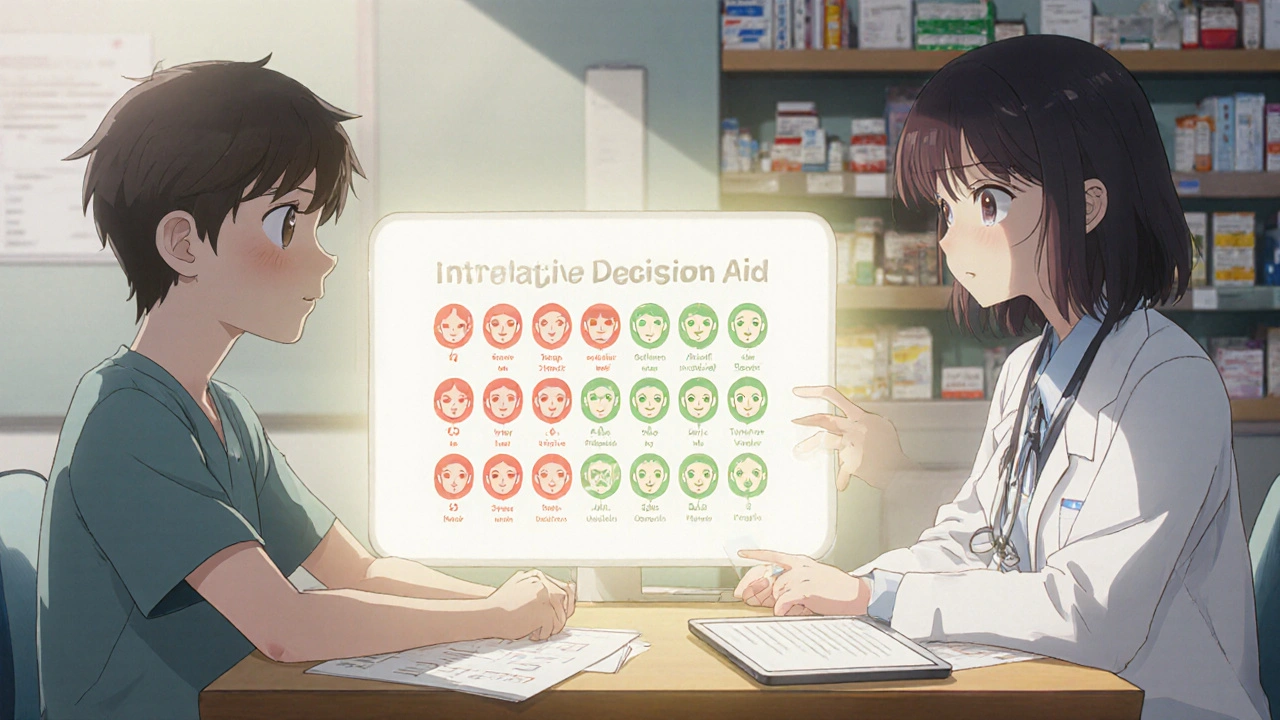
Decision Aids for Switching Medications: Understand the Risks and Benefits
Decision aids help patients understand the real risks and benefits of switching medications, using clear data and personal values to guide choices. They reduce confusion, improve adherence, and put you in control of your treatment.