
Shared Decision-Making in Healthcare: What It Is and Why It Matters
When you and your healthcare provider work together to pick the best treatment for you, that’s shared decision-making, a process where patients and clinicians collaborate using the best available evidence and the patient’s values and preferences. It’s not just asking questions — it’s having a real conversation where your input shapes the outcome. This isn’t theory. It’s what happens when you say, "I’m worried about side effects," or "I can’t afford this pill," and your doctor actually listens and adjusts the plan.
Shared decision-making isn’t just about doctors. pharmacists, health professionals who review your meds for safety, interactions, and affordability play a big role too. Think about when you switch generics and get new side effects — a good pharmacist will ask if the change felt right for you, not just check a box. medication safety, the practice of preventing harmful errors in drug use doesn’t just depend on correct dosing. It depends on you understanding why you’re taking something and feeling comfortable saying no if it doesn’t fit your life.
Look at the posts below. They’re full of moments where shared decision-making could have changed the outcome. Someone on vilazodone who didn’t know diarrhea was common and quit early. Someone switching to a generic thyroid med and blaming the drug, not realizing their body needed time to adjust. Someone getting a live vaccine while on immunosuppressants because no one asked if they understood the risk. These aren’t just medical facts — they’re missed chances to involve the patient.
Shared decision-making isn’t about overwhelming you with jargon. It’s about giving you the space to say, "I don’t want that," or "Can we try something cheaper?" It’s what happens when your values — your job, your schedule, your fear of needles, your budget — actually matter in the plan. The articles here don’t just list drugs and side effects. They give you the facts you need to speak up. Whether it’s choosing between ED pills, managing insulin reactions, or understanding why your blood sugar spikes in the morning, the right choice isn’t the one your doctor thinks is best. It’s the one that works for you.
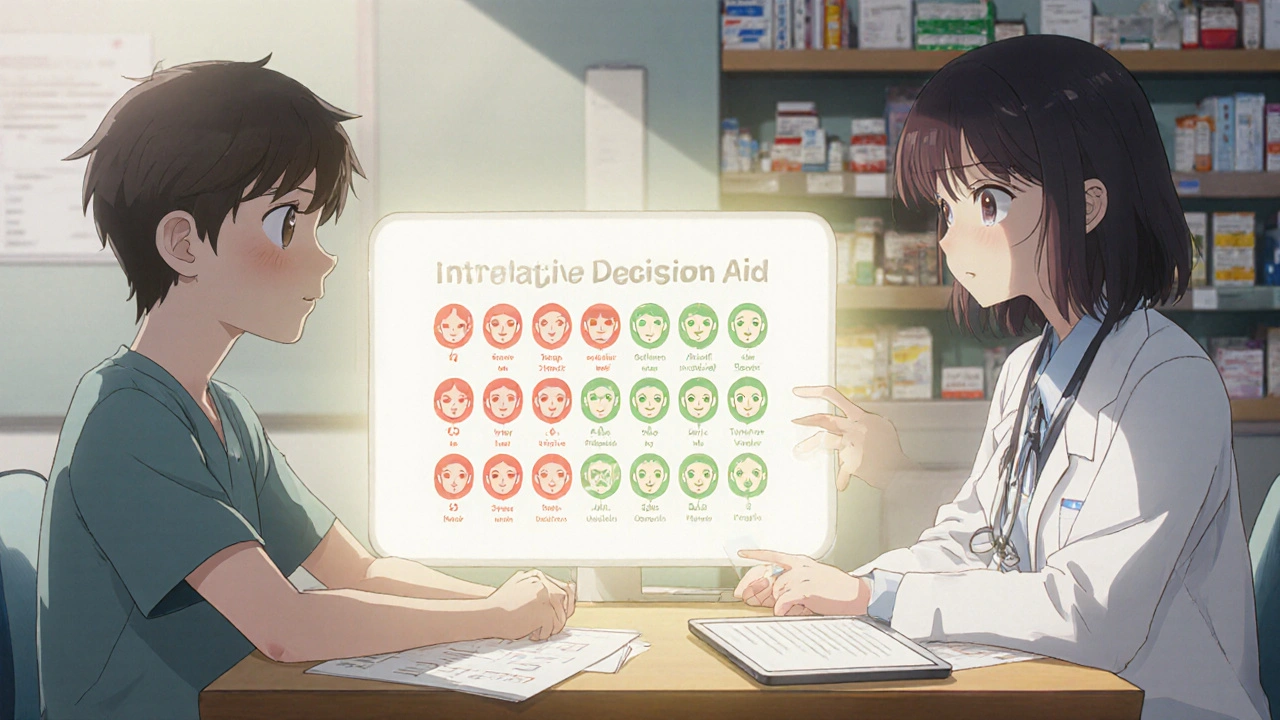
Decision Aids for Switching Medications: Understand the Risks and Benefits
Decision aids help patients understand the real risks and benefits of switching medications, using clear data and personal values to guide choices. They reduce confusion, improve adherence, and put you in control of your treatment.