
Side Effect Management: How to Handle Drug Reactions Without Stopping Treatment
When you start a new medication, side effects are often the first thing you notice—nausea, dizziness, dry mouth, or worse. But side effect management, the practical process of reducing or tolerating unwanted drug reactions while staying on treatment. Also known as adverse drug event management, it’s not about avoiding meds altogether—it’s about keeping them working for you. Many people quit their prescriptions too soon because they don’t know how to handle these reactions. The good news? Most side effects are temporary, manageable, or preventable with simple changes.
Take vilazodone, an antidepressant that causes diarrhea in nearly one in three users. Also known as Viibryd, it’s not dangerous for most people, but the discomfort makes many stop. The solution? Take it with food, try probiotics, and give it two weeks. Your body adjusts. Same goes for tretinoin, a topical retinoid that causes peeling and redness when you first start using it. Also known as Retin A, it doesn’t mean you’re allergic—it means your skin is adapting. Side effect management isn’t magic. It’s timing, dosage tweaks, diet, and knowing when to call your doctor versus when to wait it out.
Some side effects are tied to specific drug classes. anticholinergic burden, the cumulative effect of multiple medications that block acetylcholine in the brain. Also known as cognitive load from meds, it’s why older adults on allergy pills, bladder meds, and sleep aids often feel foggy or forgetful. Switching one drug can make a big difference. Or consider generic drug safety, how switching from brand to generic can trigger new reactions in sensitive patients. Also known as therapeutic equivalence issues, it’s especially true for thyroid meds, epilepsy drugs, and blood thinners. Not every generic is identical in how your body responds. Pharmacists can help flag these risks—if you ask.
And then there’s the silent kind—side effects you don’t feel until it’s too late. Like insulin allergies, rare but serious reactions that look like irritation but can escalate quickly. Also known as injection site hypersensitivity, they require immediate attention, not just rubbing it off. Or medication errors, mixing up QD and QID on prescriptions that lead to accidental overdoses. Also known as dosing confusion, they’re preventable with clear labels and double-checks. Side effect management isn’t just about your body—it’s about how your meds are written, filled, and taken.
What you’ll find below are real, tested ways to handle the side effects you actually experience—not theory, not guesswork. From managing diarrhea on antidepressants to fixing inhaler mistakes that make asthma worse, these posts show you exactly what works. No fluff. No fear. Just clear steps to keep you on your meds, safe and in control.
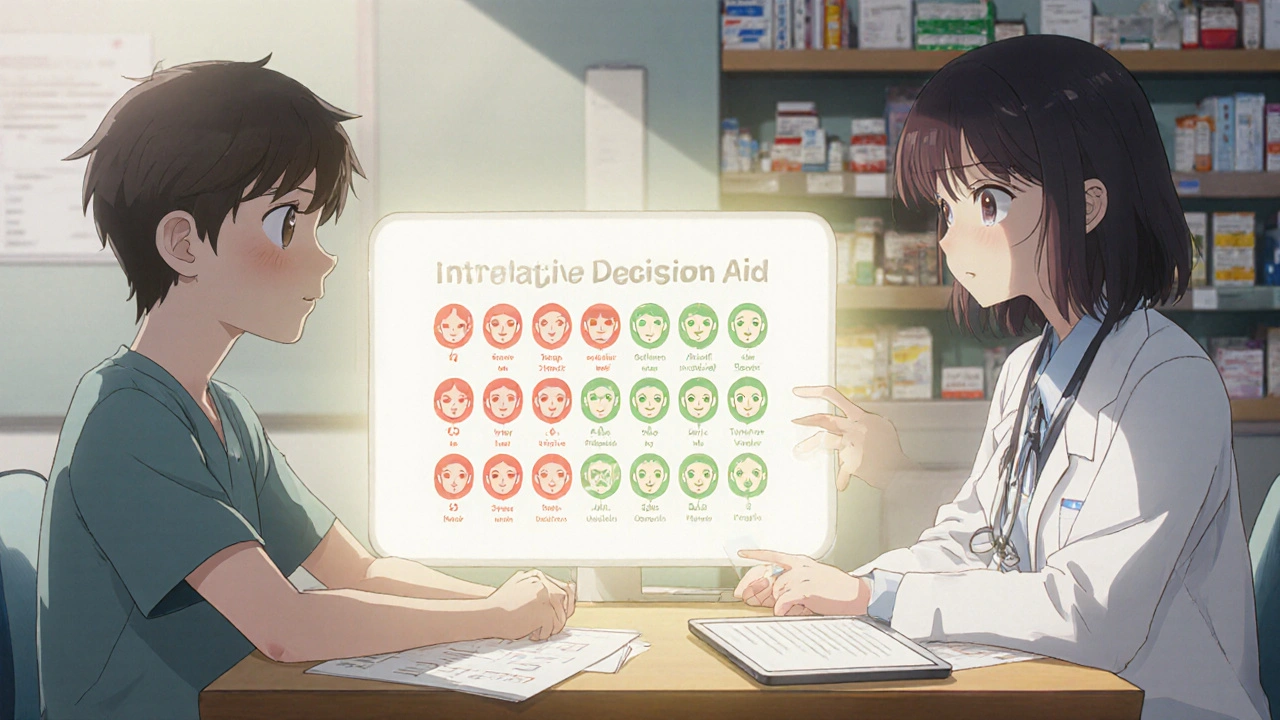
Decision Aids for Switching Medications: Understand the Risks and Benefits
Decision aids help patients understand the real risks and benefits of switching medications, using clear data and personal values to guide choices. They reduce confusion, improve adherence, and put you in control of your treatment.